
 The Crusades were conflicts predominantly focused on the stories of knights, kings, popes, Christians, and Muslims. We have some stories of women like Eleanor of Aquitaine who joined their husbands in battle. However, some women’s stories tend to get lost in the sands of the past. Take, for example, Eleanor of Aquitaine’s daughter-in-law, Berengaria of Navarre, the wife of Richard the Lionheart. Amid the Third Crusades, she must join Eleanor of Aquitaine on a treacherous journey to meet her husband while he battles for Jerusalem. Can Richard and Berengaria survive the journey to and from the Holy Land and produce the desired heir for the English throne before their enemies can claim victory? Carol McGrath has chosen to tell the tale of the forgotten queen Berengaria of Navarre in her latest novel, “The Lost Queen.”
I would like to thank Carol McGrath and Headline Books for sending me a copy of this novel. I am always looking for new heroes and heroines from the past to read about, whether it is historical fiction or nonfiction. I have heard the name Berengaria of Navarre mentioned in previous books about Plantagenet queens, but she is more of a footnote, so when I heard there was going to be a novel about her life, I knew I wanted to read it.
The year is 1191 and Berengaria of Navarre is meeting her future mother-in-law Eleanor of Aquitaine to embark on a journey to meet her future husband Richard the Lionheart in the Outremer. At the same time, Avelina FitzWilliam is planning her trip to the Outremer to find her husband William FitzWilliam who never returned from the Crusades. Avelina’s journey would not be as glamorous as Berengaria’s as she would go in disguise as a nun. Berengaria must also be wary of her surroundings as Philip of France is against the union altogether as Richard decided to pass on a union with Philip’s sister Alice of France to marry Berengaria.
Berengaria and Avelina were united by chance and became the closest of friends through numerous trials. Not only did they have to deal with the dangerous Alps crossing, but they also had to deal with pirates, Saladin’s army, Crusader factions loyal to Philip of France, Walter of Winchester and Prince John in England, and women like Princess Irene of Cyprus who only had eyes for King Richard. Through all the chaos around them, at the heart of this novel, are two love stories, Berengaria and Richard and Avelina and William.
As someone who knew very little about the life of Berengaria of Navarre, I found this novel positively enthralling. It was filled with twists, turns, high drama, and romance. I loved reading this novel and I was genuinely sad when it ended. McGrath was able to craft a luscious novel that was meticulously researched that any fan of medieval historical fiction novels will adore. If this sounds like you, I highly suggest you read, “The Lost Queen” by Carol McGrath.
The Lost Queen
1191 and the Third Crusade is underway . . .
It is 1191 and King Richard the Lionheart is on crusade to pitch battle against Saladin and liberate the city of Jerusalem and her lands. His mother, the formidable Eleanor of Aquitaine and his promised bride, Princess Berengaria of Navarre, make a perilous journey over the Alps in midwinter. They are to rendezvous with Richard in the Sicilian port of Messina.
There are hazards along the way – vicious assassins, marauding pirates, violent storms and a shipwreck. Berengaria is as feisty as her foes and, surviving it all, she and Richard marry in Cyprus. England needs an heir. But first, Richard and his Queen must return home . . .
The Lost Queen is a thrilling medieval story of high adventure, survival, friendship and the enduring love of a Queen for her King.
Acclaim for Carol McGrath’s ROSE trilogy:
‘Powerful, gripping, and beautifully told’ KATE FURNIVALL on The Silken Rose
‘A tour de force of gripping writing, rich historical detail and complex, fascinating characters’ NICOLA CORNICK on The Stone Rose
‘A beautifully narrated novel’ K J MAITLAND on The Damask Rose
Purchase Link – https://tinyurl.com/5n8ab2xv
 Author Bio – Following a first degree in English and History, Carol McGrath completed an MA in Creative Writing from The Seamus Heaney Centre, Queens University Belfast, followed by an MPhil in English from the University of London. The Handfasted Wife, first in a trilogy about the royal women of 1066 was shortlisted for the RoNAS in 2014. The Swan-Daughter and The Betrothed Sister complete this highly acclaimed trilogy. Mistress Cromwell, a best-selling historical novel about Elizabeth Cromwell, wife of Henry VIII’s statesman, Thomas Cromwell, was republished by Headline in 2020. The Silken Rose, the first in a medieval She-Wolf Queens Trilogy, featuring Ailenor of Provence, saw publication in April 2020. This was followed by The Damask Rose. The Stone Rose was published in April 2022. Carol is writing Historical non-fiction as well as fiction. Sex and Sexuality in Tudor England was published in February 2022. The Stolen Crown 2023 and The Lost Queen will be published on 18th July 2024. Carol lives in Oxfordshire, England, and in Greece.
Find Carol on her website:
http://www.carolcmcgrath.co.uk.
Follow her on Amazon @CarolMcGrath
https://scribbling-inthemargins.blogspot.com/
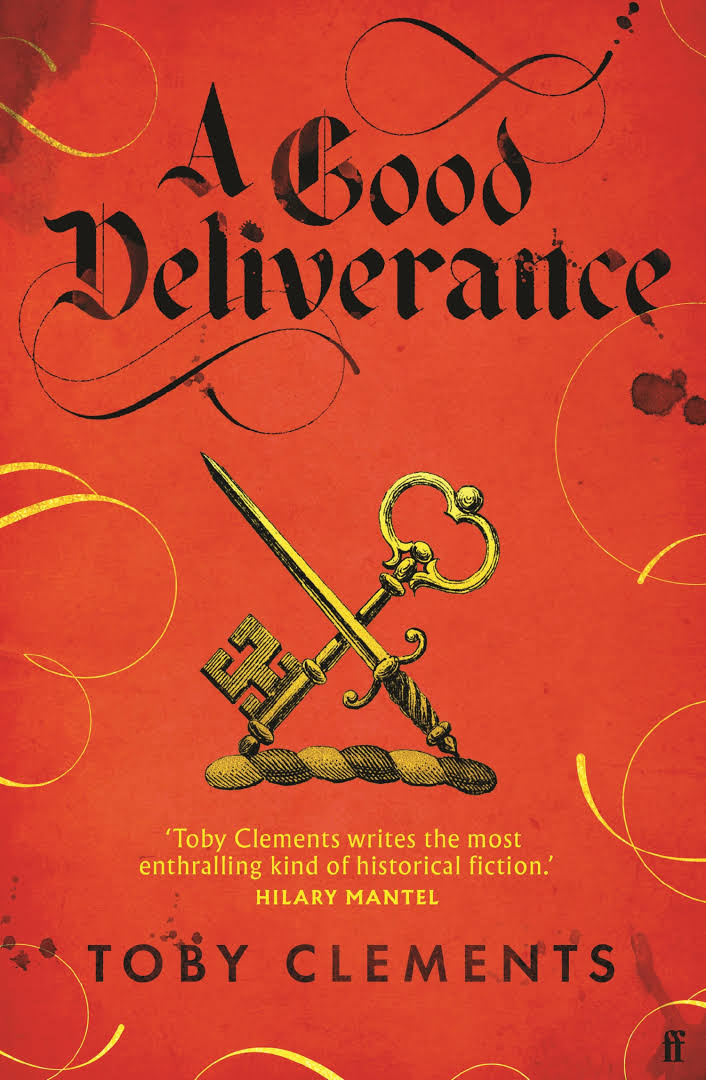 The world of King Arthur and his Knights of the Round Table is filled with stories of adventures and romance. Many authors have tried to tell these tales in a way that will allow their books to live for centuries, but none were more successful than Sir Thomas Malory and his book Le Morte Darthur. King Arthur, Lady Guinevere, Sir Lancelot, Merlin, and Sir Gawain embark on numerous adventures including the Lady of the Lake, Camelot, the sword Excalibur, and the Quest for the Holy Grail. These tales were the epitome of chivalry and valiant knights in shining armor, but the author behind them was anything but perfect. Sir Thomas Malory has had his fair share of time in a prison cell. Who was Sir Thomas Malory and why did his book about King Arthur and the Knights of the Round Table still resonate with readers centuries after it was written? In his latest novel, “A Good Deliverance,” Toby Clements hopes to reveal the truth of this famous author whose story has been overshadowed by the myths he wrote down in his legendary tome.
 Treason is the crime of betraying one’s country or monarch by trying to overthrow the government or kill a sovereign. While many English dynasties dealt with treason in their ways, the most infamous were the Tudors and how they dealt with the nobility. By the end of 1572, there were no more dukes in England, until 1623 when George Villiers became the Duke of Buckingham. What was classified as treason during the Tudor dynasty and why did the members of the nobility have to die? Helene Harrison hopes to answer these questions in her latest book, “Tudor Executions: From Nobility to the Block.”
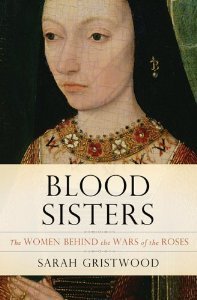 When it comes to studying wars from the past, we often focus on the men who fought during the battles the strategies that were implemented to win and the plans that backfired spectacularly. So frequently in the study of wars, we forget about the women left behind, but in fact, they had bigger roles to play than sitting on the sidelines. For example, the royal women who lived in England during the conflict known as the Wars of the Roses played an essential role in how the wars concluded. These women are slowly coming into the spotlight in biographies and historical fiction novels, but it is rare to read a book about the Wars of the Roses where the central figures are the women, until now. Sarah Gristwood has taken seven women from this age and weaved their stories into her book, “Blood Sisters: The Women Behind the Wars of the Roses.”
 The world of the 16th century was full of change and equally colorful characters. Most of the dynamic figures of this century were women, who were willing to fight in their ways for what they believed in, whether it was family, faith, or their country. They were heroines in different ways, and each had a story to tell. Each woman had to deal with her obstacles to reach their desired goal, no matter what her station was, from queens and great heiresses to nuns, and even a pirate. Sharon Bennett Connolly has decided to include a handful of these stories in her latest book, “Heroines of the Tudor World.”
 Those born of royal blood are either blessed by being able to sit on the throne or cursed to be under intense scrutiny for fears of treason. That is the case for the Grey sisters. Jane, Katherine, and Mary were the daughters of Henry and Frances Grey and the granddaughters of Mary and Charles Brandon. Their bloodline made them cousins to Mary I and Elizabeth I, which meant they threatened the two queens, especially when Edward VI named Lady Jane Grey his heir. After Mary I executes Jane and their father Henry for treason, the remaining Grey sisters, Katherine and Mary, must survive the treacherous Tudor court or end up like their sister. Can Katherine and Mary survive in a court where their royal blood leaves a target on their backs? Elizabeth Fremantle tells the tale of the lesser-known Grey sisters in her novel, “Sisters of Treason.”
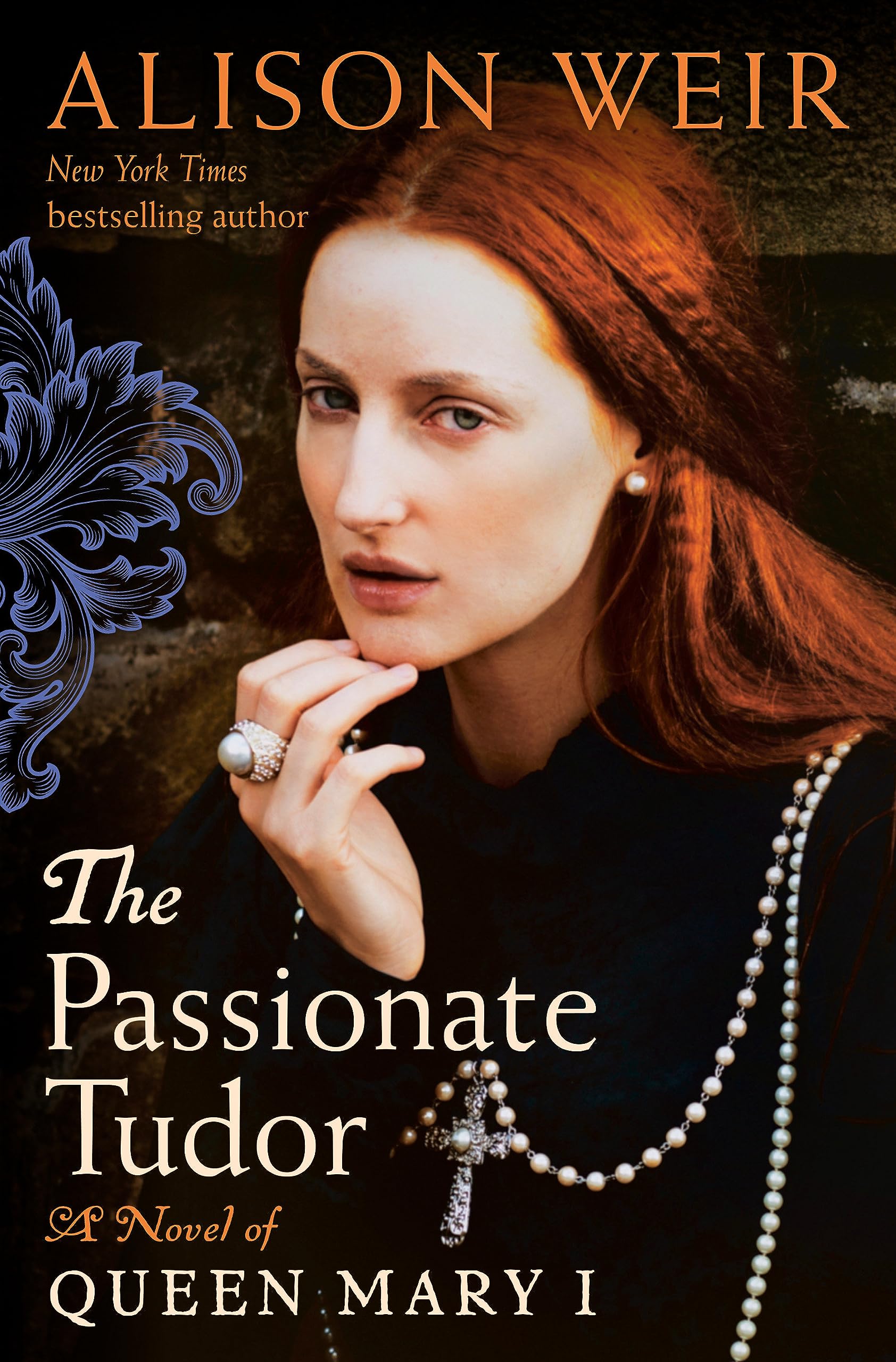 A king’s eldest child is usually the next in line to inherit the throne and become the next ruler. At least that is how the line of succession is supposed to work if the heir is male. Mary I knew this better than anyone. As the eldest daughter of King Henry VIII, she knew that once her mother Katherine of Aragon had a son, Mary would become a pawn in the marriage game. She was willing to accept this fate until her father fell in love with Anne Boleyn. Mary is declared a bastard and must fight for her inheritance and the crown of England while maintaining her Catholic faith. Alison Weir tells the tale of this remarkable woman, from her tumultuous childhood to her short reign that marked her legacy, in her latest novel, “The Passionate Tudor: A Novel of Queen Mary I.”
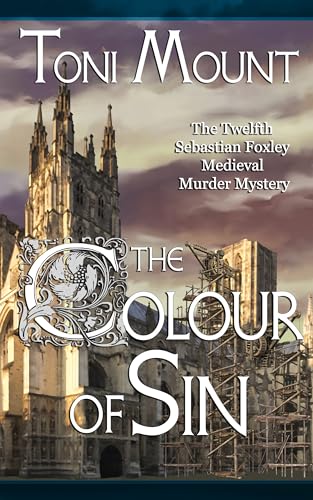 The year is 1480 and King Edward IV sits firmly on the throne, yet the Lancasterian threat lurks in the shadow. Things have taken a drastic turn for Sebastian Foxley’s workshop and his family. It has been months since a fire destroyed the Foxley home and workshop, which also left his brother Jude injured. Seb has decided now would be the perfect time to go on a pilgrimage to Canterbury to pray at the shrine of St Thomas Becket. The pilgrimage had its perils on paper before even setting out on the road. What terrors await Seb and his monty crew of pilgrims and can they survive the trip? Toni Mount’s twelfth Sebastian Foxley Medieval Murder, “The Colour of Sin,” takes our hero on a journey beyond the streets of his beloved London into a wider world full of intrigue.
 The Woodvilles were a family synonymous with the Wars of the Roses and the rise of King Edward IV. Some of the more notable names from this family include Jacquetta Woodville, the family’s matriarch, and Elizabeth Woodville, the controversial choice for King Edward IV’s wife. However, it was not just the women of the Woodville family who made a name for themselves. Anthony Woodville, the son of Jacquetta and brother of Elizabeth Woodville, would become famous for his unexpected execution at Pontefract Castle. Still, there was so much more to his story than his death. Who was Anthony Woodville and what is his legacy? Danielle Burton hopes to answer these questions and more in her debut biography, “Anthony Woodville: Sophisticate or Schemer?”
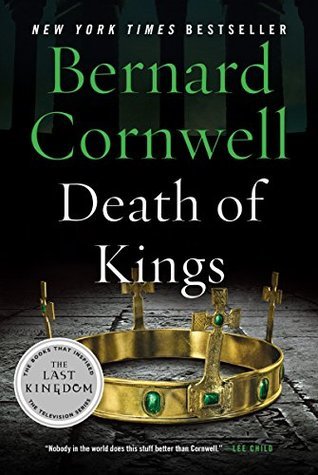 The ninth century is coming to a close and England is at a major crossroads. King Alfred the Great is dying and England being unified is still a long-term goal. The only hope for a united England lies in the hands of his son and successor Edward. However, the road to the throne will be challenging as other Saxons and Viking warriors desire the throne. Only one man can help the young king, but which side will Uhtred of Bebbanburg choose? The fight for England’s future continues in book six of the Saxon Stories, “Death of Kings” by Bernard Cornwell.
 Adventures of a Tudor Nerd