
 The royal dynasties of English history are some of the most popular in European history. We have the Normans, the Angevins, the Plantagenets, who occupied the throne for 300 years, the Scottish Stuarts who saw religious change and political upheaval, the haughty Hanovers, and the current Windsor dynasty. However, one dynasty that has captured the imagination of history nerds for centuries has been the tumultuous Tudors. In book two of Peter Ackroyd’s “The History of England: Tudors,” he explores the stories that made the Tudor dynasty so infamous.
I saw this book at a used bookstore and picked it up. I just read the previous book in this series, “Foundation” and wanted to see how Ackroyd would tackle the tricky Tudors.
Ackroyd, unfortunately, does not start with the patriarch of the Tudor dynasty, Henry VII, instead, he starts with his infamous second son, Henry VIII, and his coronation. Ackroyd did include a bit of information about Henry VII’s reign in his previous volume, but I think it would have made much more sense to have included his story in this book to show the dynasty from beginning to end. When it comes to the reign of Henry VIII, his martial affairs take a backseat to the more religious and political aspects of his reign. The theme of religious changes goes throughout this book as Ackroyd explores the reigns of Edward VI, Mary I, and Elizabeth I, the children of Henry VIII.
While I did find some of the facts in this book informative, I did have issues with this book. When it comes to the characterization of the women in this book, especially Mary I, it felt like a repetition of some of the old tropes (like Bloody Mary). There were also stories and dialogue that Ackroyd had included that felt similar to historical fiction rather than historical facts, which was a bit distracting, especially for a chronicle.
Overall, I felt like this book was just okay, but quite a bit of the information presented in this book could be disproven with the latest research about the Tudors (of course this book is over 10 years old). I think this is a fine introductory book to the Tudor dynasty and the religious changes that happened during the 16th century in England. If this sounds intriguing to you or if you have read “Foundation,” “The History of England Vol. II: Tudors” by Peter Ackroyd might be something you would be interested in reading.
 Civil wars, clashes between cousins, are known to be full of battles between men on foot and horseback, with their eyes set on the throne of their desired country. Many stories of civil wars tend to leave out the women who often were left on the sidelines, ready to pick up the pieces. The story of the Anarchy is a bit different than other civil wars as one of the main figures was not a man, but Empress Matilda, the daughter of King Henry I and the rightful heiress of England facing off against the man who stole the throne from her, her cousin, King Stephen. However, it was not just Empress Matilda who defined what it meant to be a woman during the Anarchy. In her latest book, “Women of the Anarchy,” Sharon Bennett Connolly tells the stories of the mothers, sisters, and wives who defined this turbulent period that saw the end of one dynasty and the beginning of another.
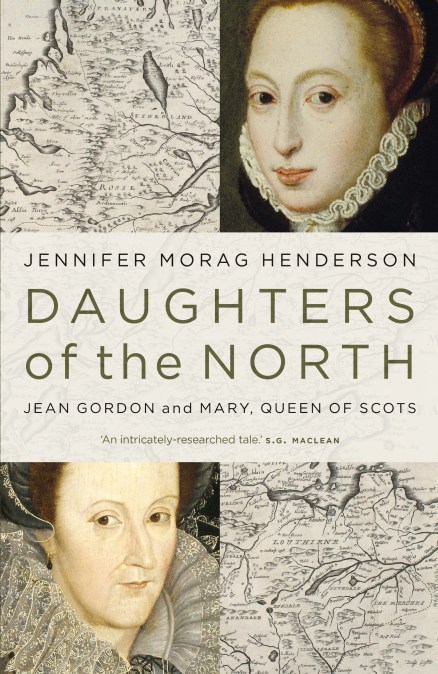 In the late 16th/ early 17th centuries, Scotland was chaotic and full of dynamic characters near or on the throne. People like Mary of Guise, Mary Queen of Scots, Lord Darnley, Earl of Bothwell, the four Maries, and James VI/I show how turbulent the Scottish court was to those around it. However, the stories of those who lived outside the court system and tried their best to maintain control of the country for their monarch tend to fade into obscurity. Take for example the story of Jean Gordon. A noblewoman who was married three times; to James Hepburn, Earl of Bothwell, Alexander Gordon, Earl of Sutherland, and her true love, Alex Ogilive. Jean’s story is full of heartaches, clashing clans, religious squabbles, and loyalty to one’s family, which is told in Jennifer Morag Henderson’s book, “Daughters of the North: Jean Gordon and Mary, Queen of Scots.”
 Castles, the monuments of medieval times, are buildings that hold many tales. Tales of sieges and sorrow, triumphs and tribulations. Through the centuries, their stones and foundations held many secrets. Some of the stories are famous, but most are hidden in the shadows of time and are hidden in ruins. Although castles exist in numerous countries and are centuries old, the castles of medieval England tell a story of a country facing turmoil and changing European and world history forever. Malcolm Hislop, a historian and researcher who specializes in architecture and archaeology, has written a single book exploring every medieval castle and its original architecture entitled, “A Guide to the Medieval Castles of England.”
 Greenwich Palace is a Tudor palace full of glamour, intrigue, and murder. A musician has been found murdered in the chambers of the current wife of King Henry VIII, Anne Boleyn. Only one person can solve this crime while protecting the royal family. No, he is not a knight or a lawyer, but a fool. No, an actual fool or jester of the court of Henry VIII, Will Somers. A man who is loyal to his king Henry VIII, but can he save his second wife from the murderer lurking in the shadows? Jeri Westerson’s Will Somers follows the clues to uncover the truth to protect those who are the most important to him in book two of A King’s Fool Mystery series, “The Twilight Queen.”
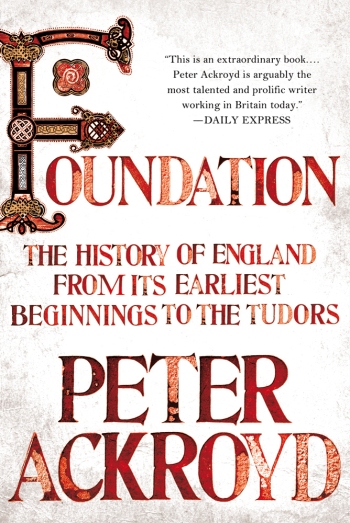 England is a nation that is rich in history and conflicts galore. Through the centuries, England has seen so much change. Many of us know the stories of the medieval and the Tudor kings and queens of England, covered in numerous books, but Peter Ackroyd has taken this concept a step forward. Ackroyd embarked on an epic quest to chronicle the history of England from its prehistoric origins to the modern age. In “Foundation: The History of England From Its Earliest Beginnings to the Tudors,” Peter Ackroyd begins his epic journey into the past to explore the origins of English history.
 A life of luxury from birth, destined to be crowned King or Queen of England. This is what we often think life must have been like for royal heirs who reached the ultimate destination of a crown and a throne. However, the stories of those who failed to reach the throne are mired in tragedy and heartache. The question of royal succession in England is a complex issue, especially when the heir to the throne dies unexpectedly, leaving doubts on whether a dynasty will survive through blood or dissolve in conflict. How did the deaths of these potential rulers radically transform the fabric of English history as a whole and what can their lives tell us about what kind of rulers they might have been? Ashley Mantle hopes to answer all of these questions and more in his latest book, “Uncrowned: Royal Heirs Who Didn’t Take the Throne.”
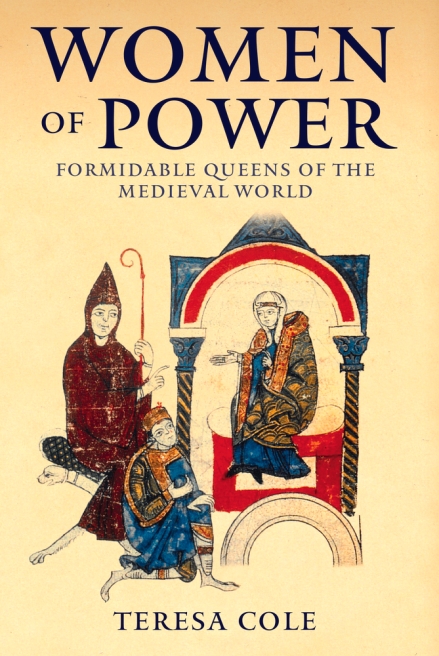 When we think about medieval women, we often think about very pious figures who relied on men, had numerous children, and would often fade into obscurity when they died. While this would be the ultimate fate for many women, it was not so for those close to thrones worldwide. In times of war and political upheaval, the daughters, the wives, and the queens picked up the pieces and patched their respective kingdoms back together. In her latest book, “Women of Power: Formidable Queens of the Medieval World,” Teresa Cole has chosen a select group of women to highlight her point about the strength of women who held power in the Middle Ages.
 When we think of old homes, we often think of the phrase, “If walls could talk,” because the true treasure of any home is not the floorboards or the walls, but rather the stories of those who lived inside its walls. Take, for example, Hampton Court Palace in England. A home for over 500 years that has seen many architectural and artistic changes in its hallowed halls, but it is the stories of those who stayed for brief periods that truly make this palace spectacular. Stories full of salacious scandals, religious implications, and revelations that would shake England to its core through revolutions. Hampton Court Palace has been the center of English court drama for centuries and finally, these tantalizing tales are being told in a truly remarkable book, “The Palace: From the Tudors to the Windsors, 500 Years of British History at Hampton Court” by Gareth Russell.
 The story of the Boleyn family in the 16th century and their ultimate fall from grace has been told for centuries. However, there is a more intriguing tale hidden in the Boleyn family tree. The origins of the family and how they became such a dynamic family that revolutionized the 16th century. How did this family of peasants rise through the ranks to have one of their own become the Queen of England? It is a tale of struggle, survival, and triumph that is told in Claire Martin’s debut book, “Heirs of Ambition: The Making of the Boleyns.”
 Adventures of a Tudor Nerd