
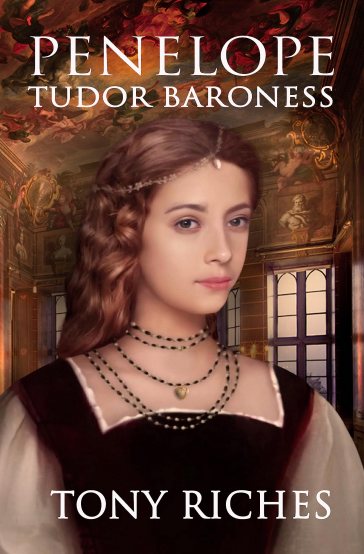
 In a time when marrying for love was taboo, one woman took a stand to follow her heart no matter the consequences. Lady Penelope Devereux, the daughter of Lady Lettice Knollys and the step-daughter of Sir Robert Dudley understands how dangerous it is to defy the wishes of Queen Elizabeth I. Her mother and stepfather were banished from court for choosing to marry secretly, but this did not deter Penelope from pursuing love. A story spanning decades, full of love, intrigue, and plots galore, “Penelope- Tudor Baroness” by Tony Riches tells the tale of this remarkable woman and her family.
I would like to thank Tony Riches for sending me a copy of his latest novel. I have been a fan of Riches’ previous novels, which were written about male protagonists, so when I heard that he was writing a book about a Tudor woman, I was curious. I did not know much about Penelope’s life before this novel and I wanted to learn about her life.
Riches begins his novel with Penelope as a young woman going to work at court as a maid of honor for Queen Elizabeth I. It is a great honor as her parents were Lord Walter and Lady Lettice Devereux. To learn what it meant to be a maid of honor, she and her siblings went to the house of Catherine Hastings, Countess of Huntingdon. It seemed as if Penelope was destined for greatness, but it all came crashing down when her mother Lettice married the queen’s favorite, Sir Robert Dudley. A devastating blow for a young woman who wanted a role in the glittering Tudor court, but it did not deter her for long.
Penelope was a woman known for her beauty as she caught the attention of men like Anthony Bagot before she ever set foot in Elizabeth’s court. Her looks captured the attention of Sir Philip Sidney, who wrote the sonnet Astrophel and Stella in her honor. Sidney had her heart, but she would marry a man she did not love, Lord Rich. She is willing to risk everything for love, including her standing at court and the family she has with Lord Rich, but the man she risked it all for is not Sir Philip Sidney. The man who had Penelope’s heart for over 20 years was Charles Blount.
Penelope saw great change during her lifetime. She saw Elizabeth courting the Duke of Anjou and the attack of the Spanish Armada. She was in the middle of her brother’s failed rebellion against Queen Elizabeth, which was known as the Essex Rebellion. Penelope swore loyalty to King James I as Queen Elizabeth was approaching the end of her life and she was there as a lady of the bedchamber for Queen Anne of Denmark. Towards the end of her life, Lady Penelope Rich saw the impact of the Gunpowder Plot against King James I, her divorce from Lord Rich, and fighting for the rights of her children with Charles Blount.
Riches weaves a delightful tale of love, and loyalty to one’s family even amongst plots for power. Penelope was a strongly independent woman who fought for love and her family, even if that meant becoming enemies with the most powerful people in England. A remarkable woman who left her mark on both the Tudor and Stuart dynasties, Lady Penelope Rich took her life and legacy into her own hands. “Penelope- Tudor Baroness” by Tony Riches is a gorgeous novel that fans of Tudor and Stuart history will adore.
 The Crusades were a series of wars between Christian and Muslim warriors for the right to control the Holy Lands of the Middle East. Many men on both sides earned legacies that would surpass their earthly bodies during bloody battles. It created many bands of knights that would last for generations, such as the Hospitallers and the Teutonic Knights. The Templars were the most famous of these knight groups, who may have lasted only for less than two hundred years, but whose legacy would turn into myth. Dan Jones has taken on the arduous task of discerning fact from fiction about the Templars in his book, “The Templars: The Rise and Fall of God’s Holy Warriors.”
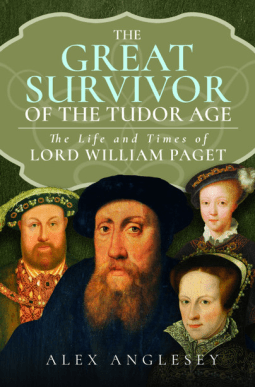 Rulers cannot govern alone. They require a team of men and women behind them to operate as a cohesive unit. The same can be said for rulers during the Tudor dynasty. We know the stories of men like Cardinal Wolsey and Thomas Cromwell, two men who rose through the ranks to prominent seats of power to ultimately have disastrous falls from grace. However, there was a third Tudor politician who should be in this discussion about rags-to-riches stories. He was the son of a common merchant who went to serve most of the Tudor monarchs as an advisor. Conspiracies and rebellions kept him on his toes, but he ultimately survived the Tudor dynasty, which was a difficult thing to achieve. His name was Lord William Paget and his story is told by his descendant Alex Anglesey in his debut book, “The Great Survivor of the Tudor Age: The Life and Times of Lord William Paget.”
 Have you ever watched a historical drama and wondered what it might have been like to wear the outfits for that period? You see so many reenactment groups online and you are envious of their talents for being able to bring clothing from the past, especially clothes from the 16th century, to life in the modern age. What might it have been like to dress like a lord or a lady? What about a commoner or a monk? How did fashion change throughout the Tudor dynasty? Judith Arnopp answers all of these questions and more in her latest book, “How to Dress Like a Tudor.”
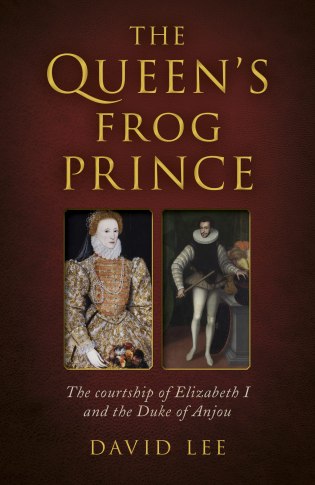 Romances in the Tudor era are legendary for their effects on English, European, and world history. From international matches to domestic love stories, the Tudors had a way of capturing our attention with whom they married. The one Tudor whose relationships caught everyone’s attention just as much as Henry VIII is his daughter with Anne Boleyn, Elizabeth I. The legendary “Virgin Queen” did have some men who caught her eye and some that she even considered marrying. There was Robert Dudley, but the one who may surprise a lot of people is the French prince, Francis Duke of Anjou. So how did this whirlwind romance begin and why did Elizabeth choose to stay single instead of marrying to secure a strong alliance with France? In his latest book, “The Queen’s Frog Prince: The Courtship of Elizabeth I and the Duke of Anjou,” David Lee explores the heart of this long-forgotten international romance.
 In any society throughout history, there are certain rules and regulations which citizens must follow to maintain order. When there is a transfer of power, those rules and their punishments shift a little bit to fit the vision of those who are in power. England was in a chaotic spiral as law and order were thrown asunder during the Wars of the Roses. The rise of the Tudors marked another shift to the justice system of England, with each monarch during this dynasty, the legal system changed yet again. In her book, “Crime and Punishment in Tudor England: From Alchemists to Zealots,” April Taylor examines the crimes of Tudor England and their respective punishments through case studies.
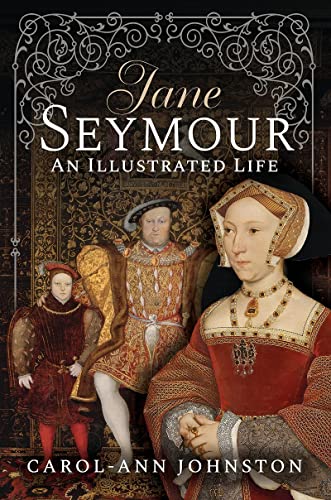 King Henry VIII’s six wives each have their unique story that transcends time. Katherine of Aragon was his first wife, the mother of Mary Tudor, and the one Henry left behind after 24 years to marry his mistress Anne Boleyn, the most famous of his wives and the mother of Elizabeth Tudor. Anna of Cleves had the shortest marriage to Henry VIII and ended up with an excellent annulment deal. Catherine Howard was young and a bit naive when it came to the ways of men, which led to her downfall while Catherine Parr survived until the end of Henry VIII’s reign. These five women are stories we know by heart, but the one whose story remains a mystery is Jane Seymour, Henry’s third wife, and the mother of the future King Edward VI. In her debut book, “Jane Seymour: An Illustrated Life” Carol-Ann Johnston tells the story of the wife who gave Henry his desired son.
 A war between brothers and cousins to determine the future of England is raging, but it is not the same kind of war England saw during medieval times. It is a clash of ideas, religious beliefs, and a fight for the survival of the reigning English king. On one side were the Catholic supporters of King Charles I, known as Cavaliers, and on the other were the Protestant Roundheads who wanted to see the king removed from the throne. Caught in the middle was the home of the Winchesters, known as Basing House, a royalist stronghold, which withstood sieges and bloodshed for two years amid the conflict. Jessie Childs’ latest book, “The Siege of Loyalty House: A Story of the English Civil War,” is dedicated to telling the story of this remarkable house and the men and women who fought to the death to defend it.
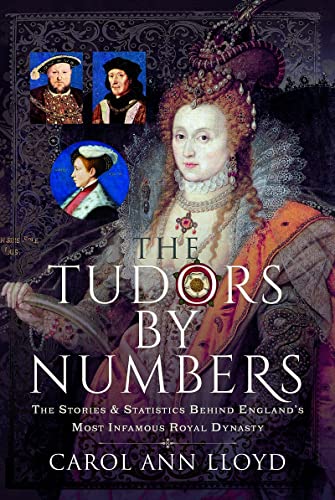 The story of the Tudor dynasty has been told in numerous different ways. We know the major figures, the significant events, and the stories of their love lives. We understand how they changed the history of England and Europe forever, but these are just the basic facts. If we look at the numbers surrounding the dynasty, what type of story does it tell? This is the approach Carol Ann Lloyd has taken in her debut book, “The Tudors by Numbers: The Stories and Statistics Behind England’s Most Infamous Royal Dynasty.”
 When we think about food during the Tudor dynasty, one of the first images that pop into our head is of Charles Laughton, who played King Henry VIII in “The Private Life of Henry VIII” from 1933. He is seen in a popular image online devouring a chicken at a Tudor feast. We assume that the Tudors were indulgent regarding their food, not caring about what they put in their bodies and their benefits. However, the recipes from this period, from the beginning of King Henry VII’s reign to the death of Queen Elizabeth I, tell a different story. In her debut nonfiction book, “Eating with the Tudors: Food and Recipes,” Brigitte Webster shows how the political and religious changes during the Tudor dynasty affected how those living in England ate every day.
 Adventures of a Tudor Nerd