
 Two independent women separated by time but united over two compelling portraits and the secrets hidden behind the paint. Mira (Miramonde) is a nun from a Renaissance convent in the Pyrenees who believes she is an orphan who wants to escape her small community and explore the world. Five hundred years later, Zari, an art scholar, begins the journey to discover who Mira is by using the clues she left behind in her works of art that will take her on a journey that will change her life forever. These two tales are woven together in the first book of the Miramonde series, “The Girl From Oto” by Amy Maroney.
I have seen this novel on social media, and it was an intriguing premise. I always look for books that present a fresh new look into the 16th century.
Our story begins with the birth of twins to Marguerite, the baroness of Oto, a boy and a girl. Unfortunately, in the house of Oto, daughters are not allowed to live, so Marguerite gives her daughter named, Miramonde, or Mira for short, to Elena, a mountain woman. Elena decides to make the journey to Belarac Abbey under the supervision of the Abbess Beatrice of Belarac. They make a plan that Mira will never know the truth about who she is and will be raised in the abbey until she is old enough to choose her path, which is her mother’s desire.
Jumping 500 years into the future, we meet Zari Durrell, a young art scholar on the hunt for paintings by a female Renaissance artist, Cornelia van der Zee, the topic of her dissertation. Her topic is well known, but while examining a portrait she believes was painted by Cornelia van der Zee, she discovers that the painting was painted by another artist named Mira. Zari’s journey to discover who Mira is will take her all over Europe as she follows the clues to the truth.
There is just something about a good history mystery mixed with a dual-timeline story that is so much fun to read. Maroney has done extensive research, not just for Mira’s story in the world of the Pyrenees, the wool trade, and life in a convent, but Zari’s adventures in academia and her journey along the Camino de Santiago.
Maroney created a colorful cast of characters, from the Renaissance to the modern day, that will grip the readers with the mysteries they must uncover. I cannot wait to see what other adventures Mira and Zari will go on. If you want a delightfully engaging and thrilling dual-timeline novel about 16th-century Spain, I highly recommend reading “The Girl From Oto” by Amy Maroney.
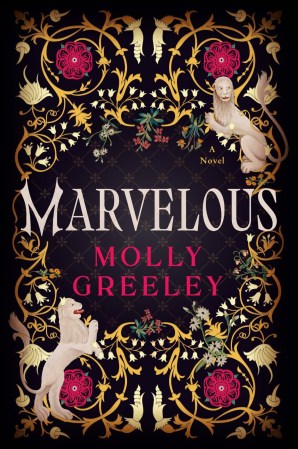 The tale is as old as time, of beauty and the beast. We know the story from either Disney or retellings. A peasant girl finds herself locked in a castle with a prince who is transformed into a hideous beast. He can only change back into a human if he can learn to love another person. Like many fairy tales, we often ask ourselves whether this story can be based on historical facts. Molly Greeley believes that Beauty and the Beast’s origins could be found in the true story of Pedro and Catherine Gonzales, who lived in the court of Catherine de Medici. She has chosen to tell their love story in her latest novel, “Marvelous.”
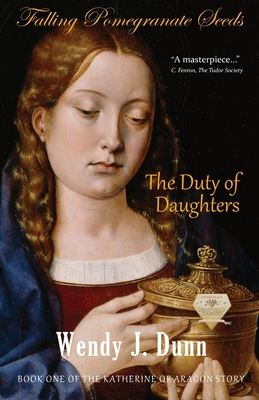 A young Spanish princess sits with her close friend, sisters, and brother as their beloved tutor, Dona Beatriz Galindo, tells them a story. As the children of Ferdinand of Aragon and Isabel of Castile, they must marry and create alliances to strengthen their kingdoms, while Beatriz must ensure they are ready for the challenge. Childhood ends rather quickly with a holy war against the Moors, the expulsion of the Jews from the kingdom, and death around every corner. In her novel, “Falling Pomegranate Seeds: The Duty of Daughters,” Wendy Dunn transports readers into a world of hope and sorrow, life and death.
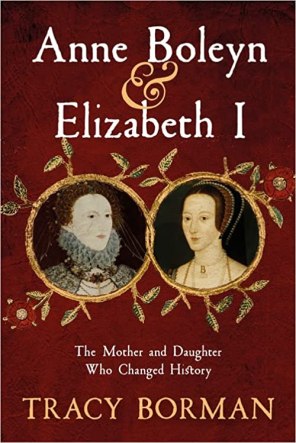 The year is 1536. A young woman climbs the scaffold for her execution while her three-year-old daughter is miles away, not knowing what will happen to her mother. Never speaking about her mother in public for decades, it would seem that the bond between mother and daughter broke that fateful day. Still, Elizabeth I kept the memory of her influential mother, Anne Boleyn, close to her heart. How did Anne prepare her beloved daughter for the complex nature of the Tudor court, and how did Elizabeth keep the memory of her mother alive? This bond is explored in depth in Tracy Borman’s latest book, “Anne Boleyn & Elizabeth I: The Mother and Daughter Who Changed History.”
 One of the most critical years in English history was 1066, when William Duke of Normandy invaded England in the Norman Conquest. Known as William the Conqueror, his strength and ruthlessness made him a legend, but William would not have been the Duke or King of England without his equally formidable wife. Matilda of Flanders stood her ground, became the Duchess of Normandy, had a large family with William, and would become the first crowned Queen of England. Although much has been written about William the Conqueror and the Norman Conquest, Matilda of Flanders has not received the same attention until now. Tracy Borman has written the first biography dedicated to this remarkable woman entitled, “Matilda: Wife of the Conqueror, First Queen of England.”
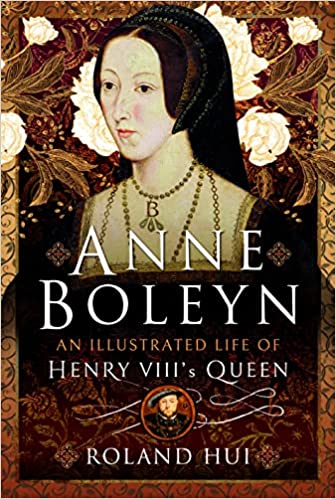 The wives of King Henry VIII have been discussed for centuries in length through novels and nonfiction books. Katherine of Aragon, Jane Seymour, Anna of Cleves, Catherine Howard, and Catherine Parr are all very popular queens, but there is one that you have all been waiting for, the most famous Tudor queen, Anne Boleyn. Her story has been told so many different ways by historians and historical fiction authors for centuries, and now it is time for another historian to write their spin on her story. In his latest book, “Anne Boleyn, An Illustrated Life of Henry VIII’s Queen,” Roland Hui paints a picture of the tumultuous life, love life, and death of Anne Boleyn.
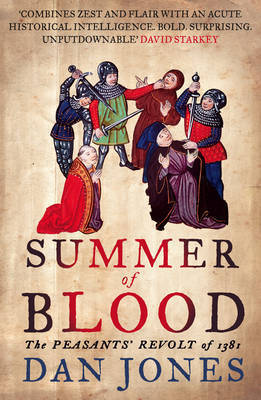 The year was 1381, and England was engulfed in chaos. A band of ruffians and revolters descended on London to achieve political change and a fair chance for the lower classes who suffered greatly from war and plague. The young King Richard II watched as men like Wat Tyler and the preacher John Ball led this ragtag army to his doorstep, fighting against his advisors, like John of Gaunt, to end a poll tax that was their last straw. Why did this ragtag army march on London? How did men like Ball and Tyler convince the masses to march against their sovereign and his government? How did this revolt end, and did the people get what they wanted due to their revolution? Dan Jones brings the bloody story of the first significant revolution by the English people to life in his book, “Summer of Blood: The Peasants’ Revolt of 1381.”
 Two kings, two rivals from different countries defined the 16th century. One was the spare to his father’s crown, but when his eldest brother suddenly passed away, he became the next Tudor king. The other was the sole heir to his parent’s large kingdom and would become the Holy Roman Emperor. Wars, the Reformation, and family drama kept these two men, Henry VIII and Charles V, busy and at each other’s throats. They would sometimes join and fight for one another’s causes, showing the importance of international politics. With each new scenario, their relationship would shift, either for the best or the worst. Richard Heath has combined the stories of these two monarchs, these “frenemies,” into one joint biography, “Henry VIII and Charles V: Rival Monarchs, Uneasy Allies.”
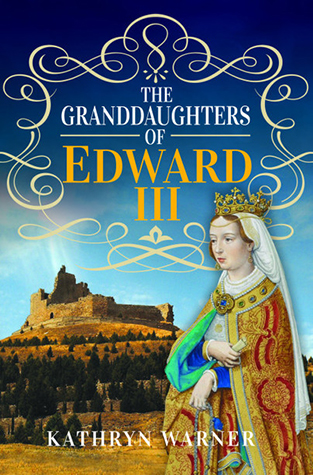 When we think about the legacy of Edward III, we often think about a warrior king who became king after his father, Edward II’s disastrous fall from grace. We know about his sons that he had with his beloved wife, Philippa of Hainault: Edward the Black Prince, Lionel of Antwerp, Duke of Clarence, John of Gaunt 1st Duke of Lancaster, Edmund of Langley, 1st Duke of York, and Thomas of Woodstock, Duke of Gloucester. Famously, we get the 15th-century conflict known as the Wars of the Roses through the descendants of Edward III. However, the male descendants only tell half the story of Edward III and Philippa of Hainault’s legacy in England and throughout Europe. In her latest book, “The Granddaughters of Edward III,” Kathryn Warner examines the lives of Edward III’s female descendants to better appreciate the strength of this group of branches of the Plantagenet family tree.
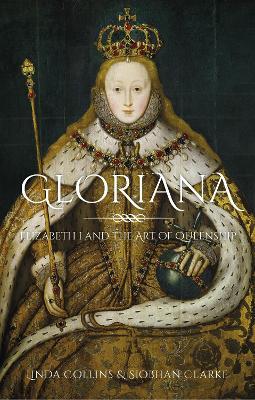 A queen locked in a struggle of being a single woman and the sole ruler of her kingdom must create the image that would help lead her divided country to a golden age. This image must comfort her people while showing strength and perseverance to her enemies who would try to take the throne from her. Elizabeth I worked hard with artists, poets, playwrights, and musicians to create the almost mythological image of “Gloriana,” the virgin goddess. Linda Collins and Siobhan Clarke explore how this image was created throughout Elizabeth’s reign in their latest book, “Gloriana: Elizabeth I and the Art of Queenship.”
 Adventures of a Tudor Nerd