
 Have you ever read a history book and wondered what life was really like for those who lived in the past? To understand a time period and the motives of the people of the past, we have to understand the structure of their society. How they understood things like class, sex, violence, government, and religion is essential for us to understand what separates us from our ancestors. What they ate, what they wore, and where they slept also give a unique insight into the time period. It can be a difficult undertaking to figure out all of the different aspects of the past connect and to present it cohesively, yet acclaimed historian Ian Mortimer has embraced this challenge head-on to tackle one of the most complex periods of the past; the Elizabethan era. His love letter to the Elizabethan age entitled, “The Time Traveler’s Guide to Elizabethan England” is a delightfully imaginative guide to the past.
There have been numerous books about the lifestyles of past eras, but what separates those books from the one that Ian Mortimer has written is his writing style and the imaginative descriptions that he included. Many writers give you the facts without the fluff. Mortimer has written this book as if you have stepped back in time and you are seeing the Elizabethan age with your own eyes. It is a treat for all of the senses. To engage the reader in such a way is not an easy feat, but Mortimer does it seamlessly.
I think we all have a vague idea of what the reign of Elizabeth I might have been like. After all, it was known as the “Golden Age”, so it must have been a time of opportunity and great providence for the people, no matter their social standing. Or maybe not. As Mortimer explains, this “Golden Age” was a varnish for a reign that was filled with its own set of trials and tribulations, very similar to what we experience today. Sure, the problems are different, but we can relate to the people of the past because they are human problems. We all deal with things like diseases, where we live, what we eat, what to wear, religion, entertainment, and education. Yet what makes each era unique is how we address these issues.
To see the Elizabethan era, which was on the precipice of the early modern age, in the midst of great progress was a joy. Obviously, this would not have been a time that modern readers would like to have stayed for an extended visit, but it was simply a fantastic guide for those who dream of the past.
I don’t usually share quotes from books in my reviews, but there was something that Mortimer said at the very end of this book that was too poignant not to share.
“History is not really about the past; it is about understanding mankind over time. Within that simple, linear story of change and survival, there are a thousand contrasts, and within each of those contrasts there is a range of experiences, and if we put our minds to it, we can relate to each one. “(pg. 325)
I picked up this particular book on a whim and I am truly glad I did. It gave me a deeper understanding of the Elizabethan age and what it meant to be Elizabethan. Although we are separated from these people by centuries, their experiences and ours are similar. We are all humans trying to get by each day the best we can. If you have ever wanted to know what the past was really like for those in the Elizabethan era, either for your own personal enjoyment or for research, I highly recommend you add, “The Time Traveler’s Guide to Elizabethan England” by Ian Mortimer to your own personal collection.
 In 1483, King Edward IV’s family received a devastating announcement; the king in the prime of his life died, leaving the throne to his young son Edward V. However, neither Edward V nor his younger brother Richard of York would ever see the throne. Instead, they were taken to the Tower of London by their protector, Richard of Gloucester, for protection, never to be seen again. For over five hundred years, many theories have emerged about what happened to the princes in the tower and who might have possibly killed the boys. In MJ Trow’s latest book, “The Killer of the Princes in the Tower: A New Suspect Revealed”, he works hard to uncover the truth of what might have happened to the sons of King Edward IV.
 The year is 1399 in Paris and the royal family is concerned about the Priory in Poissy. Something has happened behind the cloistered walls and only one person who is extremely loyal to the king and queen can figure out what is amiss, Christine de Pizan the famous medieval writer. Christine goes to Poissy to act as a copyist for the prioress, but she soon finds herself in the middle of a sinister murder case. A nun has been found dead and it is up to Christine and her allies, plus one frenemy, to figure out who killed the nun while protecting the king’s youngest daughter who calls the priory home. Can Christine figure out who murdered the young nun and make it out of the priory alive? This is the premise of Tania Bayard’s latest installment of her Christine de Pizan murder mystery series, “Murder in the Cloister”.
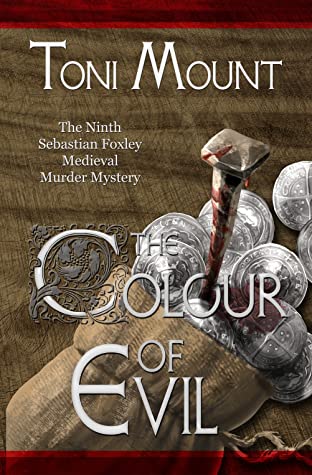 Money problems litter the streets of London like debris. Those who have money have power. Yet, there are those who try to beat the system by making their own counterfeit currency to beat the system. When this counterfeit currency leaves to murder, only Seb Foxley and his merry band of friends and family members can bring justice to those who were killed. When unexpected complications arise, like Seb’s wayward brother Jude coming home with an Italian child bride and a commission from King Edward IV himself, can Seb solve the case before anyone else becomes the next victim in this vicious cycle of greed and exploitation? Toni Mount takes her readers on another thrilling adventure in, “The Colour of Evil”, the ninth installment of the Sebastian Foxley Medieval Murder Mystery series.
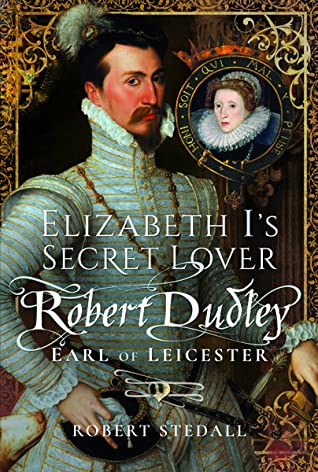 The last Tudor monarch, Queen Elizabeth I, was known for many things, but her main legacy is that she never chose to marry anyone. She was the infamous “Virgin Queen”. However, there were those around her who manage to capture her attention and her admiration for a time. The most famous of these men was Robert Dudley, Earl of Leicester. He was a massive supporter of the arts and the Protestant faith, gaining prestige and praise from his highly exalted monarch. Yet, his life and his relationship with his wives, his enemies, and Elizabeth I was full of dangers and numerous scandals. Who was this man who wooed the heart of the most eligible woman in all of 16th century Europe? Robert Stedall investigates the relationship between these two lovers destined to never marry each other in, “Elizabeth I’s Secret Lover: Robert Dudley, Earl of Leicester”.
 August 22, 1485, marked the end of the Plantagenet Dynasty with the death of King Richard III at the Battle of Bosworth Field. The man who succeeded him as King of England after his death was young Henry Tudor, whose dynasty would live in infamy in English history, thought that he was done fighting on the battlefield for his right to rule. This was only the beginning of a decades-long war against those who claimed to be lingering shadows of the past. They claimed to be the Princes in the Tower, whose disappearances in 1483 left to doubt and confusion on what happened to them and gave those who despised this new dynasty opportunity to exploit a young king’s fear of being overthrown. The young men who made this king who won his way to the throne on a battlefield quake in his boots are known today as “the Pretenders”, but who were they? In Nathen Amin’s much-anticipated book, “Henry VII and the Tudor Pretenders: Simnel, Warbeck, and Warwick”, he traces the origins of each pretender to show what type of threat that they posed to the first Tudor king.
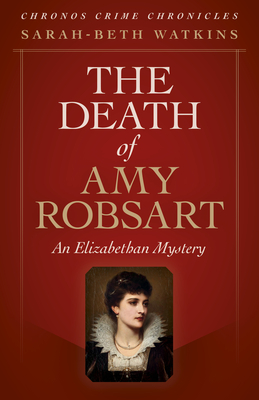 On September 8, 1560, a woman was found dead at the bottom of a flight of stairs inside Cumnor Place. The only visible marks on her body were two wounds on the side of her head, yet her neck was clearly broken. If she was an ordinary woman, her death would not have been remembered through the centuries, yet she was no ordinary woman. She was the wife of Robert Dudley, the man who was considered as one of Queen Elizabeth I’s favorite courtiers. Amy Robsart was a third wheel in the relationship between her husband and the queen, but does that mean that she was murdered? In her latest book, “Chronos Crime Chronicles- The Death of Amy Robsart: An Elizabethan Mystery”, Sarah-Beth Watkins plays detective to uncover the cause of death and the possible motive for those who wanted to see Amy dead.
 “Uneasy lies the head that wears the crown.” This famous quote from William Shakespeare’s play Henry IV, Part III has been used throughout the centuries to describe how difficult it is to rule a country for any duration of time. Most kings and queens of the past lasted for a few years, but there was one queen who lasted for a handful of days. She was the successor of Henry VIII’s only male son, King Edward VI, and was meant to replace his eldest half-sister, who would become Queen Mary I. It was a battle between Protestantism and Catholicism with a 17-year-old scholar caught in the middle. Her name was Lady Jane Grey, but many refer to her as the “Nine Day Queen of England”. Lady Jane Grey’s tragically short story, how she became queen, and the consequences of her reign are discussed thoroughly in Nicola Tallis’ beautifully written debut biography, “Crown of Blood: The Deadly Inheritance of Lady Jane Grey”.
 Action, adventure, drama, heartache, and love are what people crave when they read fictional stories. Yet, these elements are ever-present in the stories from the past. Each one of these topics could be explored in numerous ways when we are discussing history, but an area in history where romance and love were intermingled with politics was Elizabethan England. Queen Elizabeth I was obviously known as the “Virgin Queen” because she chose not to marry, but that did not mean that her subjects were banned from love and marriage. How did Elizabethans view the ideas of love, marriage, and sex? In this book, “Sex, Love, and Marriage in the Elizabethan Age”, R.E. Pritchard sets out to explore what love, marriage, and the intimate moments meant to Elizabethans of every class.
 Divorced, beheaded, died. Divorced, beheaded, survived. For those who study Tudor history, we have heard this unimaginative rhyme to refer to the wives of Henry VIII for the longest time. We all know the stories of the queens, especially Anne Boleyn, but the fifth wife and the second one to be beheaded tend to be cast aside for some of the more intriguing tales. Her name was Catherine Howard, Henry’s youngest bride. Her story is full of rumors and myths, just like her cousin Anne Boleyn. Most know of her romantic dalliances that, in the end, led to her demise, but what was her reign like as queen? What was the court of Henry VIII like during his fifth marriage as his health was failing? In Gareth Russell’s brilliant biography, “Young and Damned and Fair: The Life and Tragedy of Catherine Howard at the Court of Henry VIII”, he dives deep into the archives to shine a light on the life of this tragic and young queen.
 Adventures of a Tudor Nerd