
 The year 1483 proved to be a pinnacle point of change for the short-lived Yorkist dynasty. After finally defeating the Lancastrian army, King Edward IV and his family bring peace and order to England, but even their happiness cannot last as King Edward IV dies unexpectedly on April 9, 1483. A power struggle ensues between Richard Duke of Gloucester and Elizabeth Woodville over who should be King of England. Most of Elizabeth Woodville’s children side with her, but there is one child who is staunchly loyal to the Yorkist cause and her uncle Richard; Cecily of York. In her latest novel, “Princess of Thorns”, Saga Hillbom tells the heartbreaking tale of Cecily of York showing how deep her loyalty to her family was and how loyalty came with a cost.
I would like to thank Saga Hillbom for sending me a copy of her latest novel. This is the first novel by Saga Hillbom that I have read. When I heard that this novel was going to be about Cecily of York, I was intrigued since I have never read any novels where Cecily was the protagonist.
As the third daughter of King Edward IV and Elizabeth Woodville, Cecily of York can be the vivacious white rose of York, without the pressures that her brothers and her eldest sister have on their shoulders of one-day ruling a country. She can observe life at court while waiting for the day when she is married to a nobleman who shares her Yorkist views. However, that wish she has for her life comes crashing down when her father dies and her brothers, known in history as the Princes in the Tower, go missing. Cecily’s beloved uncle Richard becomes King Richard III, which causes Cecily’s mother Elizabeth Woodville to side with her once mortal enemy, Margaret Beaufort, and her son Henry Tudor.
After the Battle of Bosworth Field and Henry Tudor becomes King Henry VII, the remnants of the Yorkist cause slowly accept the Tudor dynasty. All except Cecily, who believes that Henry VII is a false king. We see Cecily go from a spoiled Yorkist princess to a woman who will fight for what she believes in and will never back down from an argument, even if she is arguing with the King of England himself. Along the way, she does marry and have her children, but even in her happiest moments, Cecily experiences tragic losses that will shape her future.
I usually don’t read many novels that side with the Yorkists, but this book was different. There was something about Cecily’s story that I found compelling. Her love and her loyalty to her family was her sword and shield as she waged war with life. Hillbom does repeat some of the old myths about the people that are central to this novel. I also wish Hillbom gave her readers more detailed descriptions of locations to give us a fully immersive experience.
I think this was a fine novel about the life of Cecily of York. Hillbom’s creative writing style allows the audience, whether Yorkist or Lancastrian in beliefs, to feel sympathy for Cecily and her life. This was an engaging and heartbreaking look at how the end of the Wars of the Roses was not the brilliant introduction of a period of peace that the Tudors often portrayed. There were still those who dealt with the pain of the end of a dynasty. If you are interested in a novel that focuses on one of the Yorkist princesses who does not get a lot of attention, Cecily of York, check out “Princess of Thorns” by Saga Hillbom.
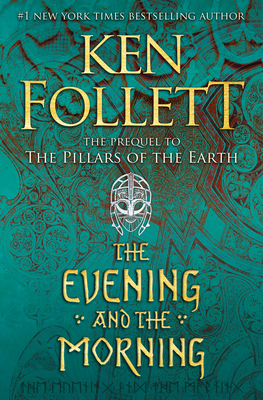 The year is 997 and England is in a dire situation. Fears of invasions from the Welsh and the Vikings leave the Anglo- Saxon residents rattled while those in power take advantage of their citizens. Chaos reigns supreme as those who rule the towns are in constant power struggles between themselves and their king, Ethelred the Unready, with the average villagers caught in the middle, like the villagers of Dreng’s Ferry. It is in this small village where three characters find their lives intertwined with the political and social drama. A young boatbuilder named Edgar endures heartache and sorrow when the Vikings attack his home. A Norman noblewoman named Ragna follows her heart to marry the man she loves and travels to a faraway land but soon finds out how difficult that love can be. Finally, a monk named Aldred works hard for the people while dreaming of transforming his meek abbey into a lively center of learning. Their tales are masterfully woven together in the much-anticipated prequel to the Kingsbridge series by Ken Follett. This is “The Evening and the Morning”.
 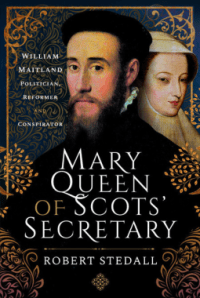 One of the most dynamic queens in 16th century Europe who spent most of her youth in a country that was not her homeland, but was fighting for the right to rule England. Her name was Mary Queen of Scots, the cousin of Queen Elizabeth I. Many know of her tragic tale, but there was a man who was behind the scenes trying to guide Scotland to a brighter future. He was not married to Mary Queen of Scots, but he was influential in her life and choosing who she might marry and who she would end up divorcing. He was a politician and a religious reformer whose decisions would alter history dramatically. His name was William Maitland and he served as Mary’s secretary. He is always mentioned as a footnote in history, until now. Robert Stedall’s latest biography, “Mary Queen of Scots’ Secretary: William Maitland- Politician, Reformer, and Conspirator”, explores the life and legacy of this rather extraordinary secretary.
 One of the most prominent royal families of English history was the Plantagenets, who reigned for over three hundred years. In the first one hundred years of this family’s infamous history, five kings ruled (the first two are considered kings of the Angevin dynasty): Henry II, Richard I, John, Henry III, and Edward I. These five kings saw England change drastically, but they also participated in the international political landscape of the day, which involved the series of wars that today we simply refer to as the Crusades. The early Plantagenet kings saw much bloodshed and war, but they were not alone in their struggle to keep the dynasty going. These men would not have gotten as far as they did without their wives who stood by their sides. In Alison Weir’s latest installment of England’s Medieval Queens series, “Queens of the Crusades”, she takes a deep dive into the lives of the first five Plantagenet queens to show how remarkable these women truly were to stand beside their husbands during the times of the Crusades in Europe.
 The year is 1540 and King Henry VIII has grown tired of his fourth wife from Germany, Anne of Cleves. The aging king longs for another heir to make sure that his dynasty is secure, which means he is searching for his fifth wife. Henry’s wandering eye lands on a young girl who happens to be a cousin of his second wife of Anne Boleyn. The young woman’s name who caught the king’s attention is Katheryn Howard. Henry believes that his new bride is virtuous as well as being very beautiful, but what secrets does this young queen hide? In her latest installment of the Six Tudor Queens series “Katheryn Howard: The Scandalous Queen”, Alison Weir takes a look into the life of this young woman and the men who loved her.
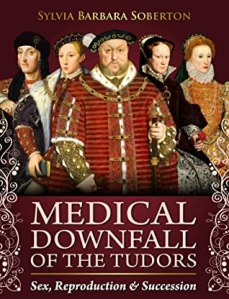 The story of the Tudor dynasty has been told from many different angles. Each monarch has been explored through lenses like social and political history numerous times. However, there is a new approach that is coming into the forefront of historical research and that is the focus on the medical history of the Tudors. Each Tudor monarch, from Henry VII to Elizabeth I, had some sort of bout with illness that would drastically alter the course of their reigns and the future of the dynasty. In Sylvia Barbara Soberton’s latest book, “Medical Downfall of the Tudors: Sex, Reproduction and Succession”, she explores the more intimate aspects of this turbulent dynasty to discover the truth about why they fell.
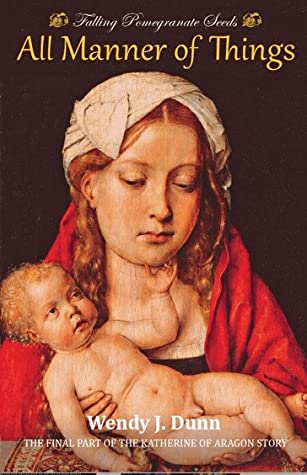 A journey to a foreign land for a long-promised marriage that will unite the royal families of Spain and England. Two friends caught in the middle far away from their beloved Spain. One is Princess Katherine of Aragon, who will marry Prince Arthur. The other is her cousin and close confidant, Maria de Salinas. Their journey like their friendship will last for decades, full of loyalty and love. Katherine’s story has been told many times in different ways, while Maria de Salinas has remained faithfully in the shadows. That is until now. In Wendy J. Dunn’s continuation of her Katherine of Aragon story, “Falling Pomegranate Seeds: All Manner of Things”, Maria de Salinas is the protagonist telling the tragic tale of love and heartache from her perspective.
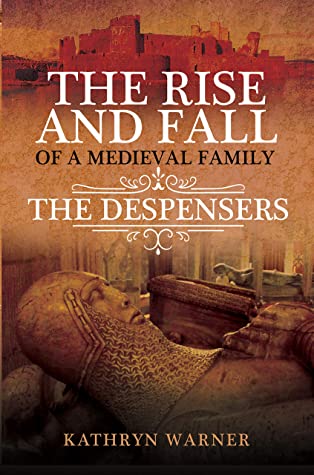 In the times of medieval kings, the power of the crown was dependent on the support that they maintained with noble families. One of the most notorious noble families in England was the baronial family known as the Despensers. Between the 13th and the 15th centuries, the Despensers were at the heart of royal politics and some of the biggest power plays during the reign of the Plantagenets. We know about the few members who truly made waves during this time, especially Hugh Despenser the Elder and Hugh Despenser the Younger, but this family’s story is much more than a few members. In Kathryn Warner’s latest book, “The Rise and Fall of a Medieval Family: The Despensers”, she takes on the challenge of explaining the entire family story of this infamous baron clan.
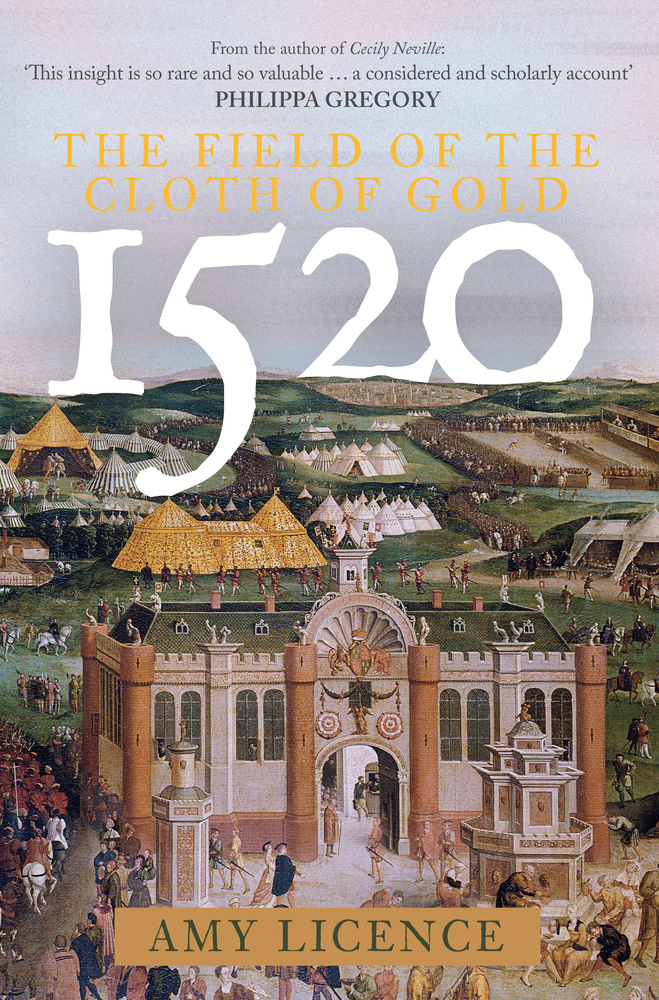 In 1520, two larger than life kings met each other in France for two weeks. This may not sound astounding as many kings left their respected countries to meet other rulers throughout history. It was part of European diplomacy. However, what made this particular period of time extraordinary is the sheer size and the opulence of the event. The King of England, Henry VIII, met the King of France, Francis I, for two weeks of festivities and feasting that we now call The Field of the Cloth of Gold. We often think that this event accomplished nothing because the rivalry between Henry VIII and Francis I continued afterward. Was the purpose of this event to quell the rivalry between the two kings or was there something more behind all the glitz and glam of the Field of the Cloth of Gold? What do the behind the scenes records reveal about this event? Amy Licence explores this event from every angle in her latest book, “1520: The Field of the Cloth of Gold”.
 Adventures of a Tudor Nerd