
 In 1547, young Prince Edward is having the time of his life studying and hoping to one day take part in a tournament. He has not a care in the world. That is until his beloved father King Henry VIII passes away, and the 9-year-old boy is now Edward VI, King of England. He must navigate family drama between his older half-sister Mary Tudor and his uncles, Edward and Thomas Seymour while maintaining order throughout the kingdom. To top it all off, he is trying to reform the entire country and convert Catholics into the Protestant faith. His short life and reign are portrayed in Janet Wertman’s third book in The Seymour Saga, “The Boy King”.
I would like to thank Janet Wertman for sending a copy of her latest novel. I have read the first two novels in this saga, “Jane the Quene” and “The Path to Somerset,” so I knew that I wanted to read “The Boy King”. I have not read many novels that feature Edward VI as the protagonist, so I was intrigued by the concept.
Wertman divides her novel between two separate narrators, Edward, and his half-sister Mary. At first, I did not understand why she included Mary in a novel about Edward, but as the story progressed, it became crystal clear. At the heart of this novel is the struggle between Protestantism and Catholicism in England during Edward’s reign. Mary and Edward may seem like opposites when it comes to the religious spectrum, making them mortal enemies, but the way Wertman portrays them shows that they were concerned about each other’s well being, even if they did not understand each other. Mary acts in a motherly role when it comes to her criticism of Edward’s religious changes.
It was not just the rivalry with Mary that Edward had to deal with; there was also the rivalry between his uncles and the men on his Regency council. Edward and Thomas Seymour’s rivalry is legendary and has been portrayed in history books and historical fiction in many different ways. However, what puts Wertman’s narrative of the brothers’ battle for power apart from others is the way that she shows how Edward might have felt about his uncles and their falls from grace. Another court rivalry happening is between his uncle Edward Seymour, 1st Duke of Somerset, and John Dudley, 1st Duke of Northumberland. Each man fights for the right to be the young king’s Lord Protector, which leads to one of them rebelling and being beheaded for treason. It is this execution that will haunt him for the rest of his life. I find it fascinating that throughout this story, Edward is striving to be like his father, yet he mourns for the mother that he never had a chance to meet, Jane Seymour.
The conclusion to The Seymour Saga is a sheer delight. Wertman has described the rise and the fall of the Seymour family in the Tudor dynasty masterfully. Throughout this novel, you witness Edward growing from a timid boy who has to rely on others to a proud and confident king who knows exactly what he wants for his kingdom. I think that what Wertman has created with her Seymour Saga is a magnificent window into the lives of the Seymour family, and “The Boy King” is the piece de resistance of the entire series. If you have enjoyed The Seymour Saga so far or you want a stand-alone novel about Edward VI, “The Boy King” by Janet Wertman is the perfect novel for you to read.
 The year is 1543 and King Henry VIII is looking for his sixth and final wife; the recent widowed Catherine Parr has caught his eye. It is her reformist values that make her a valuable asset for Archbishop Cranmer and his faction at court, and a target for others. A friend of Matthew Shardlake is viciously murdered, leading to a horrific discovery of a killer is on the loose. On top of that, Shardlake must defend a young man who has been placed in the Bedlam insane asylum for his radical beliefs. It is up to Shardlake and his intrepid assistant Barak, along with the former monk turned physician Guy Malton, to solve both cases before anyone else becomes the next victim. This is the world that readers are plunged to in the next book in C.J. Sansom’s Shardlake series, “Revelation”.
 When we study history, we tend to focus on the lives of the elite and the royalty because their lives are well documented. However, there was a large majority of the population who tends to be forgotten in the annals of the past. They are the lower classes who were the backbone of society for centuries, the people who we would call peasants. Now, if we know so much about the higher echelons of society, we must ask ourselves what was life like for those who had almost nothing in life. How did they work? When they did speak out about injustices through revolutions, how were they received? How did they worship? How were they educated? How did they relax after long days of back-breaking labor? Where did they live? These questions and more are answered in Terry Deary’s latest book, “The Peasants’ Revolting Lives”.
 The year of 1215 marked a turning point in English history with the sealing of a rather unique document; the Charter of Liberties, or as we know it today, the Magna Carta. It was a charter from the people to a king demanding the rights that they believed that they deserved. Those who sealed it were rebel barons who were tired of the way King John was running the country, yet instead of asking for his removal, they wanted reform. The clauses mostly concerned the problems of the men who made the charter, however, three clauses dealt with women specifically. In her latest book, “Ladies of Magna Carta: Women of Influence in Thirteenth Century England”, Sharon Bennett Connolly explores the lives of the women who were directly impacted by this document.
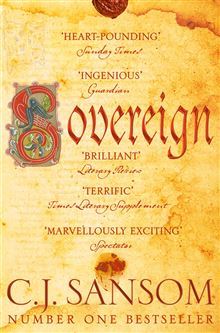 When one thinks about a royal Progress, we often think about the glitz and glam of the royal family traversing the entire country at a leisurely rate to inspire awe for their subjects. However, the Progress of 1541, when Henry VIII and his fifth wife Catherine Howard traveled to the hostile northern part of England, was anything but a casual visit. It was very political as Henry was trying to make the North submit to him after the Pilgrimage of Grace while at the same time he was waiting for a meeting with King James V of Scotland. It is the city of York and during this important Progress that C.J. Sansom shapes his latest adventure with his hunchback lawyer and part-time detective, Matthew Shardlake, in book three of the delightful Shardlake series, “Sovereign”.
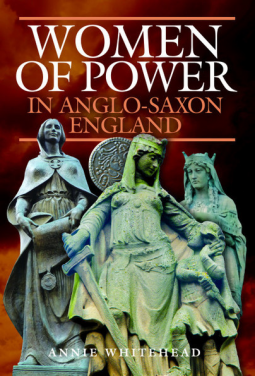 When one studies English history, many people tend to focus on the year 1066 with William the Conqueror and the Norman Conquest as a starting point. However, just like any great civilization, others formed the foundation of English history; they were known as the Anglo-Saxons. What we know about the Anglo-Saxons come from the records of the kings of the different kingdoms of England, which paints a picture of harsh and tumultuous times with power-struggles. However, every strong king and gentleman of the time knew that to succeed, they needed a woman that was equally strong with a bloodline that would make them untouchable. The stories of these women who helped define this era of Anglo-Saxon rulers in England have long been hidden, until now. In her latest book, “Women of Power in Anglo-Saxon England”, Annie Whitehead dives deep into the archives to shed some light on the stories of the formidable women who defined an era.
 The year 1540 during the reign of Henry VIII was a turbulent time. Henry’s new wife, Anne of Cleves, is not exactly the person who he imagined and his eye is starting to wander to a new woman, Katherine Howard. The reformers are starting to lose favor with the king as they and Catholics alike are being executed for treason. This is the London that Matthew Shardlake, our favorite hunchback lawyer turned detective, calls home. He thinks that he has retired from his detective work and serving Thomas Cromwell, but he is sadly mistaken. His next adventure has twice the number of cases and just as much danger that makes his trip to the monastery in “Dissolution” look easy. In the second book of the Shardlake series, “Dark Fire”, C.J. Sansom turns up the heat, the action, and the danger.
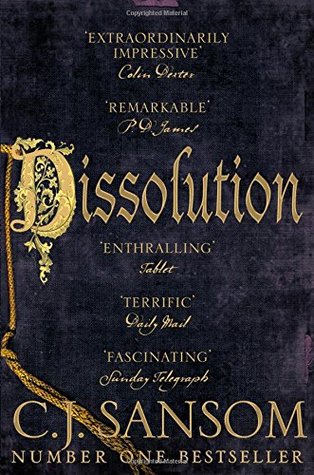 The Tudor dynasty marked tons of changes in society and religious norms. In 1537, the changes are in full force. Anne Boleyn was executed a year earlier and Henry’s third wife, Jane Seymour recently passed away after giving birth to Edward VI. Religious reformers are clashing with the Catholic Church after Henry VIII has declared himself the Supreme Head of the Church of England. Henry VIII’s reign marked the changing point in societal and religious norms, none more so than the dissolution of the monasteries. As monasteries and monks alike adjust to the new ways of life, the monastery at Scarnsea buzzes with activity and murder. Henry VIII’s right-hand man, Thomas Cromwell, sends an unlikely man to investigate the situation; the hunchback reformer lawyer, Matthew Shardlake. This is the world that C.J. Sansom has chosen to create in the first book of his Tudor mystery series, aptly named, “Dissolution”.
 Adventures of a Tudor Nerd