
 There have been certain events in Tudor history that have become as famous as those involved. None more so than the divorce between Henry VIII and Katherine of Aragon so Henry could marry his second wife, Anne Boleyn, also known as “The Great Matter”. We often study this time through the perspectives of the many historians and authors who have written about this topic. But, what if Katherine, Henry, and Anne had a chance to speak for themselves about the events of “The Great Matter”. Thomas Crockett decided to have the main figures of this famous divorce tell their tales in his latest work, “The Great Matter Monologues: Katherine, Henry, Anne”.
I would like to thank John Hunt Publishing for sending me a copy of this book. The premise of this particular play intrigued me so I wanted to read it, even though I haven’t read many plays or monologues before.
Unlike many narratives about “The Great Matter”, Crockett begins with Katherine finding out that Henry wants to divorce Katherine because she has not given her his desired son. It is a bit of a strange starting point since other narratives show the courting of Henry and Anne. Crockett’s monologues deal with Katherine, Henry, and Anne discussing the events that recently happened as well as flashbacks to easier times. As a reader, you can feel the emotional turmoil that each character is going through as the marriage of Henry and Katherine is ending and a new relationship begins.
While I did enjoy the emotional dialogues that Crockett shared to give the audience a sense of what Henry, Katherine, and Anne might have felt during this time, I did have a problem with the other pieces of dialogue. When the characters were remembering past conversations with relatively minor characters, it was hard for me to follow what was going on, but I think it might have been because I was not used to reading monologues.
The characters are each interesting in their own ways. Katherine mourns for her marriage and fights for Henry’s love, her daughter Mary, and for her crown. Henry wants what he wants and he doesn’t care who he steps on in order to get his way. The character that I really did not like in this series of monologues was the woman who was caught in the middle, Anne Boleyn. To me, she comes off as power-hungry and whining. It feels like Crockett did not like Anne Boleyn at all when he wrote this book.
Overall, I thought that this book was okay. There was nothing new about “The Great Matter”, but Crockett did bring to life the emotional struggles that Henry, Katherine, and Anne must have been going through. If you are not familiar with the divorce of Henry VIII and Katherine of Aragon then “The Great Matter Monologues: Katherine, Henry, Anne” by Thomas Crockett is a good book that gives you a different perspective of this historic event that changed England forever.
 England throughout the centuries has known internal strife with civil wars to determine who had the right to rule the island nation. None more so than in the fifteenth century when a tug of war for the English crown broke out. Today, we call this time period “The Wars of the Roses”, but what was it all about? Who were the main figures during this time? What were the crucial battles that defined these wars? How did the Plantagenet Dynasty fall and how did the Tudors become the new dynasty to rule England? These questions and more are explored in Dan Jones’ book, “The Wars of the Roses: The Fall of the Plantagenets and the Rise of the Tudors”.
 The story of the Crusades has been told in many different ways from numerous directions. The epic conflict between Christianity and Islam for the Holy Lands that went on for centuries that has lived in infamy. Many questions have arisen as historians try to separate facts from the myths surrounding this topic. How and why did it start? Why did it continue to go on for so long? Was there really a winner in this conflict? Who were the people who defined this conflict? Dan Jones has taken on the challenge of writing a comprehensive history of this conflict and the people who fought during this time in his latest book, “Crusaders: The Epic History of the Wars for the Holy Lands”.
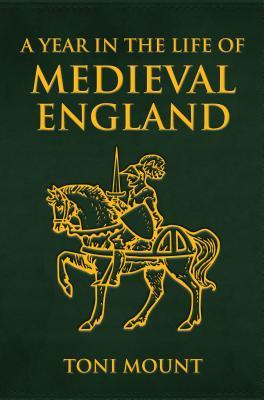 The medieval era was one of the most turbulent times in all of English history, full of family feuds, gruesome wars, and so many twists and turns. We tend to focus on the big stories, but, it was not just about the royalty and the nobility, there were also lower classes whose lives went on in the background. What was everyday life like for both the rich and the poor? What ceremonies and recipes did they use? What were wills and court cases like? These questions and more are explored in Toni Mount’s delightful book, “A Year in the Life of Medieval England”.
 In history, we tend to focus on the stories of the men and women who shaped the era. This is obviously important, but the locations where the events of the past happened are equally as important. Sadly, many of the buildings that the men and women from the past knew no longer exist. However, there are a few, especially from the Tudor period, that we can still visit. Suzannah Lipscomb explored over 50 of these remarkable buildings and decided to tell their tales in her book, “A Journey Through Tudor England”.
 When we think of medieval kings of England, we tend to think about strong warriors who did things their own way. Men like Edward I and Edward III often come to mind. Yet, there was a king in between these two legendary warriors whose name lives on in infamy, King Edward II. He is known for his numerous favorites, his relationships with men like Piers Gaveston and Hugh Despenser the Younger, his disagreements with the barons who were trying to help him run the country, his relationship with his equally famous wife and son, Isabella of France and Edward III, and his dramatic death. But who was the man known as King Edward II? What was he really like? Stephen Spinks explores these questions in his latest biography, “Edward II the Man: A Doomed Inheritance”.
 The Tudor dynasty and the enigmatic figures who made this time period so fascinating have been hotly discussed for centuries. Henry Tudor, who became King Henry VII after defeating King Richard III at the Battle of Bosworth Field in 1485. King Henry VIII, the second son whose numerous wives and his split from the Catholic Church made his name infamous in history. King Edward VI, Henry VIII’s beloved son who died before he really could accomplish the reformation that he had planned for England. Queen Mary I, who was the first Queen of England to rule in her own right and wanted to restore the Catholic Church. Finally, Queen Elizabeth I, who never married and led England to a “Golden Age”. Many historians have viewed the Tudor dynasty as a time of great change and England was in a good place. However, G.J. Meyer paints a darker picture of the era in his book, “The Tudors: The Complete Story of England’s Most Notorious Dynasty”.
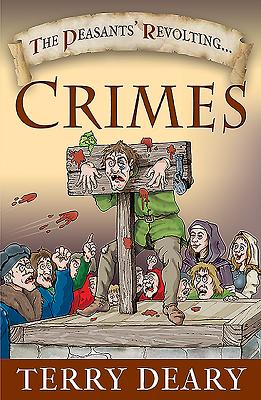 In history, we tend to look at people based on their class. There are the upper class (royalty and nobility), the middle class, and the underclasses (peasants). Most of the focus tends to be on the deeds of the upper and middle classes, yet the underclasses had there own struggles, some of which resulted in them committing crimes. What was life like for the criminals of the underclasses? What type of crimes did they commit and what sort of punishments did they suffer once they were caught? Terry Deary decided to explore the crimes of the British peasants throughout history, in his own humorous way, in his latest book, “The Peasants’ Revolting….Crimes”.
 In English history, the story of the royal families tends to capture the imagination of those who study it. Full of dynamic tales of kings and queens, and numerous nobles, these are tales that make it into history books and history classes. We tend to focus on the same kings and queens, who have become the popular royals. But what about those who are left in the dust of those popular royals? Who were the royal women who lived in the shadow of the throne that time has forgotten? What were the lives of these women like? It is these women who are the focus of Erin Lawless’s latest book, “Forgotten Royal Women: The King and I”.
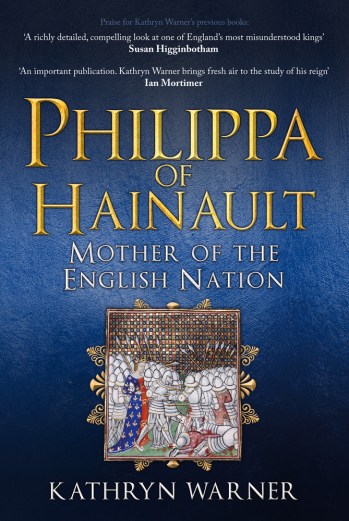 In medieval England, the queens were almost as famous, or infamous, as their husbands. In most cases, they came from royal backgrounds and their sons would become kings. That, however, was the case for Philippa of Hainault, the wife of King Edward III. She tends to be forgotten when it comes to discussing her famous husband, her infamous mother-in-law Isabella of France, and her sons whose children would go on to shape English history forever. That is until now. Kathryn Warner has decided to discover the truth about this rather remarkable woman in her latest biography, “Philippa of Hainault: Mother of the English Nation”.
 Adventures of a Tudor Nerd