
Book Review: “Tudor Victims of the Reformation” by Lynda Telford

31617175._SX318_The reigns of the Tudor monarchs were full of change, not only in court and in culture, but also when it came to religion. None more so than in the reign of King Henry VIII, especially during the incident known as “The Great Matter”, when the king wanted a divorce from his first wife, Katherine of Aragon. Many people were swept into the chaos of this time, but there are two who were infamous during this time; Thomas Wolsey and Anne Boleyn. These two were adversaries, vying for the attention of the king. They both experienced extreme highs and tragic lows as they navigated the change in England that would be the start of the Reformation. Lynda Telford explores the lives of Thomas Wolsey and Anne Boleyn, as well as the lives of other people who were caught displeasing King Henry VIII during this tumultuous time in her book, “Tudor Victims of the Reformation”.

I would like to thank Pen and Sword Books for sending me a copy of this book to read and review. The title had me intrigued and I really wanted to dive into this interesting book.

Before I started reading this book, I thought that this book was going to be about the entire Tudor dynasty and the stories of the victims of the Reformation, from King Henry VIII to Queen Elizabeth I. I also thought that this book might touch on the victims of the counter-Reformation during the reign of Queen Mary I. That is not what this book is about. Instead, Telford decided to focus on the lives of two main individuals, Thomas Wolsey and Anne Boleyn, ending in 1536. The title seemed rather misleading to me since the main focus of this book is “The Great Matter” rather than the Reformation, which was getting its start at this time, but really didn’t go into full swing in England until later in the Tudor dynasty.

Telford tells the story of Thomas Wolsey and Anne Boleyn and how they rose to be by King Henry VIII’s side. Wolsey was a brilliant scholar who rose to prominence in the Catholic church and in the court of the King. He became an ally and advisor to Henry VIII during the early years of his reign. Anne Boleyn was the daughter of Thomas Boleyn 1st Earl of Wiltshire and an English diplomat. She was able to capture the heart of the king, even though he was still married to his first wife, Katherine of Aragon. Henry decided that after decades of being married to Katherine of Aragon that she would never give him the son that he wanted, so it was only sensible to divorce her and marry Anne Boleyn. This decision would radically change England and the lives of so many forever, including Wolsey and Anne Boleyn.

As someone who knows the story of “The Great Matter”, the rise and fall of Thomas Wolsey and Anne Boleyn, and how these decisions affected England as a whole, this book felt like a review for me. There were points when I did feel like this book was a tad dry, but Telford did add more information from other European sources that helped give a new perspective about this time. Personally, this book felt like a review for me, but for someone who is being introduced to this topic for the first time, this book is a good place to start. If you have just started studying the Tudors and the event known as “The Great Matter”, I would recommend you read Lynda Telford’s book, “Tudor Victims of the Reformation”.
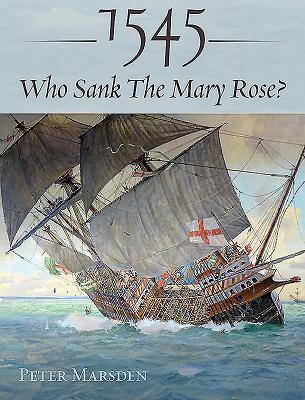
Book Review: “1545: Who Sank The Mary Rose?” by Peter Marsden

44059242On a calm summer day in July of 1545, a battle was being fought in Solent between the Tudor navy and the French navy. Tragedy struck when the Mary Rose, Henry VIII’s flagship,  suddenly sank beneath the waves, sending hundreds of men that called the ship home to a watery grave. Many theories on why this particular ship sank have been discussed for centuries, but it was not until the Mary Rose was raised to the surface in 1982 that we start to understand what really happened. Peter Marsden, an expert on the Mary Rose decided that it was finally time to explore the ship thoroughly to explain what or who sank this magnificent ship. All of Marsden’s research is on full display in his remarkable book, “1545: Who Sank The Mary Rose?”
I would like to thank Pen and Sword Books for sending me a copy of this book. Before this book, I knew a little bit about this ship and that it did sink, but I wanted to learn more. This book was jammed packed with incredible details and gave the Mary Rose a new life.

 For those who are not familiar with Peter Marsden, he is a professional archeologist and is a founder of the Council for Nautical Archeology as well as a Fellow of the Society of Antiquities. Marsden knew some of the key members of The Mary Rose Trust, whose goal was to bring the Mary Rose to the surface and to tell its story. It is his expertise in nautical archeology that makes Marsden the perfect person to tell the story of this remarkable warship.

 In order to understand how significant the sinking of the Mary Rose was at the time, Marsden begins by telling the story of how the French and English navies met at Solent in July 1545, giving a full account of the battle according to the historical records, both on the English and French sides. Marsden follows the admirals, Claud d’ Annebault for France and Sir George Carew for England, to understand why they made the decisions that they did before, during, and after the battle. 

The bulk of Marsden’s book is going into meticulous details about the Mary Rose itself. This was absolutely fascinating to read since it gives readers a better understanding of what the ship might have looked like in its heyday. The descriptions are paired beautifully well with detailed diagrams and illustrations so that even novices to Tudor shipbuilding, like myself, can get a picture of what the Tudor navy might have looked like. 

Marsden then explores the history of the salvaging of the Mary Rose and how it was not until the 1970s and 1980s when the modern world was able to see the ruins of this once magnificent ship. The modern effort to save and preserve this ship for historical purposes was truly a labor of love for all of those involved. They really took the time and effort that was necessary to protect the ruins of this ship and the remains of those who died tragically when this ship sank centuries ago. As Marsden explains, it is the artifacts and the remains of the men that give hints as to who sank the Mary Rose.

Marsden has written a masterpiece that explores this remarkable vessel. He is scrupulous in the details that will delight experts and novices of nautical archeology alike, yet his writing style makes you feel like you are watching a movie. This book is an absolute triumph and it brings a fresh perspective into the sinking of Henry VIII’s flagship. If you are interested in learning more about the story of this remarkable ship and the Tudor navy, I highly recommend you read Peter Marsden’s book, “1545: Who Sank The Mary Rose?”


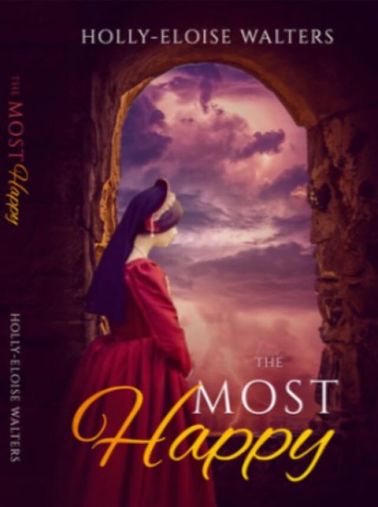
Book Review: “The Most Happy” by Holly-Eloise Walters

71957495_567591223787906_5646049859975774208_nThe story of Anne Boleyn is one of love, triumph, and tragedy. Her tale has been told in many different ways in the several centuries since her execution by many different people. Except by Anne Boleyn herself. We never truly understood what it might have felt like when she went to court for the first time, what it must have felt like to have fallen in love with King Henry VIII. How she might have felt when she had her daughter and experienced her numerous miscarriages. The devastation she must have felt when she found out about Henry’s abusive side, his mistresses, and her ultimate demise. That is until now.  In Holly-Eloise Walters’ debut novel, “The Most Happy”, Anne Boleyn tells her personal story, giving the readers a better understanding of the legend.

I would like to thank Holly- Eloise Walters for sending me a copy of her book to read and review. It can be nerve-wracking when you give someone your debut book to read and I am glad I got a chance to read it.

Normally with historical novels, we are introduced to the protagonist by being in their childhood home. That is not the direction that Walters takes as we are introduced to Anne Boleyn as she is in her lowest point, in the Tower waiting to be executed. She is alone, wishing that she could be saved, but knowing that she was going to die. Anne is firm in her love for Henry, even after all they have been through, but her one desire is to see her daughter Elizabeth “Lizzie” in this novel, again. It is in her darkest hour that she chooses to reflect on her life, which is the bulk of this book. 

What Walters does extremely well is focused on the relationships that were central in Anne’s life. Obviously, the biggest relationship was the relationship between Anne and her husband King Henry VIII. To say that their relationship was complicated would be an understatement. They started off falling madly in love with one another, not caring who they hurt as long as they were together, but then it dissolved into a rather abusive relationship. Walters also touches on the relationships between Anne and her family. While I agree with how Anne’s relationships with her siblings George and Mary, I do not necessarily agree with how Walters portrays Anne’s relationship with her parents, but that is just a personal comment. This portrayal of Anne’s life is very raw and real, focusing on emotions and relationships.

The one real concern that I had when I was reading this particular novel was the lack of details about the locations and physical descriptions of the people, which can be a difficult thing to do. It was a tad difficult to visualize the people and the locations, but I believe that as Walters grows as an author, she will get better with her descriptions. 

Overall, I think this was a very good debut novel. Walters obviously cares about telling Anne’s story through her eyes. It is a bit raw and rough around the edges, but where it shines is the portrayal of the relationships between Anne and those who were around her and were important in her life. You really feel sympathy for Anne Boleyn and heartache for her through Walters’ easy to follow writing style. This may be Walters’ first novel, but I do see potential in her writing. If you would like a new novel about Anne Boleyn from her perspective, I would recommend you read, “The Most Happy” by Holly-Eloise Walters.

Book Review: “Following in the Footsteps of Henry Tudor: A Historical Journey From Pembroke to Bosworth” by Phil Carradice

43972620In the study of history, we tend to look at the beginning and the end of a battle and why they were fought. We rarely pay attention to the march that led to the battle, but when we do, there is a distinct reason why. One particular case is of Henry Tudor’s march to the Battle of Bosworth Field. It is a tale that started from his birth at Pembroke Castle to being an exile and then from an exile to being King of England. The story of how an exile became a king and founded the infamous Tudor dynasty deserves attention. Phil Carradice believed that it was time for the story of the first Tudor king and his march to destiny to be told in his latest book, “Following in the Footsteps of Henry Tudor: A Historical Journey From Pembroke to Bosworth”.

I would like to thank Pen and Sword Books for sending me a copy of this book. This is the second book in the “Following in the Footsteps” series that I have read, so I was cautiously optimistic. I wanted to learn more about Henry Tudor’s march to Bosworth and I certainly did in this book.

Carradice begins his book with a novel-like description of Henry, or “Harri”, and his uncle Jasper Tudor landing in Wales. As a reader, I was a bit confused about the direction that Carradice was taking by using this approach since this is a historical non-fiction book instead of historical fiction, but Carradice was able to tie it in nicely. He then explains, rather briefly, the conflict known as the Wars of the Roses and how England got to the point where it was Henry Tudor versus King Richard III for the throne. It is this information that is crucial for readers to understand Henry’s motive for claiming the throne and how it was an arduous task to achieve. It was in these early chapters that we see how Henry went from a regular boy to an exile who became a thorn in the side of the Yorkist Kings Edward IV and Richard III.

The bulk of Carradice’s book deals with what happens after Henry Tudor and his men land in Wales. He deals with issues of exactly where Henry landed and why the traditional place for the landing does not make a whole lot of sense. Carradice also takes on the legends that surrounded the different locations during the march and compared them to the facts that we do know about the march, primarily from Polydore Vergil. The one problem that I had with this book was that Carradice did not include a map of the march. I was not familiar with the locations, particularly the Welsh locations, so it was difficult to visualize the distances. What I did appreciate was the fact that as the battle approached, Carradice showed how both Henry and Richard III must have been feeling and how their decisions on that fateful day made all the difference.

Overall, I was pleasantly surprised by this book. It may be small, but it is rather mighty with all the information that it contains. Carradice’s writing style makes this book feel like a historical fiction novel with a plethora of information one expects from a historical nonfiction book. If you want a great introduction book to Henry Tudor’s march to Bosworth Field and the beginning of the Tudor dynasty, I highly recommend you read, “Following in the Footsteps of Henry Tudor: A Historical Journey From Pembroke to Bosworth” by Phil Carradice.

Book Review: “Katherine – Tudor Duchess” by Tony Riches

Katherine - Tudor DuchessWhen one thinks about women reformers during the time of the Tudors, certain women like Catherine Parr and Anne Aske come to mind. However, there was one who really should get more attention and her name is Katherine Willoughby. She was the last wife of Charles Brandon. Her mother was Maria de Salinas, a lady in waiting to Catherine of Aragon and a devout Catholic. Katherine knew all six of Henry VIII’s wives on a personal level and knew all of his children. She has often been seen as an afterthought; someone you associate with other people, but never a stand out herself. That is until now. Katherine Willoughby finally gets her time to shine in Tony Riches’ latest historical fiction novel and his conclusion to his Tudor trilogy, “Katherine-Tudor Duchess”.
I would like to thank Tony Riches for sending me a copy of this charming novel. This is the third novel that I have read by Tony Riches and I enjoyed it immensely.

We are introduced to Katherine Willoughby as a young woman who is about to embark on a journey to her new home with Charles Brandon and Mary Tudor as their ward after her father passes away. At the same time, Henry VIII is wanting to remove his first wife Catherine of Aragon for his second wife Anne Boleyn. Since Katherine’s mother, Maria de Salinas was very loyal to Catherine of Aragon as one of her ladies in waiting, it is interesting to see Katherine’s view of the situation. Katherine is quite comfortable in Brandon’s household, but when Mary Tudor tragically dies, Katherine’s life is turned upside down when Charles Brandon decides to marry her and she becomes the new Duchess of Suffolk.

As the new Duchess of Suffolk, Katherine had a front-row seat to the dramas of King Henry VIII’s court and his numerous marriages. Along the way, Katherine falls in love with Charles and they become parents to two strapping and intelligent boys. Katherine and Charles are granted the great honor of welcoming Henry’s 4th wife Anna of Cleves to England and they also experienced the short reigns of Jane Seymour and Catherine Howard. It was not until Charles Brandon’s death and the rise of Catherine Parr as queen that Katherine Willoughby sees her true potential, as a woman who wants to promote religious reforms. 

Katherine experienced hardships and the tragic deaths of her two sons mere hours apart due to the sweating sickness. She did marry again after Charles’ death to a man that she did love, like Catherine Parr, and was able to have more children, a son, and a daughter. During the reigns of King Edward VI and Lady Jane Grey, Katherine and her family were able to practice their Protestant faith in peace. Things took a turn for the worse when Mary was crowned queen and Katherine had to take drastic measures to protect her family while standing up for what she believed was right.

Tony Riches has written another fabulous novel of a vivacious woman who fought to spread Protestantism in England. Through twists and turns, Katherine Willoughby was able to protect her family and survive during such a tumultuous time. Her story gives great insight into what it meant to be someone close to the Tudors. This is a binge-worthy book. If you are a fan of Tony Riches’ novels and want a wonderful book about Katherine Willoughby, I highly suggest you read Tony Riches’ latest novel, “Katherine- Tudor Duchess”. 


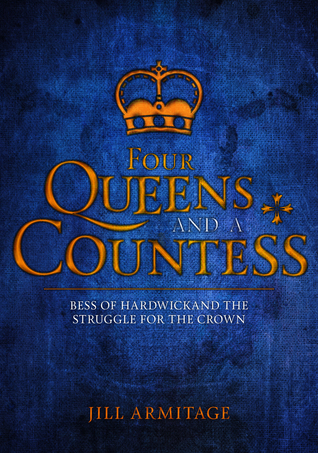
Book Review: “Four Queens and a Countess: Mary Queen of Scots, Elizabeth I, Mary I, Lady Jane Grey and Bess of Hardwick: The Struggle for the Crown” by Jill Armitage

34411961The 16th century was filled with extremely strong women who went on to shape European and world history forever. This was true for England and Scotland, two countries whose stories were intertwined by powerful women. The women who ruled these two countries during this time were women that those who study this time period know about; Lady Jane Grey, Mary I, Elizabeth I, and Mary Queen of Scots. There was one woman who knew all four of these women and lived for over 80 years: Bess of Hardwick, Countess of Shrewsbury. The story of these five women is told in Jill Armitage’s book, “Four Queens and a Countess: Mary Queen of Scots, Elizabeth I, Mary I, Lady Jane Grey and Bess of Hardwick: The Struggle for the Crown”.

I would like to thank Amberley Publishing for sending me a copy of this book. I am always interested in learning how different people in the 16th century interacted with one another, plus I didn’t know a whole lot about Bess of Hardwick and I wanted to learn more about her.

Armitage begins her book by exploring Bess of Hardwick’s family and how they rose in power so that Bess could serve royalty. It was interesting to learn about her family and the four husbands that Bess married throughout her life: Robert Barlow, Sir William Cavendish, Sir William St. Loe, and George Talbot, 6th Earl of Shrewsbury. Bess also had numerous children and grandchildren who would go to be influential in the reigns of Elizabeth I and James I. I really wish Armitage had included family trees of the different families that were involved in her book to make it easier for the readers to understand the connections, which are vital for the stories mentioned in this particular book.

The story of Bess of Hardwick’s life begins at the height of the reign of the Tudor when Henry VIII is on the throne and ends with the beginning of the Stuarts Dynasty so Armitage does include the lives of the women who shaped these times. Armitage begins with how Henry VII and Henry VIII came to the throne, marching swiftly through the six wives of Henry VIII until reaching the reign of Henry VIII’s son King Edward VI. It is here where the pace of the book slows down a bit and we dive into the lives of the Grey family and how Bess of Hardwick knew them and how the family’s legacy came to an abrupt end with the execution of Lady Jane Grey. Armitage then explores the reigns of Mary I, Elizabeth I, and Mary Queen of Scots and how Bess of Hardwick connects all three vivacious women.

Here is where I have another problem with this particular book; it is too short (less than 300 pages) when discussing all the history that Armitage has in it. Some parts felt like a review and other parts felt like facts were flying and she didn’t go into enough detail to explain it all. I feel like Armitage was a bit ambitious for the idea of this book and that if she wrote a bit more, the book would have flowed a lot better than it did.

Overall, I found this book rather interesting and relatively easy to understand. Armitage has a writing style that is readable. This is a great book for those who are being introduced to the Tudor dynasty, but for those who know about this time period, it feels like a review. If you are interested in learning about the connection between these five women, I recommend you read, “Four Queens and a Countess: Mary Queen of Scots, Elizabeth I, Mary I, Lady Jane Grey and Bess of Hardwick: The Struggle for the Crown” by Jill Armitage.

Book Review: “Margaret Tudor: The Life of Henry VIII’s Sister” by Melanie Clegg

38507404The children of King Henry VII and Elizabeth of York lived rather eventful and fascinating lives. We all know the stories of Prince Arthur, who tragically died, his younger brother Henry, who would become the notorious King Henry VIII, and Mary, who would become Queen of France and then marry the man she loved, Charles Brandon. The one sibling that many tend to forget about is Margaret Tudor, who would become the wife of King James IV and the mother of King James V and Margaret Douglas. Her love life was quite rocky, but she kept fighting for what she believed was right for her family and her adoptive country of Scotland. This remarkable woman didn’t receive much attention in her lifetime, but Melanie Clegg hopes that people today will know Margaret’s story. This is why she wrote this delightful biography of the Tudor princess turned Queen of Scotland, “Margaret Tudor: The Life of Henry VIII’s Sister”. 

I would like to thank Pen and Sword Books for sending me a copy of this book. I really like learning about Margaret Tudor and I really enjoyed the last book that I read by Melanie Clegg, so I was really excited to read this book.

Clegg begins her book by explaining how Margaret’s father, Henry VII, became King of England and how his relationship with his wife Elizabeth of York was like in the beginning. Since Henry’s throne was not secure, with pretenders like Lambert Simnel and Perkin Warbeck around, having heirs was extremely important. Henry and Elizabeth had several children; Arthur, Margaret, Henry, Elizabeth(who is hardly mentioned because she died at a young age) and Mary. Clegg goes into immense detail about the Tudor royal children and how they were raised, including the marriage arrangements between Prince Arthur and Catherine of Aragon and, of course, Margaret Tudor and King James IV of Scotland.

Margaret and James IV had a loving relationship, although he had numerous affairs that Margaret was aware of. They also faced hardships, with the death of two heirs within 24 hours of each other and the struggles of the Scottish court, with clans fighting against other clans for power. Margaret’s world came crashing down around her when James IV was killed at the Battle of Flodden by her brother Henry VIII’s army. Margaret did have to marry again, but her next husband was an awful pick. It was so bad that she had to flee Scotland for England. Margaret never truly recovered from her disastrous second marriage. Her legacy would pass onto her children, the future King James V, and Lady Margaret Douglas. 

When you read Margaret’s tragic tale, you really want to give her a hug. It felt like everyone around her used her as their own tool and she never really had anyone who she could truly depend on. Like Melanie Clegg said in her acknowledgments, Margaret Tudor really needed a best friend who she could chat with, who could give relationship advice to Margaret, and just be there for her when times got rough.

Clegg brings Margaret’s catastrophic tale to life to readers of the 21st century with a light writing style that makes you feel like you are having a conversation with Clegg. Reading this book makes you sympathetic for a Tudor Princess and a Scottish Queen who made some bad choices and who faced unbelievable hardships. If you want an engaging biography about this exceptional woman, I highly recommend you read, “Margaret Tudor: The Life of Henry VIII’s Sister” by Melanie Clegg.   


Book Review: “The House of Grey: Friends and Foes of Kings” by Melita Thomas

51fOOu0p2GL._SX332_BO1,204,203,200_There are many noble or royal families that truly were the backbone of the English society and that could help or hinder the monarchy. One such family was the Greys, who started as a baronial family and rose through the ranks by good marriages and staying loyal to those who were in power. Of course, when one rises high, there is also the risk of falling low spectacularly, which happens when Lady Jane Grey becomes Queen of England for a mere 9 days. The story of the house of Grey is complex, yet it has never been told in its entirety, until now. This extraordinary family saga is told in Melita Thomas’s latest book, “The House of Grey: Friends and Foes of Kings”. 

I would like to thank Amberley Publishing for sending me a copy of this book. Melita Thomas is the co-founder and editor of Tudor Times and this is her second book.  This particular book caught my eye as I did not know much about the Grey family, besides the story of Lady Jane Grey and her sisters. 

The story of the House of Grey begins with a rivalry between Owain Glyndwr and Lord Grey of Ruthyn over throwing off English dominance in Wales. Not a great start for a family who would become loyal to the crown of England. It was during the Wars of the Roses and the Battle of Northampton when Edmund Grey switched from supporting the Lancasters to supporting the Yorks, splitting the Grey family apart for a time. It was when Sir John Grey died at the Second Battle of St. Albans that the Greys truly supported the Yorkist crown since his widow, Lady Elizabeth Woodville, married King Edward IV. It is here that Thomas tracks the road to the crown through Elizabeth Woodville’s two Grey sons, Thomas and Richard.

Melita Thomas shows how the Grey boys made names for themselves; Richard Grey being executed while Richard of Gloucester was Lord Protector and Thomas Grey turning rebel and joining the Tudor cause to put Henry Tudor on the throne. Thomas Grey married Cecily Bonville and it was through their line that the Greys inherited the title of Marquis of Dorset. The title would pass onto each son until it reached Henry Grey, who’s ambitions for his daughter would prove fatal.

Thomas navigates the tumultuous times of the Greys to show how truly colorful the family was, from tiffs with fellow landowners to grand fallouts with kings and queens. The Grey family was able to restore themselves time after time to the monarchy’s good favor, no matter how low they fell. The Greys and their influence did not just reach England, but other corners of Europe as well, which is rather remarkable to read all about. Thomas gives the reader an opportunity to understand the roller coaster dynamics of the Grey family and the political atmosphere of the royal courts of different monarchs. The times that the Grey family lived in was one of great change and they were all along for the ride.

I found this book rather engaging and utterly fascinating. It is meticulously researched and you can tell that Melita Thomas had a passion for the subject she was writing about. Many people only know the story of Lady Jane Grey and her immediate family, but I think that this book paints a vivid picture of a complex family who survived the reigns of medieval and Tudor kings and queens. If you want to a delightful in-depth dive into the lives of the Greys, I highly recommend you read, “The House of Grey: Friends and Foes of Kings” by Melita Thomas.


“The House of Grey: Friends and Foes of Kings” by Melita Thomas will be available in the United States on January 1, 2020. If you would like to pre-order this awesome book, you can follow this link: https://www.amazon.com/House-Grey-Friends-Foes-Kings/dp/1445684977/


Book Review: “Scourge of Henry VIII: The Life of Marie de Guise” by Melanie Clegg

61QD1AenNQL._SX346_BO1,204,203,200_The study of the Tudors tends to focus on England as a country of focus, however the Tudors did affect other countries like Spain, France, and Scotland. Many know the story of Mary, Queen of Scots and her relationship with Elizabeth I, but many do not know the tale of her mother, Marie de Guise. Her tale is one of love for her family and her adoptive country of Scotland. It is of loyalty and strength to do what she believed was right. She was a sister, a daughter, a mother, a queen, and a regent of Scotland. Marie’s story tends to be overshadowed by her daughter’s tragic tale, until now.  Her story is the main focus of Melanie Clegg’s latest biography, “Scourge of Henry VIII: The Life of Marie de Guise”.

I would like to thank Pen and Sword Books for sending me a copy of this pleasant biography. I knew quite a bit about her daughter, but Marie de Guise is just as remarkable and deserves to be told. 

Clegg begins her biography in the most unusual way, but starting with the death of King James V, Marie de Guise’s second husband. This event, as Clegg will show, radically alters the path that Marie will take. Of course, Marie’s life took many turns, even from her early years. Marie de Guise was the eldest daughter of Claude de Lorraine, Duc de Guise and Antoinette de Bourbon, Duchesse de Guise. Her family, the Lorraines, were extremely close and very loyal to King Francois I of France, especially her father Claude de Lorraine, Duc de Guise. Clegg  explores Marie’s formative years, both with her paternal grandmother Philippa de Geulders, Dowager Duchesse de Lorraine, and inside the glamorous court of Francois I, and how both experiences shaped Marie into the remarkable woman she would become. 

It was truly a twist of fate that Marie de Guise would marry King James V of Scotland, who was her second husband. Marie was first married to Louis d’Orleans, Duc de Longueville and King James V was married to Princess Madeleine. However, both Louis and Madeleine died rather young, so Marie and James V both had to look for new spouses. James V wanted a French marriage, but he was not the only monarch who was looking for a bride. His uncle King Henry VIII just lost his third wife to illness and was trying to woo Marie. To say things did not go Henry’s way would be an understatement as Marie became Queen of Scotland. 

It was in Scotland where we see Marie’s true colors come out in full force. Clegg shows that although Marie loved James, things were not smooth sailing as they would have hoped. Marie’s daughter Mary Stewart, later Mary Queen of Scots, was born only a few days before her father’s untimely death shortly after the Battle of Solway Moss in 1542. Such a triumph turned tragedy would have been agonizing for anyone to deal with, but Marie de Guise knew that she had to stay strong for her daughter. As Regent of Scotland, until Mary came of age, Marie did battle, both physical and spiritual, with every Tudor monarch, from Henry VIII to Elizabeth I. 

This book was a joy to read. Melanie Clegg was able to make a biography read like a novel, yet stay informative and academic. I did not know what to expect, since this was the first book by Melanie Clegg that I have ever read, but from page one I was hooked. This was the first biography about Marie de Guise that I have ever read and now I want to read more about her. If you would like to read an engaging biography about Mary, Queen of Scots vivacious mother Marie de Guise, I highly recommend you read, “Scourge of Henry VIII: The Life of Marie de Guise” by Melanie Clegg.

Book Review: “Lovell our Dogge: The Life of Viscount Lovell, Closest Friend of Richard III and Failed Regicide” by Michele Schindler

9781445690537 (1)Words have a lot of power, especially when it comes to how we perceive historical figures. It can be through letters, chronicles, biographies, and this instance, through a couplet written by William Collynbourne in 1484. The couplet in question goes; “The Catte, the Ratte, and Lovell Our Dogge Rule All England Under the Hogge”. The Catte and the Ratte refer to two men; Sir William Ratcliffe and Sir William Catsby respectively, who were associated with King Richard III, whose badge was a white boar or a hog. “Lovell our Dogge” refers to Sir Francis Lovell, who was an ally and close friend of the king. Who was Sir Francis Lovell and how did he become Richard III’s closest friend? Michele Schindler dives into the life of Sir Francis Lovell to figure out who he really was in her debut biography, “Lovell our Dogge: The Life of Viscount Lovell, Closest Friend of Richard III and Failed Regicide”.

I would like to thank Amberley Publishing for sending me a copy of this fascinating biography. I knew about the couplet, but I never knew about Sir Francis Lovell and his remarkable life. 

Schindler begins her beautiful biography with the birth of Francis and his twin sister Joan. It is very unusual to read about twins especially in medieval England so it was interesting to read how this affected how they were raised. We are also introduced to the rest of the Lovell family,  finding out the origins of the family, and learn how noble children like Francis and Joan were raised. This part is important in understanding Francis and his loyalties because it is at this time when he was introduced to the Yorkists who would change his life; Richard Neville Earl of Warwick, King Edward IV, and Richard Duke of Gloucester, the future King Richard III. It is also in these formative years that Francis marries his loyal and loving wife Anne (Fitzhugh) Lovell. It is great to have a firm foundation when understanding a historical figure and Schindler provides the reader that foundation.

The center of Schindler’s book is Francis’ relationship with his best friend, Richard Duke of Gloucester, who would become King Richard III. It is a unique relationship because if you only know about Francis through the couplet, it makes Sir Francis Lovell sound like someone who desired power. In fact, documents provided by Schindler suggests quite the opposite. He was rather quiet when it came to politics, even though he held quite prominent roles in Richard III’s government. His loyalty to Richard III never faltered, even after the king’s death at the Battle of Bosworth Field. Francis helped with several rebellions, the most famous one was the Lambert Simnel Rebellion, even though he was not noted to have taken part. 

Sir Francis Lovell’s life was complex yet he remains an enigma for scholars of the Wars of the Roses. Schindler masterfully blends an eloquent writing style with meticulously researched details to create this illuminating biography. Before I started this book, I only knew about Sir Francis Lovell through the famous couplet, but now I want to know more about him and his family. This maybe Schindler’s debut biography, but I look forward to reading more books by her in the future. If you would like an engaging biography about a man who was central in the government of Richard III, I highly suggest you check out, “Lovell our Dogge: The Life of Viscount Lovell, Closest Friend of Richard III and Failed Regicide” by Michele Schindler.

“Lovell our Dogge: The Life of Viscount Lovell, Closest Friend of Richard III and Failed Regicide” by Michele Schindler will be available in the United States on October 1st. If you would like to pre-order a copy of this book, please follow the link below: https://www.amazon.com/Lovell-our-Dogge-Viscount-Regicide/dp/1445690535/ref=sr_1_1?keywords=Lovell+our+Dogge%3A+The+Life+of+Viscount+Lovell%2C+Closest+Friend+of+Richard+III+and+Failed+Regicide&qid=1567661947&s=gateway&sr=8-1