
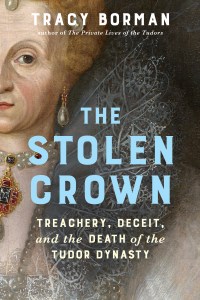
 It is March 1603, and the Virgin Queen is dying. She has no children to inherit her throne directly, so she must choose a successor. She chooses the son of Mary Queen of Scots, the queen who had been executed a few years before. James VI of Scotland will become James I of England, but was it as easy as William Camden makes it in his account? What does a recent discovery about Camden’s original manuscript of Annales tell us about James’ succession to the throne of England? Tracy explores the messy conflict to find an heir to the English throne in her latest book, “The Stolen Crown: Treachery, Deceit and the Death of the Tudor Dynasty.”
I would like to thank Grove Atlantic and Net Galley for sending me a copy of this book. I have been a fan of Tracy Borman’s books for a few years now because of how she is able to present new information about stories from the past that I already know and give them a fresh look. When I heard that James might have stolen the crown from Elizabeth I, that thought intrigued me so much that I knew I wanted to read this book.
So how did the Stuarts come into power, and why did Elizabeth have James as her successor? To understand that question, we have to explore briefly the origins of the Tudor dynasty and how Elizabeth I came to the throne. After we are firmly established in the reign of Elizabeth I, Borman goes through why Elizabeth needed to elect a successor and the nominees. Those up for Elizabeth’s throne were: James VI, Arbella Stuart, Lady Katherine Grey, Mary Grey, and Henry Hastings, Earl of Huntingdon. We get to see how Elizabeth handled each of her potential choices as the next ruler of England, but the two that are highlighted significantly in this book are Arbella Stuart, the daughter of Charles Stuart, 5th Earl of Lennox, and Elizabeth Cavendish, and the man who would become King James VI of Scotland.
Borman shows her readers the complex relationship between Elizabeth and James, a tumultuous relationship, especially after the death of James’ mother, Mary Queen of Scots. It was not the most cordial relationship that has been shown in history, including the Annales written by William Camden. However, due to extraordinary research that was revealed in 2023, it was shown that Camden’s writing had serious revisions to paint James in a better light during the fight for succession. In fact, there were attempts on Elizabeth’s life that James knew about, including one incident where he might have been directly involved. Just because James became King of England after Elizabeth’s death does not mean that he had an easier time in England. In fact, the Stuarts lasted less than a hundred years before the monarchy was dissolved with the execution of James’s son Charles I in 1649.
This is another spectacular book by Borman, one that changed how I viewed the relationship between Elizabeth and James in the final years. It reads like a political thriller and offers a deeper appreciation for Elizabeth’s fight for the English throne, while also highlighting how the Stuarts employed similar tactics to the Tudors in securing their right to rule England. Suppose you want an extremely well-researched book that provides great insight into the end of Elizabeth’s reign and provides new information about this period. In that case, I highly recommend you read “The Stolen Crown: Treachery, Deceit and the Death of the Tudor Dynasty” by Tracy Borman.
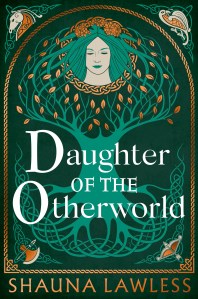 When we think about the Norman Conquest, we often think about how it impacted England, Wales, and Scotland, but we tend to forget about Ireland. Early medieval Ireland do not get a whole lot of attention in historical fiction. That is, until Shauna Lawless’s Gael Song trilogy. Now, fifty years after the events of the original trilogy, Lawless has brought in a new cast of characters, as well as old characters, into the fight between the Descendants of the Tuatha De Danann and the Fomorians. When a child of prophecy is introduced into the mix that is said to be able to defeat the Fomorians, the race is on to protect the child or to kill her. Will the Descendants survive, or will the Fomorians torch the land and the Descendants’ hope? Shauna Lawless jumps back into this work with the Gael Song Era 2 book 1, “Daughter of the Otherworld.”
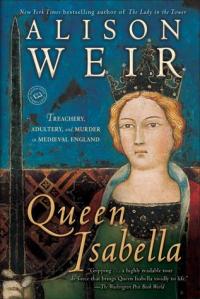 Throughout medieval English history, there have been some famous queens who left their marks. Empress Matilda, Eleanor of Aquitaine, Eleanor of Castile, Philippa of Hainault, and Margaret of Anjou each left an impression on English history, either good or bad. However, there was one queen whose negative reputation came with the nickname “She-Wolf of France,” and her name was Queen Isabella of France. The wife of Edward II and mother of Edward III, she left her husband for Roger Mortimer and overthrew her husband in favor of her son. For centuries, she has been viewed as a horrible villainess, but is that a fair assessment of her life? Alison Weir dives into the archives to find the truth about Isabella of France, and she presents her findings in her biography, “Queen Isabella: Treachery, Adultery, and Murder in Medieval England.”
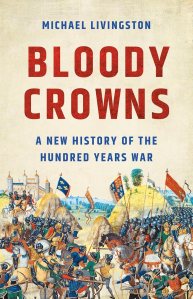 Medieval Europe was a time of conflicts and change. While smaller disputes between countries or civil wars would define borders, the most prominent conflict during this period was the Hundred Years’ War. A conflict that has been traditionally taught to have lasted 116 years between England and France. It is often told from the English perspective, with battles such as Agincourt, Crecy, and Poitiers celebrated. But what if we look at the bigger picture and expand our lens to the whole of Europe while keeping a neutral approach to the France vs England conflict? What if the conflict did not last a mere hundred years, but in fact two hundred years? What type of story would this kind of approach tell when it comes to medieval European history? Michael Livingston takes on the mammoth challenge of telling the tale of how this war changed European history forever in his latest book, “Bloody Crowns: A New History of the Hundred Years War.”
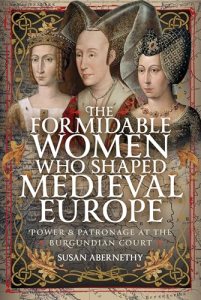 Throughout European history, we tend to think about the countries as a whole when it comes to the political sphere of influence. We think of the big countries like France, Spain, Italy, Germany, Austria, and England as having the most impact, but we have to consider that during the Middle Ages, duchies held immense power. Take, for example, the Duchy of Burgundy, also known as the Burgundian Empire. It was a part of France, but that does not mean that the dukes stayed on the side of the French. The Burgundians used their influence to expand and marry into the medieval European families, affecting European history as a whole. While we tend to focus on the Dukes of Burgundy, we should be paying attention to the women of this duchy. That is why Susan Abernethy chose to focus on these women in her latest book, “The Formidable Women Who Shaped Medieval Europe: Power and Patronage at the Burgundian Court.”
 The weather is getting colder, and life is getting a bit busier in preparation for winter and family gatherings. It’s time to get ready for the holiday season, and there is one that is universally loved. No, it’s not Halloween, even though it is October when I am writing this review. No, I am talking about Christmas. But one wonders what the origins of Christmas and how our traditions evolved? Toni Mount explores this most important holiday time in her latest book, “Medieval Christmas: The Origins and Traditions of Christmas in the Middle Ages.”
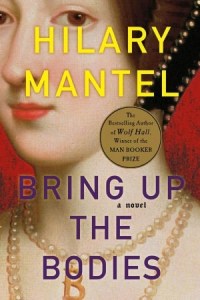 The year is 1535, and Henry VIII is growing bored with his current wife, Anne Boleyn. His eyes are wandering yet again, and this time his sights are set on Jane Seymour. Anne Boleyn had failed to give him his desired son, so Henry decided that it was only fitting for his right-hand man, Thomas Cromwell, to take down a queen. It’s Cromwell’s biggest challenge yet, but it could also become Cromwell’s defining moment. Hilary Mantel explores the pivotal months that pitted Cromwell against the Boleyns in her second book in the Wolf Hall trilogy, called “Bring Up the Bodies.”
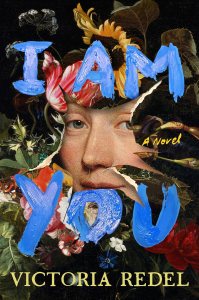 Have you ever looked at a painting and wondered what it must have been like for the artist to paint it? Have you ever wondered what their lives might have been like when they were painting these images that have sparked discussion and intrigue? Usually, we tend to focus on the male artists and their lives, but there has been a trend in recent years to tell the stories of women artists. Take, for example, the story of Maria van Oosterwijk and her maid Geertje Pieters Wyntges. Can these two women find their own successes during Amsterdam’s Golden Age through their art while navigating their own feelings towards each other? Victoria Redel explores the lives of these two women in her latest novel, “I Am You.”
 When we think of Elizabethan England, we tend to think of the Golden Age of England. A time of discoveries and for the arts to flourish under the Virgin Queen, Elizabeth I. However, there is a darker side. It was also a time of espionage, fears of invasions from other countries, and the hatred between Catholics and Protestants. The dangers of the Elizabethan underworld have reached the queen, as there is an attempt on her life. Can Jack, the son of a crime boss, change his life and find the culprit before they find him, or will he be betrayed by those he calls his friends? Amie McNee explores the seedy underworld of Elizabethan England in her novel, “To Kill a Queen.”
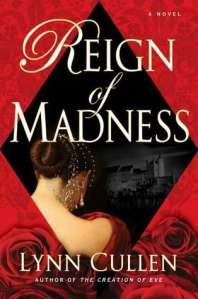 The daughters of Isabel of Castile and Ferdinand of Aragon lived very interesting lives. Of course, we know what happened to Katherine of Aragon, but her elder sister, Juana, has her own tragic tale. She was known as Juana the Mad because the rumors were that when her husband, Philip the Handsome, died, she carried her coffin around for months and would not let him be buried. Was Juana truly mad, or was it all a ruse by powerful men to steal her lands and titles? Lynn Cullen explores Juana of Castile’s life in her novel, “Reign of Madness.”
 Adventures of a Tudor Nerd