
 Anne Boleyn, the second wife of Henry VIII and the mother of Elizabeth I. Most of us know her story of how she fell in love with Henry VIII and how their relationship changed England forever as Henry broke off with Rome in order to get a divorce from his first wife Katherine of Aragon so that he could marry Anne. Unfortunately, when Anne couldn’t give Henry the son he so desired, their love began to fade. Anne Boleyn’s story ends in tragedy as she was accused of having multiple affairs, plotting the death of Henry VIII, and witchcraft, Anne was found guilty and was killed. Her fall happened in May 1536, a month that changed everything, but how much of these charges are true? Did she indeed have these affairs? Did she plot to kill her husband? What is the truth behind her fall? These are the questions that Alison Weir try to answer in her book “The Lady in the Tower: The Fall of Anne Boleyn.”
Alison Weir states that:
In assessing Anne’s character and impact on history, we should ask ourselves how she would be viewed today if she had not perished on the scaffold. Her end was one of the most dramatic and shocking episodes in English history, her last days the best documented period of her life, vividly described in the sources, while the powerful image of her on the scaffold, courageously facing a horrible death, has overlaid all previous conceptions of her. (Weir, 337-338).
Weir begins her book with the May Day joust of 1536, when Henry VIII abruptly left Anne all alone. A few months before, Anne had her last miscarriage, unable to provide Henry the son that he so desired. Henry’s attention began to wander towards Jane Seymour, even though, at this time, he still had feelings for Anne. After Katherine of Aragon’s death, a few weeks before the miscarriage, Anne’s enemies began to make their moves. Anne had many enemies in court and the entire country was against her in her role in the divorce of Henry and Katherine of Aragon, who was extremely popular.Cromwell, who despised Anne, planned a way to get Anne off the throne with the help of Chapuys, the Imperial ambassador to England for Charles V.
Cromwell had enlisted the help of Anne’s servants, including her sister-in-law Anne Boleyn, to make a tale of scandal. The story goes that Anne had affairs with five men: Sir Henry Norris, Sir Francis Weston, Sir William Brereton, Mark Smeaton, and her brother George Boleyn. Alison Weir explores the validity of the claims of the affairs as well as the details of the trials. Of course, the trials did not go in a way that was what we would now today consider “fair” and the sentence of death was passed on all of the accused. Anne Boleyn and the men accused with her are executed. The only legacy Anne left behind was her daughter, who would become Queen Elizabeth I.
I have been a fan of Alison Weir’s for years. I love the amount of details that she puts into her books and how both her fiction and non-fiction books are so easy to read. “The Lady in the Tower: The Fall of Anne Boleyn” follows this trend. For me, Anne Boleyn has been one of those people in the Tudor time that really has not interested me. That was until I read this book. The story of her fall is so dramatic and quick that it leaves a lot of intriguing questions about if Anne and the men who fell with her were indeed innocent. “The Lady in the Tower: The Fall of Anne Boleyn” by Alison Weir is such a fascinating read for anyone who is interested in Anne Boleyn and her fall from grace.
 Owen Tudor, the second husband of Catherine of Valois and the father of Edmund and Jasper Tudor. His affair with Catherine changed English history forever, yet not much is known about his past before he met Catherine. Was he married before he met Catherine and after she died? What must have been like for him as the Wars of the Roses began to take hold of England and everything he worked hard for began to fade away. The man who started as a Welsh servant turned step- father to King Henry VI and the grandfather of King Henry VII, the patriarch of the Tudor Dynasty, this is the protagonist in Tony Riches’ book, “Owen: Book One of the Tudor Trilogy”.
 Edward Seymour, the brother of Thomas and Jane Seymour, as well as the uncle of Edward VI. Many people remember him for his role as Lord Protector to his nephew as well as his role in the execution of his brother Thomas. That, however, is only a small snapshot into the life of an interesting man. His life after his sister Jane died and before he became the 1st Duke of Somerset was one of twists and turns. Nothing was safe for the brother of Henry VIII’s most beloved wife, especially when it came to dealing with his enemy at court, Bishop Stephen Gardiner. This is the time period that Janet Wertman has decided to explore in her latest book, “The Path to Somerset”, the second book in her Seymour saga (The first book of the Seymour saga is called “
 There were some men who tried to court Elizabeth, including Robert Dudley, but none could ever get her to the altar. That was when she was queen, however, there was one man who was very close to marrying her when she was just Elizabeth Tudor. The man was Thomas Seymour, the brother of Edward and Jane Seymour and the husband of Catherine Parr. In Elizabeth Norton’s book, “The Temptation of Elizabeth Tudor: Elizabeth I, Thomas Seymour, and the Making of a Virgin Queen”, she explores the relationship between Thomas and Elizabeth and why he was her temptation.
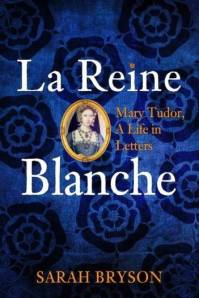 When we think of the Tudors, we often think of strong women like Katherine of Aragon, Anne Boleyn, Elizabeth I, Margaret Beaufort and Mary I. However, there was another Mary who made an impact during this time. She was the daughter of Henry VII, the sister of Henry VIII, and the wife of King Louis XII of France. She was referred to as one of the most beautiful women in the world. She gave away all of her titles to marry the man she loved, even though he was not a king. She took on debt to have a family and helped those who needed help. This is the life of Mary Tudor. In Sarah Bryson’s debut book, “La Reine Blanche: Mary Tudor, A Life in Letters”, Bryson explores the life of this extraordinary woman through her letters.
 When we think of the Grey family, we often come up with certain stereotypes. Lady Jane Grey was a passive, obedient girl who did whatever her family and her husband’s family wanted her to do. Frances Grey was a cruel mother. Katherine and Mary lived very uneventful lives. These could not be further from the truth. Leanda de Lisle in her book, “The Sisters Who Would Be Queen” attempts to paint a more realistic of the Grey sisters; Jane, Katherine and Mary.
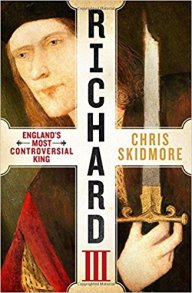 When we often think about Richard III, we tend to focus on the princes in the tower, Bosworth Field where he died, and the discovery of his body in 2012. But he was a brother to a king, a protector and he did rule as king of England. There should be more to his story than this. Chris Skidmore believed so and decided to write a modern biography on Richard called “Richard III: England’s Most Controversial King”.
 One of the greatest mysteries of all time is what happened to the young princes, the sons of Edward IV, who were held in the Tower of London. Many people believed that they were killed. There are some who believe that Richard III had them murdered and there are some who say that Henry VII ordered the deed to be done. But what if they were never killed? What if they survived? That is the premise of Matthew Lewis’s book “The Survival of the Princes in the Tower: Murder, Mystery and Myth”.
  Perkin Warbeck. These were the most famous pretenders and the ones who challenged Henry VII’s right to the throne. If they were really the princes in the tower, why were they defeated? Why were they considered pretenders? Lewis explores other people who could possibly be the princes, including a theory by amateur art historian Jack Leslau on “The Family of Sir Thomas More” by Hans Holbein the Younger.
 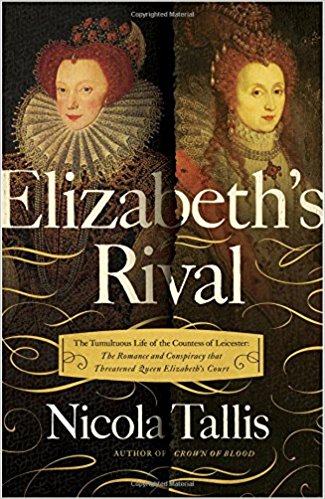 When we think of Lettice Knollys, we often think about the kinswoman who made Elizabeth I really mad when she married Robert Dudley, Elizabeth’s favorite. These two women were once best of friends, but that one event torn then apart forever. However, there is more to Lettice Knollys than this one event. She was married three times, survived seven different monarchs, and lived well into her nineties. Her story has always been hidden, until now. Lettice Knollys story is finally being told in “Elizabeth’s Rival: The Tumultuous Life of the Countess of Leicester: The Romance and the Conspiracy that Threatened Queen Elizabeth’s Court” by Nicola Tallis.
 learning and discoveries. While that is true, like any age, there were good elements and bad elements. We tend to overlook the bad elements with Elizabeth’s “Golden Age” and move on to the good elements. However, we cannot get a full image of the age if we only look at the good elements. That is why A.N. Wilson wrote the book “The Elizabethans”:
 Adventures of a Tudor Nerd