

I would like to thank The Coffee Pot Book Club and Judith Arnopp for sending me a copy of this novel. I have enjoyed her novels about Margaret Beaufort, so when I heard that she was writing a novel about Margaret of Anjou, I was intrigued to see what she could add to her story.
Arnopp begins with Marguerite on the verge of leaving her beloved France to become the new Queen of England. She is to be the bride of the son of King Henry V, King Henry VI. She imagines that her new husband will be similar to his father, a warrior, and that Marguerite will be able to stop the Hundred Years’ War between France and England. Instead, she is married to Henry VI, a man who is extremely devout to his faith, and lives in an England that hates Marguerite. It’s not the picture-perfect situation, but Marguerite tries to make the best of it, including falling in love not only with her husband but also with Somerset and Exeter, men loyal to her husband.
In time, Marguerite does indeed become a mother to Prince Edward, the Lancastrian heir, but it is then that her life truly begins to fall apart. A few months before, King Henry VI fell ill and remained that way for the rest of his life. Marguerite tried to become the Protector of the Realm, but the position went to Richard, Duke of York. Rivalries would turn deadly, and the Lancastrians would face the Yorkists on the battlefield. With the king incapacitated, Marguerite must be a mother, wife, queen, and general to make sure that the Lancastrian cause survives and her family can live to fight for the crown that is rightfully theirs.
This was a very good novel about a woman who was trying to keep her family and her country together while finding love. Arnopp does a great job exploring what life must have been like for Marguerite in a turbulent time. If you want a novel that explores what life was like for the Lancastrian queen during the Wars of the Roses, I recommend you read “Marguerite: Hell Hath No Fury” by Judith Arnopp.
 Blurb:
Marguerite: Queen of England
From the moment Henry VI’s new queen, Marguerite of Anjou, sets foot on English soil, she is despised by the English as a foreigner and blamed for the failures of the Hundred Years’ War in France.
Her enemies impede her role as the king’s consort, and when Henry sinks into apparent madness, her bid to become regent is rejected. Marguerite must fight, not only for her position but to maintain Henry’s possession of the crown.
The ambitious Duke, Richard of York, seizes control of the country, thrusting Marguerite aside and inflating the mutual hatred between the houses of York and Lancaster. But the queen refuses to relinquish power and fights determinedly for the rights of her son, Edward of Lancaster.
The long and bitter civil conflict, which come to be known as the War of the Roses, commences.
Buy Link:
Universal Buy Link: https://mybook.to/mhhnf
This title is available to read on #KindleUnlimited.
 Author Bio:
A lifelong history enthusiast and avid reader, Judith holds a BA in English / Creative Writing and a Master’s in Medieval Studies. She lives on the coast of West Wales, where she writes both fiction and non-fiction. She is best known for her novels set in the Medieval and Tudor period, focusing on the perspective of historical women, but recently she has written a trilogy from the perspective of Henry VIII himself.
Judith is also a founder member of a re-enactment group called The Fyne Companye of Cambria, which is where and why she began to experiment with sewing historical garments. She now makes clothes and accessories both for the group and others. She is not a professionally trained sewer but, through trial, error, and determination, has learned how to make authentic-looking, if not strictly historically accurate, clothing. A non-fiction book about Tudor clothing, How to Dress like a Tudor, was published in 2023 by Pen and Sword.
She runs a small seaside holiday let in Aberporth and when she has time for fun, likes to garden and restore antique doll’s houses. You can find her on most social media platforms.
Her novels include:
A Song of Sixpence: The Story of Elizabeth of York
The Beaufort Chronicle: the life of Lady Margaret Beaufort (three-book series)
The Henrician Chronicle: comprising:
A Matter of Conscience: Henry VIII, the Aragon Years (Book One of The Henrician Chronicle)
A Matter of Faith: Henry VIII, the Days of the Phoenix (Book Two of The Henrician Chronicle)
A Matter of Time: Henry VIII, the Dying of the Light (Book Three of The Henrician Chronicle)
The Kiss of the Concubine: A Story of Anne Boleyn
The Winchester Goose: at the court of Henry VIII
Intractable Heart: The Story of Katheryn Parr
Sisters of Arden: on the Pilgrimage of Grace
The Heretic Wind: The Life of Mary Tudor, Queen of England
Peaceweaver
The Forest Dwellers
The Song of Heledd
The Book of Thornhold
A Daughter of Warwick: The Story of Anne Neville, Queen of Richard III
Marguerite: Hell Hath no Fury!
Author Links:
Website: http://www.judithmarnopp.com/
Blog: http://www.juditharnoppnovelist.blogspot.co.uk/
Twitter / X: https://twitter.com/JudithArnopp
Facebook: https://www.facebook.com/thetudorworldofjuditharnopp
Instagram: https://www.instagram.com/tudor_juditharnopp/
Threads: https://www.threads.net/@tudor_juditharnopp
Bluesky: https://bsky.app/profile/jarnopp.bsky.social
Pinterest: https://www.pinterest.co.uk/jarnopp/
Book Bub: https://www.bookbub.com/profile/judith-arnopp
Amazon Author Page: http://author.to/juditharnoppbooks
Goodreads: https://www.goodreads.com/author/show/4088659.Judith_Arnopp
 The year is 1599 in Rome, Italy. A young rich woman stands in front of an executioner’s block. She is a mother, a daughter, a sister, a lover, and a killer. Her victim was her father, a man who made her life and the lives of her family members a living hell. When she falls in love with one of her father’s spies, she believes that it is a way out. However, the path she chooses to embark on will bring deadly consequences. What is the truth surrounding this case, and is Beatrice Cenci a cold-blooded murderer or a victim looking for her freedom? Elizabeth Fremantle explores the life of Beatrice Cenci and the circumstances of this crime in her latest novel, “Sinners.”
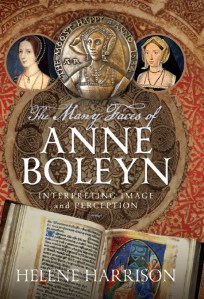 Anne Boleyn, a queen whose story has lived on for centuries. She was the woman who stood between Catherine of Aragon and King Henry VIII. Her daughter, Queen Elizabeth I, was her greatest legacy and her pride and joy. It was her untimely death due to charges that many believe were unfounded. We all have our image of the infamous queen, but how does that change when we switch the type of media we consume? Helen Harrison explores how our idea of Anne Boleyn changed over time in her latest book, “The Many Faces of Anne Boleyn: Interpreting Image and Perception.”
 In each era throughout history, we see how men and women adapt to the struggles and triumphs of the age. Take, for example, the 16th century, primarily in Tudor England. It was a time of great religious changes and dynamic rulers who would change the course of European history forever. While men had the most power, except for a handful of women, the majority of women struggled to survive each stage of life. So, what was life truly like for Tudor women? Elizabeth Norton explores this topic in her book, “The Lives of Tudor Women.”
 The 16th century was dominated by powerful women who left their indelible mark on European history. Take, for example, the aunt of Charles V, the Holy Roman Emperor. No, not Catherine of Aragon, the first wife of Henry VIII. I am talking about a woman who was the daughter of Emperor Maximilian I, was married three times, had no children, and helped raise her nephew Charles V, was an essential part of the Ladies’ Peace, taught Anne Boleyn how to live at court, and was a patroness of the arts and literature. Of course, I am talking about Margaret of Austria, the Governor of the Netherlands. A formidable woman who saw much change and chose to be part of politics, even though she was a woman. Her remarkable story is told in Rozsa Gaston’s novel, “Margaret of Austria: Governor of the Netherlands and Early 16th-Century Europe’s Greatest Diplomat.”
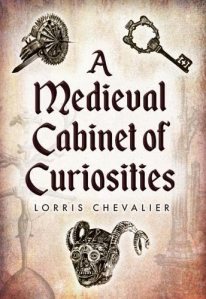 When we think about how we study history, we often consider documents and chronicles that can provide us with dates and the stories of historical figures. However, this is only half the story. We can learn a great deal from the artifacts left behind. Each era left behind its treasure trove of trinkets for archaeologists and historians to discover and interpret their meanings and purposes. One of the most fascinating periods of history was medieval Europe, full of war, religious struggles, artwork, plagues, and technological advances. What types of artifacts were left behind from medieval Europe? Lorris Chevalier explores the trinkets and artifacts left behind in his book, “A Medieval Cabinet of Curiosities.”
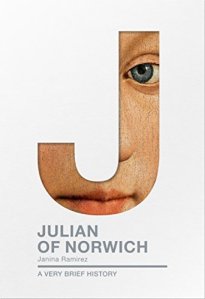 When we think about the most impactful women authors, we often think about writers like Agatha Christie, Mary Shelley, and Jane Austen. However, when it comes to religious texts, we have to go back in time centuries. We think about nuns like Bridget of Sweden and a mother of 14 children named Margery Kempe. Yet, we must include an anchorite who stayed in her cell for almost thirty years. Her book, Revelations of Divine Love, is considered the first great work of English prose, but many people are not familiar with the author until now. Janina Ramirez tells the story of Julian of Norwich and how impactful her book was in her book, “Julian of Norwich: A Very Brief History.”
 We all know the story of Romeo and Juliet. Two crazy kids in love, whose families hated each other they decided to make the ultimate sacrifice and die for each other. One of the greatest tragic love stories of all time. But what if it didn’t end in tragedy? What if Romeo and Juliet had their happy ending and had a large family? In this version of Verona, Romeo and Juliet have a large family, and their eldest daughter Rosaline is the most beautiful, headstrong girl in all of Verona. Unfortunately, Rosaline (Rosie) has got herself in quite a mess with an unwanted prince fiancé, a ghost who only she can see, and a murder investigation. Can Rosie solve the case and figure out her love life before things go horribly wrong? This is the premise of the second book of the Daughter of Montague series by Christina Dodd called “Thus with a Kiss I Die.”
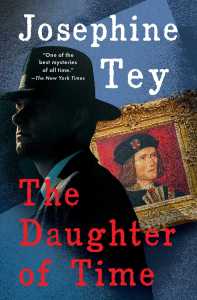 Have you ever read about a historical mystery that captivated you so much that you spent your available free time trying to solve the case? Who was the man in the iron mask? Were the casket letters real? Who built Stonehenge and why? And yet, one of the greatest mysteries in all of history revolves around two missing princes who were last seen in the Tower of London. Nearly five hundred years later, an inspector from Scotland Yard named Alan Grant decides to take on the case. Can the inspector solve the ultimate cold case? Josephine Tey tells the tale of the detective and the mystery of the Princes in the Tower in her most famous novel, “The Daughter of Time.”
 The year is 1485, and the last Plantagenet king, Richard III, is dead. The young man whose army defeated the king is Henry Tudor, and he is about to start a dynasty that will reshape world history forever. Henry Tudor, now King Henry VII, married the daughter of King Edward IV and Elizabeth Woodville, Elizabeth of York. Their marriage and their children would lay the foundation for the Tudor dynasty, but what was life like for the children who were the first generation of this remarkable dynasty? Aimee Fleming explores the lives of these royal siblings in her latest book, “Tudor Princes and Princesses: The Early Lives of the Children of Henry VII and Elizabeth of York.”
 Adventures of a Tudor Nerd