
 For centuries, fairy tales have entertained and taught lessons to those young and young at heart. One of the most memorable stories was the tale of Rapunzel, the maiden a witch kidnapped because her parents stole a Rapunzel plant from her while Rapunzel’s mother was pregnant. For years, Rapunzel languished in a Tower, her hair growing exponentially until a rogue/ prince climbs her hair and rescues the damsel in distress. The witch dies and Rapunzel and her hero live happily ever after. At least, that is how the story has been passed down to us throughout the centuries, but where did the story come from and how are the stories of three women from different generations and countries connected? Kate Forsyth weaves together the stories of three women and their fates into one delightful novel called, “Bitter Greens.”
I want to thank Allison & Busby and Net Galley for sending me a copy of this novel. When I am not reading historical fiction or nonfiction, I do enjoy reading fairy tales retold, so when I heard about this novel and how it would explore the origins of the story of Rapunzel, it was intriguing to me.
Forsyth breaks down her novel into three separate narratives based on the lives of three women. We begin with Charlotte-Rose de la Force, a woman who weaves stories on a whim at the court of the Sun King Louis XIV. Charlotte is the person who gave the Rapunzel story some of the main characteristics that we are familiar with from the Italian origin story by Giambattista Basile. Her life choices have caused the king to send Charlotte to exile in a convent. It is in the convent that Charlotte meets Soeur Seraphina and she learns the story of Margherita and Selena Leonelli.
Margherita is the daughter of a mask maker and his wife. When she turns 7, a sorceress named La Strega Bella tells her parents that it is time to pay for their crime of stealing bitter greens. La Strega Bella wants to raise Margherita as her child, so she kidnaps Margherita, changes her name to Petrosinella, and places her in a convent. When Margherita turns 12, she is taken from the convent, placed in a tower, and given her characteristically long hair.
The question is why did La Strega Bella take Margherita from her parents just to put her in a tower with such long hair? It is through Selena Leonelli’s story that we can discover the truth about La Strega Bella. A woman who had to survive in the dark days of the plague in the early 16th century when her family died, she learned how to use spells and the power of plants from a woman named Sibillia. Life was not always fair for Selena, but then she met a man named Tiziano, who we know as Titian, and she inspired his art. Selena is afraid of growing old and wants to stay young forever, so she comes up with a dark and twisted plan.
This novel is dark and full of tragedies, love, and adventures. While I did enjoy reading it, there were a few historical inaccuracies, such as the plague doctor uniform was not introduced until the 17th century, not the 16th century. If you want a dark version of a fairy tale retold with a historical twist, I think you will enjoy “Bitter Greens” by Kate Forsyth.
 England’s history is centuries old, full of colorful characters and change galore. What truly defines the history of England is the monarchy, which has lasted over a thousand years. Over 40 kings and queens left their distinct marks on the history of this proud island nation. While some could maintain the crown with no issues, others had to fight to earn the crown, and a few even died for the crown. While there has been a plethora of books and novels written about individual monarchs and their impacts on the history of England, only a select few have chosen to take the arduous task of telling the story of the British Monarchy from its origins to the modern-day. One such historian who has chosen the latter is Tracy Borman in her book, “Crown and Sceptre: A New History of the British Monarchy from William the Conqueror to Elizabeth II.”
 The Great Matter was a defining event in the lives of King Henry VIII, Catherine of Aragon, and Anne Boleyn. One of the world’s messiest divorces, it saw Henry VIII trying everything in his bag of tricks to annul his marriage to Catherine of Aragon to marry his new infatuation, Anne Boleyn. While we know that the basis for his argument that he should be able to divorce Catherine comes from the book of Leviticus in the Bible, we often see Henry’s debate through the Catholic and Protestant lenses. However, Henry relied on another group of people who had not been on English soil for centuries, the Jews. What does Jewish law bring to the discussion of the Great Matter and did it help Henry? Jerry Rabow examines this often overlooked aspect of Henry’s road to divorce in his book, “Henry VIII and His Rabbis: How the King Relied on Jewish Law to End His First Marriage- and Why He Failed.”
 Have you ever had an incident that was so impactful that it defined your entire life from that moment on? For Anne Howard, Countess of Arundel, it was the death of her younger brother, George. She vows vengeance against those who were behind his untimely demise. In the present day, Sarah must return to her godmother’s home, which holds a lot of memories, mostly painful. It is in the halls of this ancient house that Sarah meets Anne through a book of poetry. Can these two women find peace or will the truths bring even more disasters? Clare Marchant tells the stories of these two women, the tragedies and the poetry that unite them, in her latest novel, “The Shadow on the Bridge.”
 For centuries, man’s best friend has been the dog, but don’t tell your feline friends that. In ancient times, cats were revered as idols, but something changed during the medieval period. For a thousand years, from 500 to 1500, cats were vilified and believed to be working with witches and the devil—a harsh assessment for small, fluffy cats, which we consider pets nowadays. So how were cats portrayed in medieval art and literature? Catherine Nappington hopes to give her readers a glimpse of feline art and literature in her book, “Medieval Cats: Claws, Paws, and Kitties of Yore.”
 When we think about live theater, we often think about big actors, elaborate sets, and glittery costumes. The world of the Tudor theater, especially during the reign of Elizabeth I, was similar in some ways, but there was an element of danger. Richard Shakespeare, an actor in the Lord Chamberlain’s Men company and a former thief, knew the dangers of Tudor theater life better than anyone. When a manuscript is stolen, suspicion lands squarely on Richard’s shoulders. Can Richard clear his name, or will it be his final curtain call? Bernard Cornwell tells the story of Richard Shakespeare and the debut of A Midsummer’s Night Dream in his novel, “Fools and Mortals.”
 Medieval wars were not just fought on the battlefield. They also fought in court through marriage alliances and politics. While we often think about wars and men, we should also consider the women who played their parts either in exile or glistening palaces. We often think about medieval queens like Margaret of Anjou as these strong women who fought in their ways, but we have to consider the wife of Richard Neville Earl of Warwick, known as the Kingmaker; her name was Anne Beauchamp Countess of Warwick. The relationship between Margaret of Anjou and Anne Beauchamp has not been discussed much until now. Anne O’Brien tells the stories of these two women and the wars that bound them together in her latest novel, “The Queen and the Countess.”
 Have you ever had a dream for your life that seemed so impossible that you would do anything to make sure it happened? Whether the matter of age or gender or even circumstances of one’s birth, there is always that one dream that keeps you going even during the most difficult times. Sander Cooke and his best friend Joan Buckler have dreams that seem impossible, especially living in Elizabethan England. Sander wants to stay young so he can continue to act in female roles in plays whereas Joan wants to be a natural philosopher even though she is a woman. Can they achieve their dreams or will they be doomed to fall to greater powers? The story of Sander and Joan is told in Nicole Galland’s latest novel, “Boy.”
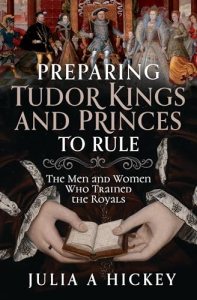 In life, when it comes to a new skill or job, you must be trained to become good at it. The same can be said for the monarchy, which in a sense is a job that encompasses one’s entire life. You have to understand different languages, rhetoric, the arts of dancing, and music, as well as diplomacy and physical activities if you want to rule a nation. It may seem like a lot for one person to handle, but from the moment of their birth, a prince or princess has a team of people behind them to make sure that they are ready to either rule their home country or create an alliance with other nations. The Tudors knew how important educating their future monarchs was for the survival of the dynasty. Julia A. Hickey examines the people behind the teams raising the future Tudor monarchs in her book, “Preparing Tudor Kings and Princes to Rule: The Men and Women Who Trained the Royals.”
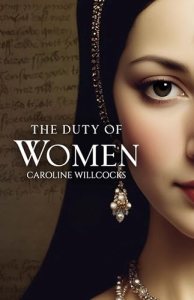 The Tudor court during the reign of King Henry VIII was a treacherous place to be, even for the humble female musician. It was full of men and women vying for a position of power, and they were ready to give anything and everything for that power. This is the world that Kat Cooke finds herself in. After faithfully serving Queen Katherine of Aragon for years, she must switch her loyalties to Anne Boleyn, but when things get dangerous, where will Kat’s loyalties lie? Can Kat survive such turbulent times or sacrifice everything she holds dear? Kat’s story is told in the second book of Caroline Willcocks’ Tudor Queens series, “The Duty of Women.”
 Adventures of a Tudor Nerd