
Hey my fellow history nerds!
I know this is not the kind of post that you normally see on the blog; it’s usually something you will see on the Facebook page, but this was such a big milestone that I felt like it warranted a blog post.
As you can tell from the title of the post, Adventures of a Tudor Nerd has officially crossed over 500,000 views, which is insane to think about. Seven years ago, when I started after I was a guest author for Rebecca Larson’s blog, Tudor Dynasty. It was a lot of fun, but Rebecca said that I should try writing my own history blog. I wasn’t sure what I could write about since all I am passionate about are history and books, so I decided to give history book blogging a try and post book reviews.
And the rest was history.
I wasn’t sure if anyone would be interested in what I had to say when it came to history books, but you guys have been such an amazing community. I started with the Tudors because that was the dynasty that I felt the most comfortable discussing, but as time has gone on, I have added even more periods of the past; the Anglo-Saxons and the Vikings, the Plantagenets and the wider medieval world, the Wars of the Roses, the Tudors, and most recently the Stuarts. It’s been fun to share my thoughts on books with all of you, but I also believe that authors should be able to promote their books on my blog through guest post, to bring things full circle. Finally, I enjoy talking about TV shows and movies that I have watched and want to rant about, as well as poetry that I find profound.
I have been blown away by the amount of love and support that I have received over the years. I am just a history nerd with a love for the past and books. Thank you all so much for being part of this crazy, amazing adventure. To the publishers and authors I have worked with, thank you for allowing me to read some truly amazing books, and thank you for becoming mycolleagues and friends.
This has been such an unbelievable journey so far, and I can’t wait to continue to embark on even more history adventures.
Keep on taking your own history adventures and never stop learning from the past.
Here’s to more history adventures!
-Heidi
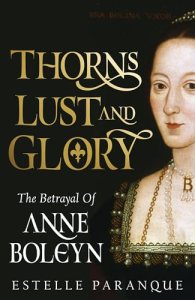 A young woman catches the attention of a king already married to a princess from a faraway kingdom. The king desires the young lady and divorces his wife to marry her. However, there is a catch. The young lady spent some time in the French court of Francis I and Claude of France, whereas the king’s wife was the daughter of the Spanish King and Queen as well as the aunt of the Holy Roman Emperor. The Great Matter of Henry VIII, Anne Boleyn, and Catherine of Aragon is considered one of the messiest divorces in English history and rightfully so when you consider the diplomatic consequences that this divorce would have across Europe. Estelle Paranque highlights the connection between Anne Boleyn and the French court in her latest book, “Thorns, Lust, and Glory: The Betrayal of Anne Boleyn.”
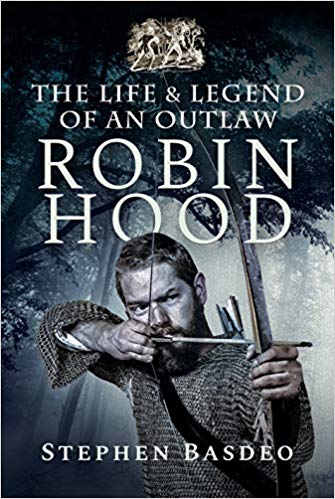 When one studies history, one comes across legends and myths that seem to transcend time itself. In England, there are two such legends. One, of course, is King Arthur and his Knights of the Round Table. The other is of a rogue and his band of merry men, who “stole from the rich and gave to the poor”. Of course, I am speaking of none other than Robin Hood. When exploring Robin Hood, tons of questions come to mind. Who was Robin Hood? Was Robin Hood an actual person? How did his legend change over time? Stephen Basdeo, an Assistant Professor of History at Richmond University, dives into discovering the truth about Robin Hood in his latest book, “Robin Hood: The Life and Legend of an Outlaw”.
 Adventures of a Tudor Nerd