
 When we think of old homes, we often think of the phrase, “If walls could talk,” because the true treasure of any home is not the floorboards or the walls, but rather the stories of those who lived inside its walls. Take, for example, Hampton Court Palace in England. A home for over 500 years that has seen many architectural and artistic changes in its hallowed halls, but it is the stories of those who stayed for brief periods that truly make this palace spectacular. Stories full of salacious scandals, religious implications, and revelations that would shake England to its core through revolutions. Hampton Court Palace has been the center of English court drama for centuries and finally, these tantalizing tales are being told in a truly remarkable book, “The Palace: From the Tudors to the Windsors, 500 Years of British History at Hampton Court” by Gareth Russell.
I would like to thank Gareth Russell and Atria Books/Simon and Schuster, for sending me a copy of this book. I have enjoyed Russell’s previous biographies about The Queen Mother and Catherine Howard, so when I heard that he was writing a new book about Hampton Court Palace, I knew I wanted to read it.
Russell structures this book similarly to how he structured, “Do Let’s Have Another Drink” in that each chapter is a different tale from this palace’s half a century of history, which is a ton of historical fun to explore. He starts with a story of a ball attended by Elizabeth Windsor, soon to be Queen Elizabeth II, a few days before her coronation in 1953. Full of glitz and glamor, we soon transition to the origins of the land that Hampton Court Palace resides on and how the palace came to be after its humble beginnings as an estate for the Knights Hospitaller. It was not until the Wars of the Roses that the manor gained prominence under a favorite of Henry VII, Giles Daubeney, 1st Baron Daubeney.
By understanding how this phenomenal manor became a palatial palace, we can appreciate the stories that are the bulk of this book. Russell takes his readers through 500 years of English royal history, starting with the tumultuous Tudors, moving to the saucy Stuarts, the haughty Hanovers, the gossiping Georgians, and finishing with the worldly Windsors. Each chapter focuses on one character from each dynasty and one room of the palace.
While I was relatively well aware of the Tudor tales of Cardinal Wolsey, Catherine Howard’s run down the Haunted Gallery, and Mary I’s phantom pregnancies, it was the other dynasties that drew me into an engrossing book. The Stuarts especially shocked me with the colorful cast of characters who ranged from King James I with the King James Bible, Charles II and his many mistresses, and Oliver Cromwell. Russell shows the tragic moments, which included the death of several queens of England, the chaotic period known as the English Civil Wars, the creation of “The Tomb of the Unknown Warrior,” and the story of The Grand Duchess Xenia, the last living sister of Tsar Nicholas II. There are also stories full of art, scientific research, love, humor, and even chocolate and court life.
Russell’s narrative style of writing combined with his meticulous research has created another smash hit. I could not put this book down and I was very sad when I finished reading it, I did not want it to end. I don’t want to spoil much about this book, but it is my new favorite book by Gareth Russell. If you want a book full of fascinating history that you can binge-read, I highly suggest you read, “The Palace: From the Tudors to the Windsors, 500 Years of British History at Hampton Court” by Gareth Russell.
 The 1520s in England were a raucous time. As the years pass, King Henry VIII’s desire for a legitimate son grows and his resentment towards his wife Katherine of Aragon increases. Henry has decided to divorce his wife of over 20 years to marry a new fling, Anne Boleyn, who would surely give him the son and heir. All of Europe, especially the Pope, is horrified at the direction Henry is taking, but one man stands firmly on the side of the King. Thomas Cromwell rose through the ranks to become Henry VIII’s right-hand man, even though he had rather humble origins. Can Thomas Cromwell help the man who made him and survive the king’s wrath? Hilary Mantel explores the origins of Cromwell’s rise and The Great Matter in the first book in her Thomas Cromwell trilogy, “Wolf Hall.”
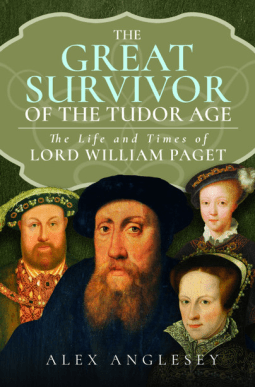 Rulers cannot govern alone. They require a team of men and women behind them to operate as a cohesive unit. The same can be said for rulers during the Tudor dynasty. We know the stories of men like Cardinal Wolsey and Thomas Cromwell, two men who rose through the ranks to prominent seats of power to ultimately have disastrous falls from grace. However, there was a third Tudor politician who should be in this discussion about rags-to-riches stories. He was the son of a common merchant who went to serve most of the Tudor monarchs as an advisor. Conspiracies and rebellions kept him on his toes, but he ultimately survived the Tudor dynasty, which was a difficult thing to achieve. His name was Lord William Paget and his story is told by his descendant Alex Anglesey in his debut book, “The Great Survivor of the Tudor Age: The Life and Times of Lord William Paget.”
 The year is 1523, and England is again preparing for war against its mortal enemy, France. Cardinal Wolsey is firmly in power as King Henry VIII’s right-hand man who is about to open Parliament, but Sir Thomas More’s star is slowly rising. London is busy, and at the center of it, all is Wolsey’s trumpeter and groom, Anthony Blanke. In this chaos of Wolsey’s household where murder and betrayal lie, and the enemies of the Cardinal begin to pile up. It is up to Anthony Blanke to clear his name and find the murderer before it is too late. Anthony’s latest thrilling adventure occurs in Steven Veerapen’s novel, “Of Judgement Fallen: An Anthony Blanke Tudor Mystery.”
 When we think about those who rose through the ranks to achieve significant titles in the Tudor Court, we instantly think about Thomas Cromwell. However, we should also consider his mentor as one of these great men, Cardinal Thomas Wolsey. The son of Robert Wolsey, an Ispwich businessman, and his wife, Joan Daundy, who worked hard and ended up being the right-hand man of the young King Henry VIII. The man behind Hampton Court helped start the Great Matter and The Field of Cloth of Gold, Wolsey had numerous achievements. Who was the man behind these significant Tudor moments? This is the question Phil Roberts tries to address in his book, “Cardinal Wolsey: For King and Country.”
 When we think about the men who surrounded King Henry VIII, a few names come to mind. Cranmer, More, Wolsey, and Wroithesley are just a few, but the man who is synonymous with the infamous king’s reign is Thomas Cromwell. The man who helped Henry get his divorce from Katherine of Aragon saw both the rise and fall of Anne Boleyn. He also assisted in the dissolution of the monasteries and brought reform to England with the break from the Roman Catholic Church. To modern audiences, it feels as if we know everything that there was to know about Thomas Cromwell’s public life, but what was he like in his private life when his friends and family surrounded him? Caroline Angus gives her readers an insight into Cromwell’s personal life in her latest book, “The Private Life of Thomas Cromwell.”
 The year is 1522, and London is in a jovial mood. King Henry VIII and his wife Catherine of Aragon are to play host to the Holy Roman Emperor Charles V as he visits England. As one of King Henry VIII’s most loyal advisors, Cardinal Wolsey had the great honor of hosting a grand masque featuring King Arthur and the Black Knight for the distinguished company. Unfortunately, as preparations for the luxurious masque are in full swing, Wolsey’s historian is horrifically murdered. The only one who can solve the case is Anthony Blanke, the son of John Blanke, the trumpeter before the masque is ruined, and Henry VIII discovers the truth. The story of this case is told in Steven Veerapen’s latest novel, “Of Blood Descended.”
 One of the most popular Tudor historical fiction series in recent memory has revolved around the enigmatic Thomas Cromwell. Of course, I am talking about the famous
  The story of the reign of King Henry VIII has been told mainly through his numerous marriages and through the lives of his children. Although his immediate family was a big part of his legacy, there is much more to his story than his tempestuous relationships. There were also his legal, religious, and military exploits. The ones who were with Henry when he made these decisions were the men who were loyal to him, his counselors and companions. Their tales are often told separately, until now. Tracy Borman has decided to masterfully combine their tales to explore the life of their infamous king in her latest biography, “Henry VIII and the Men Who Made Him”.
  Adventures of a Tudor Nerd