
 As humans, we love a good love story. Tales of courtships, grand confessions of love, over-the-top weddings, and marriages that last decades. These seem like high expectations, especially when we compare these expectations to royal courtships of the past. The majority of royals married and they were more focused on political matches instead of love. However, few chose a different path altogether, they decided to be single. One of the most famous monarchs with a single status was Queen Elizabeth I of England, the Virgin Queen So why did Elizabeth stay single throughout her reign, and how did she navigate her numerous suitors? Carol Ann Lloyd tries to answer these questions in her latest book, “Courting the Virgin Queen: Queen Elizabeth I and Her Suitors.”
I want to thank Pen and Sword Books and Net Galley for sending me a copy of this book. I enjoyed Lloyd’s previous book, “The Tudors by the Numbers,” so when I heard about this book and that it would be about Elizabeth I and her romances, I knew I wanted to read it.
Lloyd breaks her book down into sections focusing on the suitors and the aspects that made her reign rather unique. While she was a child, Elizabeth’s primary purpose was to create a powerful alliance with another country, however, issues of legitimacy and religion hampered any real chance of her marrying anyone before she became queen. Once she was crowned, the marriage market became even more complicated as she not only had a great number of eligible suitors both in England and abroad, she needed to make sure her kingdom was secure and that she remained in power. She had to balance her natural and her political body of a ruler, a task that was difficult for a man to accomplish let alone a queen whose legitimacy and religious standings were on shaky grounds.
I think Lloyd did a great job of presenting new information about Elizabeth I, her suitors, and how different aspects of courting affected how the queen ruled. I will say that the way the book was organized did hinder my enjoyment of this book a little bit. I think it would have made more sense to have the aspects of Elizabeth’s courting and how it affected her reign before diving into her numerous suitors and why things didn’t go so well, which led to Elizabeth becoming the titular Virgin Queen.
Overall, I did find this a rather informative and fascinating read. If you want a solid book about Elizabeth I and her numerous romances, I recommend you read, “Courting the Virgin Queen: Queen Elizabeth I and Her Suitors” by Carol Ann Lloyd.
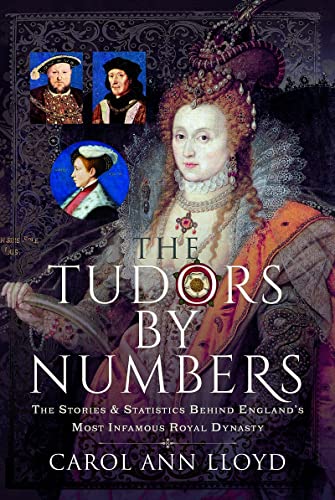 The story of the Tudor dynasty has been told in numerous different ways. We know the major figures, the significant events, and the stories of their love lives. We understand how they changed the history of England and Europe forever, but these are just the basic facts. If we look at the numbers surrounding the dynasty, what type of story does it tell? This is the approach Carol Ann Lloyd has taken in her debut book, “The Tudors by Numbers: The Stories and Statistics Behind England’s Most Infamous Royal Dynasty.”
 Adventures of a Tudor Nerd