
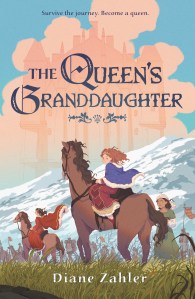
 When a medieval princess married, most of the time, she had to take an arduous journey to their new country. For many of these royal ladies, they had an idea that this would be their fate at a young age, but for others, it would come as a complete surprise. Take, for example, Blanca (Blanche) of Castile. She was the granddaughter of the indomitable Eleanor of Aquitaine. When it is time to create a marriage alliance between Castile and France, Blanca believes that her sister Urraca will be the one who will become Queen of France. However, Eleanor has other plans. How will the journey change Blanca and get her ready to rule a nation? Diane Zahler tells the tale of Blanca’s journey to the throne in her middle grade novel, “The Queen’s Granddaughter.”
I would like to thank Roaring Brook Press and Net Galley for sending me a copy of this novel. I tend to read books tailored towards young adults and adults, but I wanted to see how middle grade books handle historical figures. My love of history started with a middle grade book, so I wanted to see how middle grade books are for the next generation of history nerds.
We are introduced to Blanca of Castile when she was twelve years old. As the daughter of Alfonso VIII of Castile and Eleanor of England, Blanca realizes that she will have to marry one day, but she wants to stay with her family in Castile. With the arrival of her grandmother, Eleanor of Aquitaine, from England to discuss a match between Castile and the French dauphin Louis. Blanca believes that the intended bride will be her elder sister Urraca, but she doesn’t want her sister to leave. Grandmother Eleanor has a different plan and says that the bride to be is Blanca.
To say Blanca is shocked will be an understatement, but after spending time with her best friend Suna and her family, who are Almohads, Blanca decides that she will go to France. Suna, grandmother Eleanor, and Sir William Marshal join Blanca in her journey over the Pyrenees Mountains to France. The journey is arduous as they encounter a snow storm that lands the party in a cave while grandmother Eleanor recovers from an illness. They also face off against Hugh de Lusignan, a man who is seeking vengeance. Throughout the journey, Blanca learns that a queen must make difficult decisions and say the hardest goodbyes for the good of her new kingdom.
This was a great novel to get younger future history nerds interested in history. It was well researched and even gives Zahler’s readers mini biographies about the main characters so that they can begin their own journey into medieval European history. If you want a book for a young history lover in your life that focuses on medieval Castile and France, I recommend you check out “The Queen’s Granddaughter” by Diane Zahler.
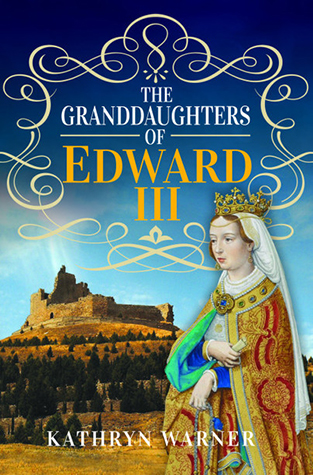 When we think about the legacy of Edward III, we often think about a warrior king who became king after his father, Edward II’s disastrous fall from grace. We know about his sons that he had with his beloved wife, Philippa of Hainault: Edward the Black Prince, Lionel of Antwerp, Duke of Clarence, John of Gaunt 1st Duke of Lancaster, Edmund of Langley, 1st Duke of York, and Thomas of Woodstock, Duke of Gloucester. Famously, we get the 15th-century conflict known as the Wars of the Roses through the descendants of Edward III. However, the male descendants only tell half the story of Edward III and Philippa of Hainault’s legacy in England and throughout Europe. In her latest book, “The Granddaughters of Edward III,” Kathryn Warner examines the lives of Edward III’s female descendants to better appreciate the strength of this group of branches of the Plantagenet family tree.
 Medieval princes are often viewed as men who will one day be king of their homeland or another country. They are seen as wealthy men with prestige and honor who live lavish lifestyles and go to war to earn titles and estates. One of these noble medieval princes was a man who married three times, including to his most beloved mistress. He was the son of Edward III, the uncle of Richard II, and the father of the queen of Castile and King Henry IV, the first Lancastrian king. His children, grandchildren, and great-grandchildren would rule in different European countries, even though he never had the chance to wear the crown of England or Castile for himself. His name was John of Gaunt, and his story is told in Kathryn Warner’s latest biography, “ John of Gaunt: Son of One King, Father to Another.”
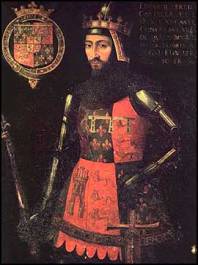 (Born March 6, 1340- Died March 15, 1399).
  Adventures of a Tudor Nerd