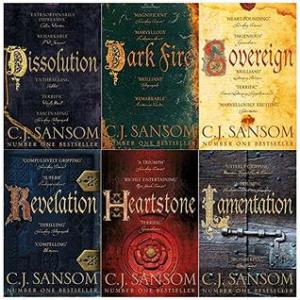
 Have you ever read a historical fiction series that made you stop and think that the plots of the books could be possible? They make you question the way you look at the past and wonder why no one had ever written a series like it before. You feel like you are friends with the protagonist and his pals and you despise the nefarious villains that try to thwart the efforts of the heroes. You feel like the books are true escapism and that you can visualize the world that the author has created using a combination of facts and fictional ideas.
Now, I could be describing any number of historical fiction series, but this one, in particular, blew me away. If you have been following my blog or my page, you know that I am talking about the Matthew Shardlake series by C.J. Sansom. The books are all unique, yet read in the chronological order that Sansom intended, shows the amazing progress of England through the reign of the Tudors and how these changes affected those living during this time. We follow the hunch-back lawyer Matthew Shardlake on seven of his more infamous cases, each one more dangerous than the previous one: Dissolution, Dark Fire, Sovereign, Revelation, Heartstone, Lamentation, and Tombland.
 Before I jumped into this series, I honestly had never heard of it, except when people mentioned these books in posts that I asked my followers what they are reading. I do not normally read murder mystery novels, but since it was based in the Tudor dynasty, I decided to give it a shot and I wholeheartedly loved it. I am so glad no one spoiled this series for me. I might fangirl a bit during this review, but I will try my best not to spoil this series for anyone else. I want to discuss the different elements of this series that I have comes to enjoy. I would love to continue to discuss this series with those of you who have read it and have enjoyed it as much as I have.
Characters
Matthew Shardlake
Matthew Shardlake is our main protagonist in this series, aptly named after him. As mentioned above, he is a hunch-back lawyer who works hard to solve mostly murder mysteries. He fights for what he believes is right, even when times get tough. There are sometimes when he is not even sure what he stands for, especially when it comes to his stance on religion and if he supports those in power. He is constantly the butt of everyone’s jokes and for the most part, they don’t bother him. He fights against notorious enemies while defending his friends and those who cannot defend themselves. Matthew is unlucky when it comes to love, but that does not mean that we can’t help but root for him to find his happily ever after. There were so many times that I was not sure Matthew was going to survive, but Sansom’s plan for his loveable protagonist throughout this series was simply brilliant. A protagonist who I will never forget.
 Jack Barak
We are first introduced to Jack Barak in book two of the series, “Dark Fire”. He was a rogue working for the mighty Thomas Cromwell. He teams up with Shardlake for what seems like only one case, but the two men soon develop a lasting friendship, even when things get a bit rocky between them. In the third book, “Sovereign”, Jack is introduced to the love of his life, Tamasin. Their relationship will be tumultuous at times, but it is caring and it does survive the test of time. He is the bad boy turned family man that everyone loves. He does make stupid mistakes, but you cannot help but admire his tenacity.
Guy Malton
Next to Matthew Shardlake and Jack Barak, Guy Malton is probably one of my favorite characters. We are introduced to Guy when he was working in a monastery in “Dissolution”. Guy goes from a former monk to a well known and respected apothecary with his shop. He is unlike anyone who Matthew has ever met as he is a Moorish man turned Christian monk. I love the fact that Sansom went this direction to show how truly diverse the Tudor world was. Guy challenges Matthew when it comes to religion and what he believes is right when it comes to science. He is the wise old man that heals everyone’s wounds and is a comforting counsel when someone needs his help.
 Nicholas Overton
Nicholas Overton is Matthew’s young assistant in the last two books, “Lamentation” and “Tombland”. He comes from a wealthy family, but when a disagreement happens, he goes to work for Matthew Shardlake. He is young and naive but loyal to a fault. He believes that everything should be handed to him on a silver platter until life gives him a rude awakening call. We don’t get to see him develop as a character as much as the others, but I hope if Sansom writes any more novels, he includes Nicholas Overton.
Historical Figures
Now, some characters are historical figures that make an appearance in the novels that left a lasting impression on me while I was reading. The calculating Thomas Cromwell, who was always trying to stay in his majesty’s favor and do his bidding until the bitter end. The dastardly Richard Rich, who I have always felt was a bit shady, but Sansom made me hate him even more. The legend himself, King Henry VIII, who is glittery and magnanimous to his people, but if you cross him, his true colors come out in full force. Catherine Parr, the scholar turned queen whose writings and her views on religious reform walk a fine line between what is acceptable and what is considered heretical. Elizabeth Tudor, the intellectual daughter of the king who has a similar temper to that of her father, but has a longing to help the Boleyn family in honor of her mother.
What is brilliant about Sansom’s series is that these historical figures are more background characters or they are villains. They are not the protagonists, as they are portrayed in other historical novels. The real heroes are the average people, reminding the reader that under all the glitz and glam of the Tudor court, there were regular men and women were trying to survive during such tumultuous times.
 Cases
Cases
With such a remarkable cast of characters, Sansom had to put them through extremely difficult obstacles to test their limits and to give his readers a breathtaking look into the Tudor world. Whether it is the dissolution of a monastery, a race to find a mysterious flame, a radical killing based on the book of Revelation, or the sinking of the Mary Rose, Sansom takes us on a non-stop roller coaster of emotions. Just when you thought you had the case figured out, a monkey wrench is thrown into the mix and all of the sudden, our intrepid heroes are risking their lives because one of the villains knew that they were getting too close.
Since all of these novels revolve around murder mysteries, I think it is only right that we should discuss the murders themselves. In “Dissolution”, there is a typical advancement of murder to cover up the original crime. As the series progresses, you can see the wheels turning in Sansom’s head as he comes up with even more dastardly ways to kill off in his novels. There were points where I was starting to get concerned just from the graphic details of some of these deaths and executions. They will be engrained in my brain for a long time, which is a sign of how delightful Sansom’s writing style truly is, especially in this series.
 The Details
As I mentioned before, what sets this series apart from others that I have read are those exquisite details. I think what helped is the fact that C.J. Sansom does have a Ph.D. in history, so he understands how important accurate facts are to historical fiction readers. The fact that Sansom decided to use his skills as a Doctor in History to write a Tudor historical fiction murder mystery series is awe-inspiring.
He was able to create a Tudor world that feels so real that you forget that you are reading novels. From scenic descriptions to the more gruesome accounts of horrific events, Sansom takes us on a trip to the past that we do not want to leave. We are craving more adventures after we finish every novel.
The Future
However, as I am writing this review, Tombland is the final book in the Shardlake series. C.J. Sansom is currently ill and I wish him nothing but the best in his recovery. These seven books make for a fabulous series, but Sansom has mentioned that he does wish for the series to go through the reign of Elizabeth I, which I would love.
As I was reading this series, I came up with some ideas for spin-off series to continue the adventures of Matthew Shardlake and his friends. For prequels, I was thinking that Sansom could either follow the adventures of Jack Barak working for Cromwell or Guy Malton as he learns how to be Moorish and a monk. Then there is the sequel, which I think would have Nicholas Overton as the protagonists and the children that we have seen grow up during this series. They could solve mysteries in the Elizabethan era into the Stewarts, bridging the gap between the two dynasties. I also think that if Sansom does write more novels with this cast of characters, it would be fun to explore other countries, in Europe or beyond, during the 15th and 16th centuries. I think it would expand the world for the readers and give them a taste of other royal dynasties and what else was going on in the world during the time of the Tudor dynasty in England.
Update: On Saturday, April 27, 2024, CJ Sansom died. Thank You CJ Sansom for sharing your passion for the past, especially the 16th century with The Matthew Shardlake series. Your stories have inspired countless historians and historical fiction writers, giving readers a historical escape for years.
 Conclusion
I am so glad so many of you recommended that I should read this series. I would have never picked it up if it had not been for you. I now know why so many people love it. It is one of those series that you have to read from start to finish, even though each adventure is a treat by themselves. It is one of those series that I will reread soon so that I can visit Matthew Shardlake and his friends all over again.
I wanted to write this series review because the Shardlake series is easily becoming one of my favorite historical fiction series and I had a lot to say about it. I decided to leave major details of the individual novels out of this review so that those who are not familiar with these seven stunning, spellbinding novels can experience them for themselves without spoilers. If you do want to know how I feel about each book, I have included links to each of the reviews down below.
Dissolution:https://adventuresofatudornerd.com/2020/06/06/book-review-dissolution-by-c-j-sansom/
Dark Fire:https://adventuresofatudornerd.com/2020/06/20/book-review-dark-fire-by-c-j-sansom/
Sovereign: https://adventuresofatudornerd.com/2020/07/05/book-review-sovereign-by-c-j-sansom/
Revelation: https://adventuresofatudornerd.com/2020/07/21/book-review-revelation-by-c-j-sansom/
Heartstone: https://adventuresofatudornerd.com/2020/08/04/book-review-heartstone-by-c-j-sansom/
Lamentation: https://adventuresofatudornerd.com/2020/08/22/book-review-lamentation-by-c-j-sansom/
Tombland: https://adventuresofatudornerd.com/2020/09/21/book-review-tombland-by-c-j-sansom/
I want to leave the last part of this review for those who have read this remarkable series to discuss it. I know that is not a series that is often discussed, so I thought that you should have your say. What is your favorite book in the series and why? Who is your favorite character and why? Who is your favorite villain and why? Why do you enjoy this series?

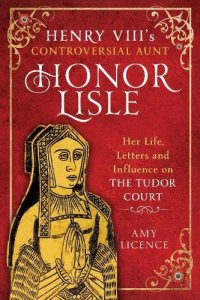 Marrying into the royal family is not all sunshine and rainbows. Of course, we tend to think about those who marry the king, the queen, the prince, or the princess. But we also need to consider the aunts and the uncles of the royals as part of the family. Take, for example, Arthur Plantagenet, the illegitimate son of Edward IV and the uncle of Henry VIII. His second wife, Honor Lisle, would help him rule Calais; however, she is best known for her letters and her devout Catholic faith during the Reformation in England. So why is Honor Lisle considered a controversial figure, and what was the cause of the fall of Honor and Arthur from the royal good graces? Amy Licence explores the life of Henry VIII’s step-aunt in the first full biography dedicated to Honor Lisle, which is entitled “Henry VIII’s Controversial Aunt, Honor Lisle: Her Life, Letters, and Influence on the Tudor Court.”
 The world of the 16th century was full of change and equally colorful characters. Most of the dynamic figures of this century were women, who were willing to fight in their ways for what they believed in, whether it was family, faith, or their country. They were heroines in different ways, and each had a story to tell. Each woman had to deal with her obstacles to reach their desired goal, no matter what her station was, from queens and great heiresses to nuns, and even a pirate. Sharon Bennett Connolly has decided to include a handful of these stories in her latest book, “Heroines of the Tudor World.”
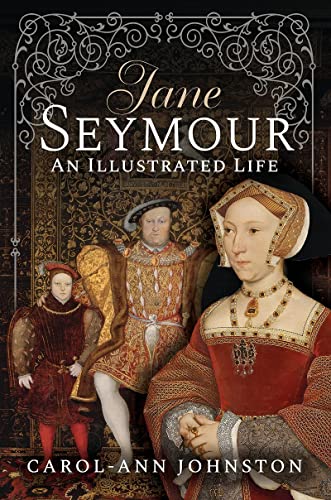 King Henry VIII’s six wives each have their unique story that transcends time. Katherine of Aragon was his first wife, the mother of Mary Tudor, and the one Henry left behind after 24 years to marry his mistress Anne Boleyn, the most famous of his wives and the mother of Elizabeth Tudor. Anna of Cleves had the shortest marriage to Henry VIII and ended up with an excellent annulment deal. Catherine Howard was young and a bit naive when it came to the ways of men, which led to her downfall while Catherine Parr survived until the end of Henry VIII’s reign. These five women are stories we know by heart, but the one whose story remains a mystery is Jane Seymour, Henry’s third wife, and the mother of the future King Edward VI. In her debut book, “Jane Seymour: An Illustrated Life” Carol-Ann Johnston tells the story of the wife who gave Henry his desired son.
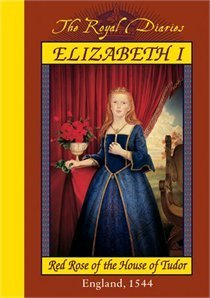 What was the first book you read that excited you so much about the historical figure that you wanted to continue studying history? You would read any text you could get ahold of that mentioned their name, including encyclopedia entries. You have fond memories of that book and wish to reread it as an adult to see if it is still a great book with all its charms. I have noted numerous times that the book series that enticed me to study history was The Royal Diaries Series. The book that started my fascination with the Tudors was “The Royal Diaries- Elizabeth I: Red Rose of the House of Tudor” by Kathryn Lasky.
 Many actors and actresses have portrayed the lives of Henry VIII and his six wives in modern films and dramas. When asking Tudor nerds which Henry VIII stood out the most, the most popular response is Keith Michell in the 1970s BBC series, “The Six Wives of King Henry VIII.” I had not heard about this series until I started “Adventures of a Tudor Nerd.” Many people have wanted me to watch the series solely for the performance of Keith Michell, so when a coworker allowed me to borrow her DVD copy of the series, I finally decided it was time to tackle this legendary series.
 The year is 1547, and the infamous King Henry VIII is dead. The throne is left to his young son Edward VI while his half-sisters Mary and Elizabeth wait in the wing. Without their powerful father to look after their well-being, his children must navigate the tumultuous Tudor court with powerful men who desire to use them as mere pawns in their game to influence how England is ruled. Throw in some romantic drama and the ever-changing religious landscape with the clash between Protestants and Catholics. This is the premise of the latest Tudor drama on Starz, “Becoming Elizabeth,” which follows the titular Princess Elizabeth Tudor during the reign of the third Tudor king.
 The cast of “Becoming Elizabeth” is a plethora of talented actors and actresses who remarkably bring the treacherous Tudor court to life. The titular role of Princess Elizabeth was played by Alicia von Rittberg, who portrays the young woman’s naivety and eventual strength in love and court politics. Oliver Zetterstrom is the young King Edward VI who struggles to find his identity as a reformer king while navigating the drama of his court and Lord Protectors. Finally, we have Romola Garai, who revolutionized how Princess Mary Tudor was portrayed on television. Garai gives the audience a more sympathetic and vibrant woman trying to hold her family together while defiantly standing up for her Catholic faith in a Protestant court.
 While most of the storylines are engaging, and I found them rather enjoyable, one got under my skin: the intimate relationship between Princess Elizabeth and Thomas Seymour. Now I know it was the central storyline for the first half of this show, but it made my skin crawl. I know that Tom Cullen has discussed this issue with fans, and I think his portrayal of Thomas is spectacular. My problem is with Princess Elizabeth and how she goes along with the relationship to the point of no return. I feel like Princess Elizabeth was much stronger than how she was portrayed during those moments in the show, and she would have turned Thomas down, knowing the false allegations against her mother, Anne Boleyn. I do not think she slept with Thomas Seymour, but I do believe there were elements of flirting between the two, which could have been seen as them having an intimate relationship.
 The year is 1546 and England is once again in turmoil. Rumors swirl that the once-mighty King Henry VIII is gravely ill and his councilors, both Protestants and Catholics, are vying for power to see who will help Henry’s young son, Edward when he becomes king. With such distinct factions, those are not Protestant or Catholic, like the Anabaptists, are deemed heretics and they are hunted down. Executions over faith, like the death of Anne Askew, run rampant across London. Those who own books that were deemed “controversial” were under a shroud of suspicion. When Matthew Shardlake’s main supporter, Queen Catherine Parr’s book Lamentation of a Sinner, goes missing, Shardlake must navigate the religious divide carefully to retrieve the missing manuscript before it is discovered. Can Shardlake and his friends save the queen from the heresy hunt in time? The stakes could never be higher in C.J. Sansom’s sixth Shardlake novel, “Lamentation”.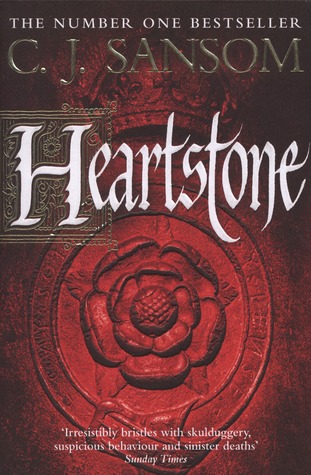
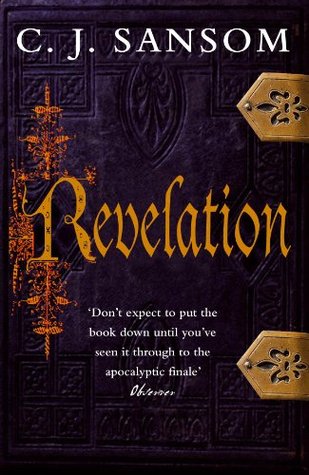 The year is 1543 and King Henry VIII is looking for his sixth and final wife; the recent widowed Catherine Parr has caught his eye. It is her reformist values that make her a valuable asset for Archbishop Cranmer and his faction at court, and a target for others. A friend of Matthew Shardlake is viciously murdered, leading to a horrific discovery of a killer is on the loose. On top of that, Shardlake must defend a young man who has been placed in the Bedlam insane asylum for his radical beliefs. It is up to Shardlake and his intrepid assistant Barak, along with the former monk turned physician Guy Malton, to solve both cases before anyone else becomes the next victim. This is the world that readers are plunged to in the next book in C.J. Sansom’s Shardlake series, “Revelation”.
 Adventures of a Tudor Nerd