 I am pleased to welcome Judith Arnopp to my blog today to share an excerpt from her latest novel, “A Matter of Conscience: Henry VIII, The Aragon Years”. Thank you, The Coffee Pot Book Club and Judith Arnopp for allowing me to host a spot on this blog tour.
Excerpt
1505 – Henry is informed by his father that he must withdraw from his betrothal to Catherine of Aragon
Most of my companions, the older ones at least, have tasted the pleasures of women but I have no desire to dally with whores. Instead, when the curtains are drawn about my bed at night, I think of Catalina and the delights we will one day enjoy. Since there are no tutors to instruct me on such matters, I listen to the tales my friends tell of their conquests. The prospect of bedding my future wife fills me with a mix of excitement and terror.
And then, on the eve of my fourteenth birthday, the king informs me that I must make a formal protest against the union with Spain.
“Why?” I exclaim. “I have no wish to protest against it!”
Father rubs his nose, dabs it with his kerchief, rolls it into a ball, and glares at me.
“Your wishes are of no moment. This is politics. You will do as you are told.”
I am furious but I know better than to argue. It would do me no good. I can feel my ears growing red with resentment. I clench my teeth until I hear my jaw crack. Oblivious to my feelings, Father shuffles through the papers on his desk, picks one up, and reads aloud the instruction he has written there.
“You must declare, before witnesses, that the agreement was made when you were a minor and now you reach puberty you will not ratify the contract but denounce it as null and void. Your words will be set in writing and then signed and witnessed by six men.
Protestations tumble in my mind but I cannot voice them. When he dismisses me with a flick of his fingers, I bow perfunctorily, turn on my heel, and quit the room. I find Brandon on the tennis court, loudly protesting the score while his opponent, Guildford, stands with his hands on his hips.
“You are wrong, Brandon, the point is mine. Isn’t that so?”
He turns to the others, who are lounging nearby. Having only been half attending, they shrug and shake their heads noncommittally.
“My Lord Prince,” Brandon, noticing my arrival, turns for my support. “You witnessed it, did you not? The point was mine. Back me up, Sir.”
I pick up a racket, idly test it in my hand, and emitting a string of curses, hurl it across the court. Silence falls upon the company.
“What ails you, Sir?”
Brandon is the only one brave enough to come forward. He reaches out, his hand heavy on my shoulder. There are few men I allow to touch me. At the back of my mind, I am aware that Brandon is merely proving to others how high he stands in my regard.
I should shrug him off, but I don’t.
“Walk with me,” I mutter between my teeth and then turn away, almost falling over Beau who dogs my every footstep.
“Out of my way!” I scream and he cowers from me, tail between his legs.
Tossing his racket to Thomas Kyvet, Brandon follows me.
“Henry, wait,” he calls, and I slow my step until he has caught up.
“What has happened?”
“My accursed father.”
I am so angry, I can hardly speak; my lips feel tight against my teeth, my head pounds with repressed fury. “He demands that I denounce my union with Catalina.”
I stop, rub my hands across my face, the blood thundering in my ears.
“I don’t know if I am angry because I have lost her, or because I am so sick of being told what I must do. What will Catalina think? What will happen to her?”
He shrugs. “In all probability, she will be sent home to Spain.”
I think of her leaving, imagine her sad little figure boarding ship for the perilous journey to her homeland. For four years she has lived at the mercy of my father’s generosity which, as we all know, is greatly lacking, and now is to be sent home like a misdirected package.
“Sometimes I feel this … this limbo will never end, and I will spend my whole life under my father’s jurisdiction.”
He flings a brotherly arm about me and I am suddenly grateful to have a friend. He speaks quietly, with feeling and I struggle not to weep like a woman.
“We are all told what to do by our fathers, Henry, and we are much alike you and me. I am also the second son. Had my brother not died, I’d like as not be languishing in the country, wed too young to some red-cheeked matron yet here I am, your honoured servant. One day, you will be king, and I will still be at your side. The future will soon be ours, and the time for following orders will be done with.”
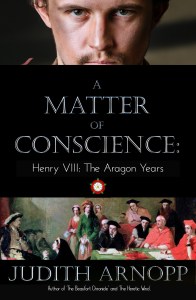 Blurb
Blurb
‘A king must have sons: strong, healthy sons to rule after him.’
On the unexpected death of Arthur Tudor, Prince of Wales, his brother, Henry, becomes heir to the throne of England. The intensive education that follows offers Henry a model for future excellence; a model that he is doomed to fail.
On his accession, he chooses his brother’s widow, Catalina of Aragon, to be his queen. Together they plan to reinstate the glory of days of old and fill the royal nursery with boys.
But when their first-born son dies at just a few months old, and subsequent babies are born dead or perish in the womb, the king’s golden dreams are tarnished.
Christendom mocks the virile prince. Catalina’s fertile years are ending yet all he has is one useless living daughter and a baseborn son.
He needs a solution but stubborn to the end, Catalina refuses to step aside.
As their relationship founders, his eye is caught by a woman newly arrived from the French court. Her name is Anne Boleyn.
A Matter of Conscience: the Aragon Years offers a unique first-person account of the ‘monster’ we love to hate and reveals a man on the edge; an amiable man-made dangerous by his own impossible expectation.
Buy Links:
Amazon UK: https://www.amazon.co.uk/gp/product/B08W48QQ9C
Amazon US: https://www.amazon.com/Matter-Conscience-Henry-Aragon-Years-ebook/dp/B08W48QQ9C
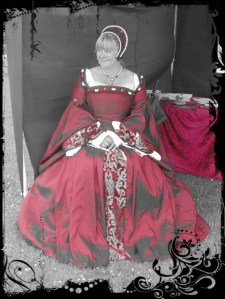 Author Bio:
Judith Arnopp
A lifelong history enthusiast and avid reader, Judith holds a BA in English/Creative writing and an MA in Medieval Studies.
She lives on the coast of West Wales where she writes both fiction and non-fiction based in the Medieval and Tudor period. Her main focus is on the perspective of historical women but more recently is writing from the perspective of Henry VIII himself.
Her novels include:
A Matter of Conscience: Henry VIII, the Aragon Years
The Heretic Wind: the life of Mary Tudor, Queen of England
Sisters of Arden: on the Pilgrimage of Grace
The Beaufort Bride: Book one of The Beaufort Chronicle
The Beaufort Woman: Book two of The Beaufort Chronicle
The King’s Mother: Book Three of The Beaufort Chronicle
The Winchester Goose: at the Court of Henry VIII
A Song of Sixpence: the story of Elizabeth of York
Intractable Heart: the story of Katheryn Parr
The Kiss of the Concubine: a story of Anne Boleyn
The Song of Heledd
The Forest Dwellers
Peaceweaver
Judith is also a founder member of a re-enactment group called The Fyne Companye of Cambria and makes historical garments both for the group and others. She is not professionally trained but through trial, error and determination has learned how to make authentic-looking, if not strictly HA, clothing. You can find her group Tudor Handmaid on Facebook. You can also find her on Twitter and Instagram.

Social Media Links:
Website • Blog • Twitter • Instagram • Amazon

 A love that can get through any obstacle even when the couple is married to other people is considered very rare. However, star-crossed lovers at court were practically unheard of, especially multiple couples from the same family. Anne Brandon knows how rare these matches are as her father Charles Brandon married the sister of King Henry VIII. Now she must figure out her feelings about romance while navigating court life. In the modern day, Caroline Harvey has relationship problems while she navigates the loss of her famous writer, grandfather Dexter Blake. How are these two women from different centuries connected and can they fight for who they love or are they destined to be alone? Alexandra Walsh tells both women’s stories in her novel, “The House of Echoes.”
 The life of a 16th-century princess is not all that it is cracked up to be. You can have jewels, and glamorous dresses, attend the glittering yet treacherous court, and have numerous homes. You must marry the person the king says you should marry to create strong alliances for the kingdom, so the concept of marrying for love is not in your vocabulary. You had to ensure your opinions were kept in line with the monarch’s views so you didn’t meet a disastrous end. In other words, the closer you are to the throne, the more scrutiny is forced upon you. No one understood this advice better than Mary Tudor, the daughter of King Henry VII and the younger sister of Henry VIII. She was a daughter, a sister, a wife, a queen, a duchess, and a mother. Her remarkable story is told in Amy McElroy’s book, “Mary Tudor: Queen of France.”
 When we think of those who made an impact in history, we tend to think of those who have been born to a married couple and therefore were considered legitimate children, especially when it comes to royal children. However, we know that illegitimate royal children, like William the Conqueror, greatly impacted history. Illegitimate royal children may have been barred from becoming king or queen of their respective countries of birth, but that does not mean they didn’t impact how their home country was governed. One of these children who affected politics during the Tudor dynasty was Arthur Plantagenet, the illegitimate son of Edward IV. In her latest book, “Arthur Plantagenet: Henry VIII’s Illegitimate Uncle,” she explores the life of this man who gives us extraordinary insight into the running of Calais and how Henry VIII treated other family members.
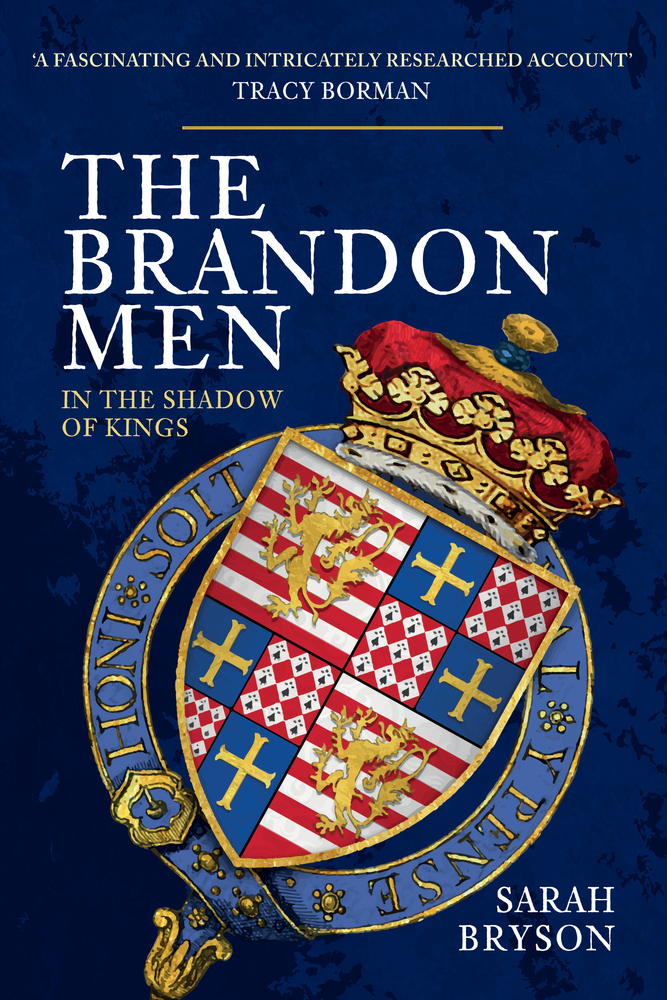 Loyalty to one’s king was imperative during times of war and strife. This statement was painfully true during periods of civil war when cousins fought against cousins. The Wars of the Roses was where we see families rise and fall like the tides, depending on which side they were loyal to and who was on the throne. One family who was able to navigate this political quagmire and end up on the side that would win in the end was the Brandons. Many recognize the name Brandon because of Charles Brandon and his rise in the court of Henry VIII, but how did they reach that point? What are the origins of the Brandon family? In her latest book, “The Brandon Men: In the Shadow of Kings”, Sarah Bryson takes her readers on a ride to find out what loyalty to the crown gave this family and why their legacy lives on today.
 “Uneasy lies the head that wears the crown.” This famous quote from William Shakespeare’s play Henry IV, Part III has been used throughout the centuries to describe how difficult it is to rule a country for any duration of time. Most kings and queens of the past lasted for a few years, but there was one queen who lasted for a handful of days. She was the successor of Henry VIII’s only male son, King Edward VI, and was meant to replace his eldest half-sister, who would become Queen Mary I. It was a battle between Protestantism and Catholicism with a 17-year-old scholar caught in the middle. Her name was Lady Jane Grey, but many refer to her as the “Nine Day Queen of England”. Lady Jane Grey’s tragically short story, how she became queen, and the consequences of her reign are discussed thoroughly in Nicola Tallis’ beautifully written debut biography, “Crown of Blood: The Deadly Inheritance of Lady Jane Grey”.
 The story of the reign of King Henry VIII has been told mainly through his numerous marriages and through the lives of his children. Although his immediate family was a big part of his legacy, there is much more to his story than his tempestuous relationships. There were also his legal, religious, and military exploits. The ones who were with Henry when he made these decisions were the men who were loyal to him, his counselors and companions. Their tales are often told separately, until now. Tracy Borman has decided to masterfully combine their tales to explore the life of their infamous king in her latest biography, “Henry VIII and the Men Who Made Him”.
  When one thinks about women reformers during the time of the Tudors, certain women like Catherine Parr and Anne Aske come to mind. However, there was one who really should get more attention and her name is Katherine Willoughby. She was the last wife of Charles Brandon. Her mother was Maria de Salinas, a lady in waiting to Catherine of Aragon and a devout Catholic. Katherine knew all six of Henry VIII’s wives on a personal level and knew all of his children. She has often been seen as an afterthought; someone you associate with other people, but never a stand out herself. That is until now. Katherine Willoughby finally gets her time to shine in Tony Riches’ latest historical fiction novel and his conclusion to his Tudor trilogy, “Katherine-Tudor Duchess”.
 Attractive, wealthy and influential, Katherine Willoughby is one of the most unusual ladies of the Tudor court. A favourite of King Henry VIII, Katherine knows all his six wives, his daughters Mary and Elizabeth, and his son Edward.
 Author Bio
 Adventures of a Tudor Nerd