
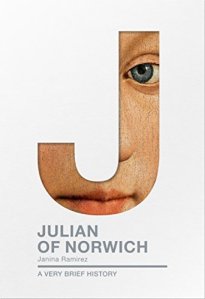
 When we think about the most impactful women authors, we often think about writers like Agatha Christie, Mary Shelley, and Jane Austen. However, when it comes to religious texts, we have to go back in time centuries. We think about nuns like Bridget of Sweden and a mother of 14 children named Margery Kempe. Yet, we must include an anchorite who stayed in her cell for almost thirty years. Her book, Revelations of Divine Love, is considered the first great work of English prose, but many people are not familiar with the author until now. Janina Ramirez tells the story of Julian of Norwich and how impactful her book was in her book, “Julian of Norwich: A Very Brief History.”
I have heard the name Julian of Norwich before in books about the 14th century and church history, but I didn’t know much about her life. I saw this book when I was preordering the latest book by Janina Ramirez, and so I decided to give it a try.
Since this is a short book, I will try to keep this review brief. Ramirez divided this biography into sections: the history and the legacy. In history, we as readers learn about Julian’s life from the limited sources that we have about her, as well as learning about how England and Europe changed during her lifetime. It was a chaotic period in the past with the Bubonic plague, the Hundred Years’ War, the Great Western Schism, the Peasants’ Revolt, and John Wycliffe. Let’s be honest, it’s a lot to deal with, but Julian was positive in her anchorite cell. Ramirez shows how complex yet hopeful and full of love Revelations of Divine Love is while showing the theological arguments Julian of Norwich makes in her work of prose. Finally, we get to see how Julian of Norwich’s story and her writing survived for centuries.
This was a delightful little nugget of a book that was extremely well researched, that shone a light on an obscure medieval woman writer. Reading this book gave me a new appreciation for medieval female authors. If you want to learn more about this remarkable woman, I suggest you read “Julian of Norwich: A Very Brief History” by Janina Ramirez.
 In an age when most women of power did not have much power outside their own countries, one stood higher than most. She was not even supposed to become queen, but fate had a bigger mission for the young woman: rescue Christianity from dying out. As a ruler, this seems like a monumental task to complete especially when their enemies were the Ottoman Empire and the Turks at the height of the power. There was one woman who was up to the challenge while fighting to reclaim Spain for the Christians, exploring the new world, and dealing with her family drama. Isabella of Castile is either viewed as a saintly queen or a horrible woman ruler, but what do the archives tell us about her reign? Kirstin Downey tells the story of this revolutionary queen in her biography, “Isabella: The Warrior Queen.”
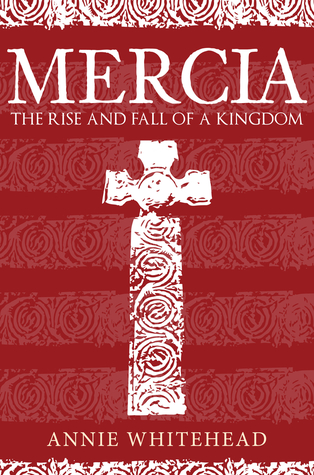 England’s history is full of daring moves and colorful characters, but it is also very ancient compared to other countries. We often considered the “start” of English history in school as the Norman Conquest in 1066. Nevertheless, this was just a stage in the massive story of the island. We have to consider those who called England their home; those who knew England, not as a unified country, but seven kingdoms known as the heptarchy. The most famous of these seven kingdoms was Wessex, the last kingdom, but their mortal enemy had a rich history of their own. Mercia was a thriving kingdom for hundreds of years, with colorful characters that many people are not familiar with. Annie Whitehead has taken the tales of this forgotten kingdom to the forefront with her book, “Mercia: The Rise and Fall of a Kingdom.”
  Adventures of a Tudor Nerd