
 In an age when most women of power did not have much power outside their own countries, one stood higher than most. She was not even supposed to become queen, but fate had a bigger mission for the young woman: rescue Christianity from dying out. As a ruler, this seems like a monumental task to complete especially when their enemies were the Ottoman Empire and the Turks at the height of the power. There was one woman who was up to the challenge while fighting to reclaim Spain for the Christians, exploring the new world, and dealing with her family drama. Isabella of Castile is either viewed as a saintly queen or a horrible woman ruler, but what do the archives tell us about her reign? Kirstin Downey tells the story of this revolutionary queen in her biography, “Isabella: The Warrior Queen.”
I knew a little bit about Queen Isabella of Castile from my research into her daughters Catherine of Aragon and Joanna. I learned about the stories of Christopher Columbus mostly through school. Finally, when it comes to the Inquisition and the Reconquista, it was mostly from movies and television shows. In other words, I did not know much about the reign of Queen Isabella and the history of Spain during this period, so I was excited to start learning through this biography.
Isabella of Castile may have been the daughter of King Juan II and his second wife Isabella of Portugal, but she had two brothers, Alfonso and her half-brother Enrique IV. As the son of King Juan’s first wife Maria of Aragon, Enrique IV became King of Castile after the death of King Juan. Enrique IV helped raise Isabella and Alfonso, but his court was filled with trials, tribulations, and battles. While Enrique IV did marry twice to Blanche II of Navarre and Joan of Portugal, he only had one child, a girl named Juanna le Beltraneja, but a woman could not rule, so the crown was supposed to pass to Alfonso. However, Alfonso died unexpectedly, which left Isabella and Juanna to fight for the throne after Enrique died. Isabella was a prize on the marriage market, but she decided to take her fate into her own hands instead of being a pawn in the game of international politics; she married a man of her choice, the future King Ferdinand II of Aragon.
However, this is not the only time that Isabella took matters into her own hands. When King Enrique IV of Castile died in December 1474, Isabella decided to crown herself Queen of Castile. Although she was married to Ferdinand, she ruled Castile on her own. Ferdinand was not a faithful husband as he was known to have dalliances on the side, but Isabella and Ferdinand did have children who would marry and influence European countries. Isabella was not a wallflower queen as she channeled the spirit of Joan of Arc, especially when it came to battles against the Ottoman Empire under the command of Mehmed II the Conqueror, the fall of Granada in 1492, and ended a struggle between Christians and Muslims in Spain. Isabella also created some questionably dark moments in European history including the Reconquista of Spain, the Inquisition, and the voyages of Christopher Columbus. While we often remember these events as something done by Ferdinand and Isabella, it should be noted that most of these were done according to Isabella’s will. It was not until the death of Isabella that one gets a sense of the type of ruler Ferdinand truly was as he fought against Philip the Handsome and Joanna of Aragon, Ferdinand’s daughter, for the right to rule Castile.
I found this book extremely accessible and informative. Downey was able to be balanced and fair when it came to the more controversial topics about Isabella’s reign. I have a new appreciation for Isabella’s life, her reign, and the history of Spain in general. If you want a fantastic biography about Isabella of Castile that is well-balanced and well-researched, I highly recommend you read, “Isabella: The Warrior Queen” by Kirstin Downey.
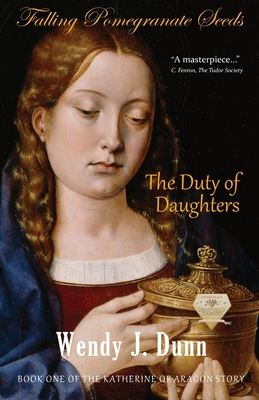 A young Spanish princess sits with her close friend, sisters, and brother as their beloved tutor, Dona Beatriz Galindo, tells them a story. As the children of Ferdinand of Aragon and Isabel of Castile, they must marry and create alliances to strengthen their kingdoms, while Beatriz must ensure they are ready for the challenge. Childhood ends rather quickly with a holy war against the Moors, the expulsion of the Jews from the kingdom, and death around every corner. In her novel, “Falling Pomegranate Seeds: The Duty of Daughters,” Wendy Dunn transports readers into a world of hope and sorrow, life and death.
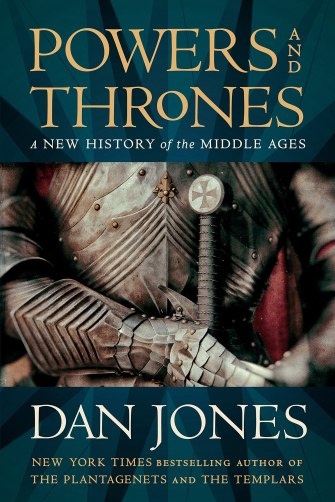 When we study human history, in general, we tend to pick a country and a period to focus on and research. Books on the subject material tend to focus on one land with interactions between other nations. It is infrequent for authors to take on multiple countries unless concentrated on one event that affected numerous locations. Those books often read like textbooks and can be a bit dry. Finding the perfect balance between these elements and engaging with the reader is a monumental task for any author, but Dan Jones has taken on the challenge. His latest behemoth tome, “Powers and Thrones: A New History of the Middle Ages,” takes on the gigantic task of telling the story of the Middle Ages from diverse perspectives.
 Adventures of a Tudor Nerd