
 When we think of the German Duchy of Cleves, our first thoughts tend to go to Anna of Cleves, King Henry VIII’s fourth wife, whom he immediately divorced due to not being attracted to her looks, at least according to English tales. We tend to leave Anna’s German life to the side and forget about her family’s story when we study the ever-changing 16th and 17th centuries, even though Germany was dealing with the Reformation. We have an inkling about how life might have been like for Anna of Cleves in England with the fabulous book, “Anna, Duchess of Cleves: The King’s Beloved Sister,” but what about Anna’s siblings, Sybylla, Wilhelm, and Amalia? Heather Darsie has decided to take up the challenge of telling the story of Anna of Cleves’ family from the German perspective in her latest book, “Children of the House of Cleves: Anna and Her Siblings.”
I want to thank Amberley Publishing for sending me a copy of this book. I thoroughly enjoyed Darsie’s first book on Anna, Duchess of Cleves. So when I heard she was writing a new book about Anna’s family and their impact on 16th and 17th-century European history, I knew I wanted to read it.
Darsie begins her book by explaining how the duchy system worked in Germany and the birth of William IV, Duke of Julich-Berg, in 1455, and we are introduced to John II, Duke of Cleves-Mark (grandfather of the von der Mark siblings and was known as the “Childmaker” for his illegitimate children). We also learn how the German duchies connected with the Holy Roman Empire and its often rocky relationship with the papacy in Rome. It is essential background information to fully understand the political and religious quagmire in which Anna and her siblings would be involved during the 16th century.
We then transition to the marriage of Johann III of Cleves-Mark and Maria of Julich-Berg, the parents of Sybylla, Anna, Wilhelm, and Amalia. It is through their marriage that the United Duchy of Julich-Berg-Cleves is formed. During their reign as the Duke and Duchess of Julich-Berg-Cleves, we see the emergence of Lutheranism, the rise of the Reformation, and the political landscape starting to shift.
The marriages of the von der Mark children and their consequences comprise the bulk of this book. Sybylla, the eldest child, married Johann Friedrich von Wettin, the Elector of Saxony and one of the founding members of the Schmalkaldic League. Anna married King Henry VIII, and we all know how well that marriage went, and Amalia never married. Wilhelm’s martial history is a bit more complex as he married Jeanne d’ Albret to align with France. Still, when that became a disaster, he married Maria von Habsburg, Hereditary Archduchess of Austria.
The tale of the von der Mark children is full of heartache, madness, war, and religious change. Although the von der Mark dynasty and the Duchy of Cleves lasted less than two centuries, it had a lasting impact, culminating in the Thirty Years’ War. Darsie has done a masterful job of collecting and presenting the story of Anna and her siblings to an English audience concisely. “Children of the House of Cleves: Anna and Her Siblings” by Heather R. Darsie is a marvelous dive into the life of 16th and 17th-century Germany that any Tudor nerd would find utterly delightful and insightful.
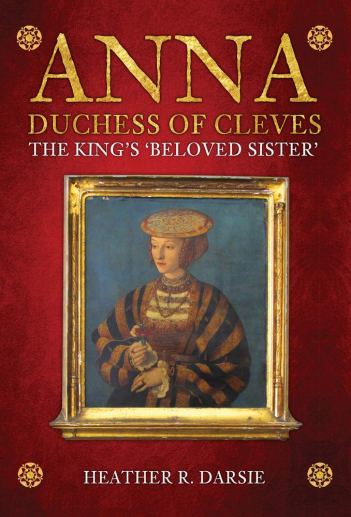 The wives of Henry VIII are some of the most hotly-discussed women of the Tudor Dynasty. They all had unique lives and origins before and after they met the man that connects them all. Two of his brides, Catherine of Aragon and Anna, Duchess of Cleves, were foreign princesses and their marriages were used to create alliances with Spain and Germany respectfully. While Catherine of Aragon and the rest of the wives of Henry VIII get a ton of attention, Anna Duchess of Cleves tends to be brushed aside. She is often seen as the wife that Henry did not approve of because of her looks. However, Heather R. Darsie decided to change how we view Anna with her groundbreaking debut biography, “Anna, Duchess of Cleves: The King’s ‘Beloved Sister’”.
  Adventures of a Tudor Nerd