
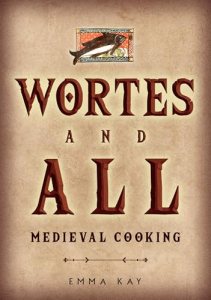
 History is not just dates and conflicts with men and women sprinkled in, so we can learn a lesson. It’s not just births, conflicts, triumphs, marriages, and deaths. The people of the past are similar to us in so many ways, and it is through the field of study known as Living History or Experimental Archeology that we can understand the past through a more hands-on approach. One of the most popular methods of studying living history is cooking recipes from the past. But one must wonder how our tastes and understanding of the benefits of food change over time. Emma Kay takes the question of how eating and drinking changed over the medieval period in England and explores it in her book, “Wortes and All: Medieval Cooking.”
I would like to thank Amberley Publishing for sending me a copy of this book. The study of Living History/Experimental Archeology has been an area of interest for me for a couple of years now, especially cooking, as it gives the past a bit more substance. When I heard about this book, it was a compelling concept to me, and I wanted to read it and see if Kay would provide new insight into this field of study.
This book is broken down into chapters where different foods are highlighted: soups and stews, bread and dough, meat, fish, sauces, dairy, eggs, fruits, vegetables, sweet treats, and drinks. Each chapter explores these topics through the early medieval period (4th-13th centuries) and the later medieval period (14th-16th centuries). While we do have manuscripts that have recipes written down, Kay also highlights leechdoms, which are medical remedies or medicinal tomes. She also explores how the theory of the four humors affected the diets of those living in the medieval world.
What I appreciate about this book is the diverse resources that she compiled for her research. It is not just English cookbooks and manuscripts, but Anglo-Saxon tomes on medicine, Scandinavian sagas, French cookbooks, and even Middle Eastern manuscripts. It shows how interconnected the medieval world was, even with all the conflicts and distances between nations. Kay goes a step further by including not only the original recipes in their original languages, but also her translations and even images of her recreating the recipes.
Overall, I did enjoy this book and the information that was provided. I learned quite a lot of new information about cooking and drinking in the medieval world, but part of me wishes it were a bit longer, as this is only about a hundred pages. I think I will explore other books written by Emma Kay. If you want a book that explores how the culinary arts changed over the medieval period, I recommend you read “Wortes and All: Medieval Cooking” by Emma Kay.
 When we think about food during the Tudor dynasty, one of the first images that pop into our head is of Charles Laughton, who played King Henry VIII in “The Private Life of Henry VIII” from 1933. He is seen in a popular image online devouring a chicken at a Tudor feast. We assume that the Tudors were indulgent regarding their food, not caring about what they put in their bodies and their benefits. However, the recipes from this period, from the beginning of King Henry VII’s reign to the death of Queen Elizabeth I, tell a different story. In her debut nonfiction book, “Eating with the Tudors: Food and Recipes,” Brigitte Webster shows how the political and religious changes during the Tudor dynasty affected how those living in England ate every day.
 Adventures of a Tudor Nerd