
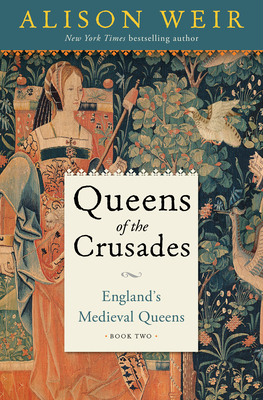
 One of the most prominent royal families of English history was the Plantagenets, who reigned for over three hundred years. In the first one hundred years of this family’s infamous history, five kings ruled (the first two are considered kings of the Angevin dynasty): Henry II, Richard I, John, Henry III, and Edward I. These five kings saw England change drastically, but they also participated in the international political landscape of the day, which involved the series of wars that today we simply refer to as the Crusades. The early Plantagenet kings saw much bloodshed and war, but they were not alone in their struggle to keep the dynasty going. These men would not have gotten as far as they did without their wives who stood by their sides. In Alison Weir’s latest installment of England’s Medieval Queens series, “Queens of the Crusades”, she takes a deep dive into the lives of the first five Plantagenet queens to show how remarkable these women truly were to stand beside their husbands during the times of the Crusades in Europe.
I would like to thank Ballantine Books, Random House, and Net Galley for sending me a copy of this book. I have been a massive fan of Alison Weir’s nonfiction books for years now. To have an opportunity to read this title and review it is simply astounding. As soon as Weir announced this new installment of England’s Medieval Queens series, I knew I wanted to read it because I had enjoyed Queens of the Conquest immensely.
The five queens that Weir covers in this particular book are Eleanor of Aquitaine, Berengaria of Navarre, Isabella of Angouleme, Alienor of Provence, and Eleanor of Castile. Many are familiar with the story of Eleanor of Aquitaine and Henry II and how it soured as their sons fought against their father, but it is worth noting that every queen in this book led a rather remarkable life. Eleanor of Aquitaine may have been alive during the time of Thomas Becket’s murder and Isabella of Angouleme witnessed her husband King John seal the Magna Carta, but some of these queens witnessed battles of the Crusades being fought as they traveled with their husbands to distant lands. There was also the matter of ruling two kingdoms, England and parts of France plus keeping the peace with Wales and Scotland, all while raising their children. There was never a dull moment for the lives of the early Plantagenet queens.
I found each queen in this book fascinating to read about, even though I did not know much about their lives. I obviously knew about Eleanor of Aquitaine, but the other queens have been briefly mentioned in other books that it felt like I was discovering their stories for the first time. The way they governed England and the way that they showed their love for their husbands and their children were different, but they each made a significant impact on the story of the Plantagenet dynasty. If I did have a problem with this book it would be that I found myself confused on which Eleanor was which, especially when Alienor of Provence and Eleanor of Castile were alive during the same time.
Overall, I found this book extremely informative and meticulously researched. Alison Weir has yet again made the lives of these queens that time seemed to have forgotten come to life. I believe that this is an excellent introductory book for anyone who wants to learn about the early queens of the Plantagenet dynasty. It is engaging, thought-provoking, and masterfully written. If this sounds like you, check out the second book in the England’s Medieval Queens series by Alison Weir, “Queens of the Crusades”.
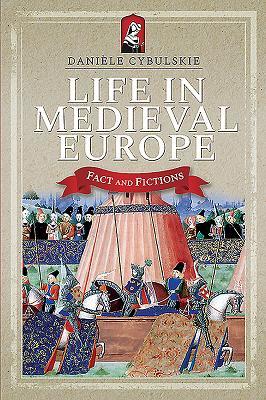 Have you ever read a book, either historical fiction or nonfiction, about medieval Europe and wondered if what the author was writing about was true? What about historical movies or dramas? You know that they probably have the facts about the important people and events correct, or at least you hope, but you wonder about the small details. What did they eat? How did they keep themselves clean and healthy? How did religion and the criminal justice system work in medieval Europe? What was medieval warfare like? These questions and more are explored in Daniele Cybulskie’s enchanting book, “Life in Medieval Europe: Fact and Fiction”.
 The story of the Crusades has been told in many different ways from numerous directions. The epic conflict between Christianity and Islam for the Holy Lands that went on for centuries that has lived in infamy. Many questions have arisen as historians try to separate facts from the myths surrounding this topic. How and why did it start? Why did it continue to go on for so long? Was there really a winner in this conflict? Who were the people who defined this conflict? Dan Jones has taken on the challenge of writing a comprehensive history of this conflict and the people who fought during this time in his latest book, “Crusaders: The Epic History of the Wars for the Holy Lands”.
 Adventures of a Tudor Nerd