 I am pleased to welcome Mercedes Rochelle to my blog today to discuss Viking England during the life of Earl Godwine, as part of the blog tour for her novel, “Godwine Kingmaker” of The Last Great Saxon Earls series. I would like to thank Mercedes Rochelle and The Coffer Pot Book Club, for allowing me to be part of this tour.
During Godwine’s rise to power, England lived under Danish rule from 1016-1042, though for some reason we rarely talk about it. That’s a whole generation! Sweyn Forkbeard conquered England in 1013 and was declared king, sending Aethelred the Unready into exile to Normandy along with his sons Edward and Alfred. But mysteriously, Sweyn died after only five weeks on the throne, and the Danelaw immediately declared his second son Canute king of England. However, the southerners had other ideas and recalled Aethelred, who gladly returned and drove the usurper out. This didn’t last long!
By late 1015, Canute came back with a large mercenary army and Wessex submitted to him, although Aethelred was still alive and sulking in London, leaving his son Edmund Ironside to fight his battles. This, too, didn’t last long; King Aethelred took his last breath on 23 April 1016, and London declared Edmund king. Now England had two kings, and so began a treacherous struggle marked by five major battles, men changing sides, a siege of London—where Canute was said to have dug a trench around the city—and many, many dead warriors.
Although Edmund stoutly aided London in its defense against the Danes, he frequently left the city in order to draw Canute away from his siege. It is said Ironside raised five armies that year–one for each battle. The last and most important, the Battle of Assandun took place on October 18 and ended in disaster for the Saxons because of the treachery of Eadric Streona, who took to flight with his forces and turned the tide against Edmund.
This time Canute was determined to end the conflicts. The Saxons withdrew but the Danes followed them up the Severn River into Gloucestershire, finally stopping at an island called Olney (or Alney). There, in deference to the chieftains of the land who had had enough (led by Eadric Streona, who somehow retained the goodwill of Edmund Ironside), the two Kings decided to solve the issue by single combat. This legend comes down to us through the chroniclers, as unlikely as it sounds.

Combat between Canute the Dane and Edmund Ironside, Matthew Paris, Chronica Maiora, Cambridge, Corpus Christi, 26, f. 160 (Wikipedia)
The Saxon King was said to have been the stronger fighter and soon hammered the Dane, breaking his shield and beating him down when Canute called a stop to the fight. “Bravest of youths,” he cried out, “why should either of us risk his life for the sake of a crown?” Edmund paused, considering. “Let us be brothers by adoption,” the Dane continued, “and divide the kingdom, governing so that I may rule your affairs, and you mine.” (Florence of Worcester).
The single combat story is probably apocryphal, but the ensuing treaty is not. According to their agreement, Canute was to rule Northumbria and Danish Mercia, while Edmund was the ruler of Wessex, Essex, East Anglia, and English Mercia. It’s unclear who was supposed to rule London (I found it stated both ways), but in the end, the Londoners were obliged to come up with their own tribute payment to Canute and permit him to anchor his ships in the Thames for the winter, so I guess the result speaks for itself.
Most importantly, it was stated that this treaty excluded brothers and children of the two Kings; if either was to die, all the possessions would revert to the other. And so when Edmund Ironside died suddenly in the winter of 1016, Canute took the crown and made sure to bring the witnesses forward to confirm the terms of the treaty. An exhausted England accepted his claim without demurring. Canute sent Edmund’s children, Edward and Edmund Aetheling, to the King of Sweden in the hopes that they would be murdered, but instead, they were whisked away to Hungary for safekeeping. Then, in a gesture calculated to appease his new countrymen, Canute married Aethelred’s widow, Emma, making a deal with her that their children from previous marriages would be passed over in favor of any issue of their own. This agreement disinherited Edward and Alfred (safely in Normandy) and Canute’s son Harold Harefoot by his handfasted wife Aelfgifu of Northampton. Emma gave birth to Harthacnut, who was sent to Denmark when he was only eight years old as Canute’s representative under a council led by his brother-in-law Ulf. We don’t see him in England again until 1040.
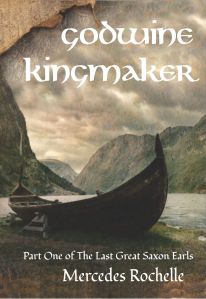 Blurb:
They showed so much promise. What happened to the Godwines? How did they lose their grip? Who was this Godwine anyway, the first Earl of Wessex and known as the Kingmaker? Was he an unscrupulous schemer, using King and Witan to gain power? Or was he the greatest of all Saxon Earls, protector of the English against the hated Normans? The answer depends on who you ask.
He was befriended by the Danes, raised up by Canute the Great, and given an Earldom and a wife from the highest Danish ranks. He sired nine children, among them four Earls, a Queen, and a future King. Along with his power came a struggle to keep his enemies at bay, and Godwine’s best efforts were brought down by the misdeeds of his eldest son Swegn.
Although he became father-in-law to a reluctant Edward the Confessor, his fortunes dwindled as the Normans gained prominence at court. Driven into exile, Godwine regathered his forces and came back even stronger, only to discover that his second son Harold was destined to surpass him in renown and glory.
Buy Links:
This series is available on Kindle Unlimited
Universal Link: https://books2read.com/u/38VrJZ
Amazon UK: https://www.amazon.co.uk/dp/B0BRQMHYWB
Amazon US: https://www.amazon.com/dp/B0BRQMHYWB
Amazon CA: https://www.amazon.ca/dp/B0BRQMHYWB
Amazon AU: https://www.amazon.com.au/dp/B0BRQMHYWB
Audio: https://www.audible.com/pd/Godwine-Kingmaker-Audiobook/B09JFJCY3G
 Author Bio
Mercedes Rochelle is an ardent lover of medieval history and has channeled this interest into fiction writing. She believes that good Historical Fiction, or Faction as it’s coming to be known, is an excellent way to introduce the subject to curious readers. She also writes a blog: HistoricalBritainBlog.com to explore the history behind the story.
Born in St. Louis, MO, she received her BA in Literature at the Univ. of Missouri St. Louis in 1979 then moved to New York in 1982 while in her mid-20s to “see the world”. The search hasn’t ended!
Today she lives in Sergeantsville, NJ with her husband in a log home they had built themselves.
Social Media Links:
Website: https://mercedesrochelle.com/
Twitter: https://twitter.com/authorrochelle
Facebook: https://www.facebook.com/mercedesrochelle.net
Book Bub: https://www.bookbub.com/authors/mercedes-rochelle
Amazon Author Page: https://www.amazon.com/stores/Mercedes-Rochelle/author/B001KMG5P6
Goodreads: https://www.goodreads.com/author/show/1696491.Mercedes_Rochelle

 There’s nothing like a quest to keep a man going, even on the brink of death, but in the case of Uhtred of Bebbanburg, he has several quests. His main goal is to reclaim his birthright, Bebbanburg, but he also wants to help fulfill Alfred’s dream of uniting the kingdoms to create England. However, life can present even more challenges, and Uhtred knows this all too well. Uhtred not only has to save a royal heir and his daughter, but he also must find the sword that wounded him and place a woman on a throne to rule in a time when women were seen rather than heard. It’s a lot to do, but if anyone is up to the task, it is Uhtred of Bebbanburg. The question is, will he survive? Bernard Cornwell brings us another action-packed novel full of adventures in book 8 of the Saxon Stories series, “The Empty Throne.”
 The island we know as England is on the cusp of the 10th century. King Alfred is dead, and his son Edward now rules. The kingdom of Wessex is still standing strong, and it looks like the Danes are behaving themselves and keeping the peace, for now. Unfortunately, things are not going smoothly for Uhtred of Bebbanburg. He gets into a bit of mischief and becomes a target of Cnut Longsword, the Viking leader, all while trying to fight for his right to rule his beloved Bebbanburg. Can Lord Uhtred survive his latest adventure, or will his Saxon allies save him in the nick of time? This is the premise of Uhtred’s latest adventure, “The Pagan Lord,” Book 7 in the Saxon Stories series by Bernard Cornwell.
 The ninth century is coming to a close. King Alfred is dying, and his young son Edward is untested on the battlefield. Alfred wants Uhtred to swear his loyalty to his son Edward, but Uhtred wants to be free to recapture his beloved Bebbanburg. The Danes, led by the warrior Harald Bloodhair are on the warpath—just a typical mission for our intrepid Saxon lord who was raised by Danes warrior Uhtred of Bebbanburg. However, there is always a catch, and the major obstacle in his path is a fair woman with a fiery temper named Skade. How can one woman and her plans make Uhtred of Bebbanburg quake in his boots? Book number 5 in the Saxon Stories, “The Burning Land” by Bernard Cornwell, holds all the answers in the next adventure for Uhtred and his men.
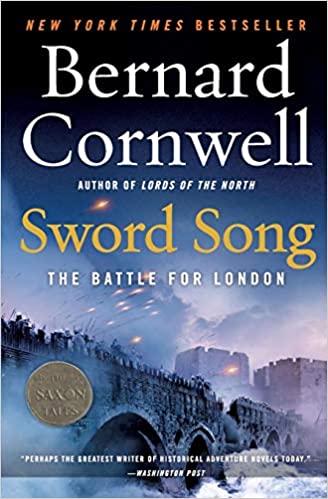 The year is 855, and the country that one day will be known as England is relatively peaceful. The Danes have their kingdom in the north, while the Saxons, under King Alfred, rule Wessex in the south. Uhtred of Bebbanburg, a Saxon man raised by Danish warriors, lives with his wife Gisela and his children in Wessex, where he is sworn to protect Alfred and his family. It is a touchy alliance, but when rumors about a dead man speaking reach Uhtred’s home, he knows that he must pick up Serpent-Breath once again and make a choice that could change the direction of England as a whole. What do the dead man and new Viking invaders have in plan for Uhtred, and how will it affect Wessex and the rule of King Alfred? Another engaging adventure for Uhtred of Bebbanburg is book four of The Saxon Tales, “Sword Song” by Bernard Cornwell.
 King Alfred and Uhtred have achieved a massive victory over the Danes, and as a reward, Alfred has allowed Uhtred to be free of his allegiance. Now, Uhtred travels north to his home, yet fate throws this hero another curveball. He encounters an enslaved person who claims to be the King of Northumbria named Guthred. This chance meeting sends Uhtred on a journey across the seas against his will and to finally face off against Kjartan the Cruel, who captured his stepsister Thyra. Bernard Cornwell takes his readers on another whirlwind adventure into 9th century England with Uhtred of Bebbanburg in the third novel of the Saxon Stories series, “Lords of the North.”
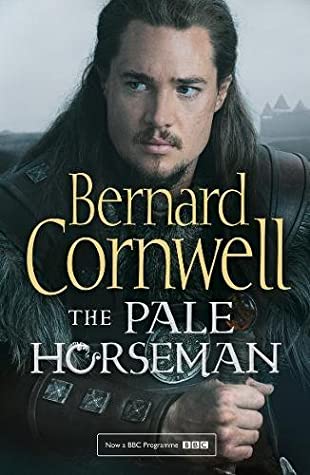 England is in danger of falling to its Danish invaders. The kingdoms of East Anglia, Northumbria, and Mercia have already fallen; all that stands in the way of complete Danish domination is Wessex and its king Alfred. Yet this king is more of a saint than a warrior, so Alfred desperately needs a man who knows how to fight. A man like Uhtred of Bebbanburg is a skilled warrior even though he doesn’t always see eye to eye with Alfred on matters of faith. When Alfred and his family become fugitives, he must rely on Uhtred to help restore him and his family to ensure Wessex does not fall. This is the premise of book two of The Saxon Stories series by Bernard Cornwell, “The Pale Horseman.”
 England in the 9th century was a land full of dangers and was deeply divided in the form of four main kingdoms; Northumbria, East Anglia, Mercia, and Wessex. One by one, the kingdoms began to fall to the Danes until there was only Wessex that stood in the way of complete conquest. There was a young man who became a king who stood in the way of the invaders. His name was King Alfred the Great, but he was not alone in his quest to unite all of England. His right-hand man was a Northumbrian nobleman who lost his birthright, was raised by the Danes, and had to choose a side in this conflict. His name was Uhtred of Bebbanburg, and his story begins in the first novel of The Saxon Stories series by Bernard Cornwell, “The Last Kingdom.”
 Adventures of a Tudor Nerd