
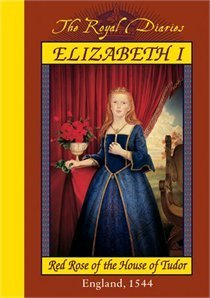
 What was the first book you read that excited you so much about the historical figure that you wanted to continue studying history? You would read any text you could get ahold of that mentioned their name, including encyclopedia entries. You have fond memories of that book and wish to reread it as an adult to see if it is still a great book with all its charms. I have noted numerous times that the book series that enticed me to study history was The Royal Diaries Series. The book that started my fascination with the Tudors was “The Royal Diaries- Elizabeth I: Red Rose of the House of Tudor” by Kathryn Lasky.
I first read this book and the Royal Diaries series in 6th grade/ middle school. I remember being utterly enraptured with the invisible princess Elizabeth and her struggle to be noticed by her family, especially her father, Henry VIII. Elizabeth was a strong and very intellectual princess; she became my historical heroine as a child. I would read anything about her and the Tudors, which fueled my desire to study history in college. When I started Adventures of a Tudor Nerd, I knew I wanted to get a copy of this novel to reread and review as a nod to my past.
This fictitious diary of Elizabeth I begins in 1544 and ends in 1547, covering a lot of changes in young Elizabeth’s life and the Tudor court. Her governess, Kat Champernowne (soon to be Ashley), gave Elizabeth the diary to record her thoughts after Queen Catherine Parr convinced her father, King Henry VIII, to allow Elizabeth to return to court. Elizabeth’s life has been rocky since her mother’s execution at her father’s command because, as this version of the tale goes, she was a witch.
Since this is a children’s book, the diary entries, as are the characterizations of the people around Princess Elizabeth at court, are very generic. Kat is paranoid about poisons, Henry VIII is old, fat, and has dramatic mood changes. Anne of Cleves is a kind soul with a thick accent and an unpleasant appearance. Mary is a manipulative person who treats Elizabeth horribly because she is the daughter of Anne Boleyn. Edward is a sickly child destined to become the next King of England, but many wonders if he will last that long. Robin Dudley is Elizabeth’s best friend who would rather have fun than study like his friend.
While rereading this novel, I found numerous historical inaccuracies I overlooked when I was younger because it was the first Tudor novel I had ever read. Of course, the target audience for this book and the series are children the author hopes will get interested in the story and start studying history. Still, it deserves a rewrite to incorporate correct historical facts.
Even though there were errors, I still am very fond of this book and The Royal Diaries series. Overall, this is a decent book and series for young readers who want to study history, especially royal history. If you have a young history lover who wants to learn more about Elizabeth I and her childhood in a fun way, you should have them read “The Royal Diaries- Elizabeth I: Red Rose of the House of Tudor” by Kathryn Lasky.
 The Tudor dynasty was full of colorful characters and events that defined the era. Their lives were full of love affairs, marriages, births, wars, tragedies, and triumphs. In numerous books about these monarchs and this period in history, we have seen the significant events that defined the era, but what about lesser-known social events that these monarchs participated in. The bulk of the research into this dynasty focuses on those who ruled, from Henry VII to Elizabeth I, because their lives give us a brilliant insight into what it was like to live in the glittery Tudor court. In “The Tudor Socialite: A Social Calendar of Tudor Life,” Jan-Marie Knights gives her readers a glimpse into the social calendar of the Tudor rich and famous.
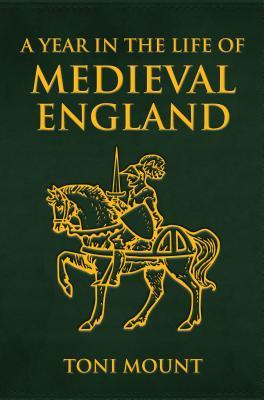 The medieval era was one of the most turbulent times in all of English history, full of family feuds, gruesome wars, and so many twists and turns. We tend to focus on the big stories, but, it was not just about the royalty and the nobility, there were also lower classes whose lives went on in the background. What was everyday life like for both the rich and the poor? What ceremonies and recipes did they use? What were wills and court cases like? These questions and more are explored in Toni Mount’s delightful book, “A Year in the Life of Medieval England”.
 Adventures of a Tudor Nerd