
 What’s better than snuggling up on a cold winter’s day and reading a murder mystery? How about an entire book about historical murders and the laws about murder and revenge? While we do have murder mysteries in every century and every walk of life, the farther back into the past we go, the more difficult it can be to discern fact from fiction. Take, for example, the stories of murder, betrayal, and revenge in Anglo-Saxon England. Annie Whitehead hopes to reveal a deeper understanding of this period through numerous murder cases in her latest book, “Murder in Anglo-Saxon England: Justice, Weregild, Revenge.”
I want to thank Amberley Publishing for sending me a copy of this book. I have read a few of Annie Whitehead’s books, including “Mercia: The Rise and Fall of a Kingdom,” and “Women of Power in Anglo-Saxon England,” so when I heard that she was writing a new book about this era, I knew I wanted to read it. Whitehead has always been able to make this era come alive, so I hoped to learn more about this period in English history.
Whitehead begins by explaining that she will cover close to a hundred cases of murder and revenge in this book from the 7th century to the 11th century. Each chapter focuses on a different kingdom: Northumbria, Mercia, East Anglia, and Wessex, as well as a different concept like laws, women killers, and Anglo-Saxon saints. It is a lot of ground to cover in a book, but she also decided to include the different law codes that defined the era and how murder was dealt with in a legal sense. Whitehead also decided to take on myths and legends of how saints and martyrs were killed, as well as the mythological killing method of the Blood Eagle employed by the “Vikings.”
There are so many colorful stories full of betrayal, political intrigue, and legal implications. These stories and myths of killings tell us more about the period of the past. Anglo-Saxon England was not a lawless society as we do see how taxes like weregild and their punishments for murder evolved. These were not just some stories written down on paper. The men, women, and children lived and ultimately died at a time when England was figuring out its identity. Although most of these incidents are isolated cases of murder and revenge, the St. Brice’s Day Massacre saw the execution of many Danish men on English soil.
I found this book extremely informative and easy to follow. Whitehead does it again and makes the world of Anglo-Saxon England come alive with her extensive research and her writing style. I may be a novice to the Anglo-Saxon period in English history, but it is books like this that make me want to continue to study this era. If you are interested in murder mysteries from the Anglo-Saxon world, I highly recommend you read “Murder in Anglo-Saxon England: Justice, Weregild, Revenge” by Annie Whitehead.
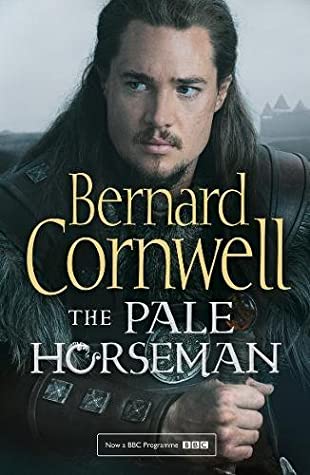 England is in danger of falling to its Danish invaders. The kingdoms of East Anglia, Northumbria, and Mercia have already fallen; all that stands in the way of complete Danish domination is Wessex and its king Alfred. Yet this king is more of a saint than a warrior, so Alfred desperately needs a man who knows how to fight. A man like Uhtred of Bebbanburg is a skilled warrior even though he doesn’t always see eye to eye with Alfred on matters of faith. When Alfred and his family become fugitives, he must rely on Uhtred to help restore him and his family to ensure Wessex does not fall. This is the premise of book two of The Saxon Stories series by Bernard Cornwell, “The Pale Horseman.”
 England in the 9th century was a land full of dangers and was deeply divided in the form of four main kingdoms; Northumbria, East Anglia, Mercia, and Wessex. One by one, the kingdoms began to fall to the Danes until there was only Wessex that stood in the way of complete conquest. There was a young man who became a king who stood in the way of the invaders. His name was King Alfred the Great, but he was not alone in his quest to unite all of England. His right-hand man was a Northumbrian nobleman who lost his birthright, was raised by the Danes, and had to choose a side in this conflict. His name was Uhtred of Bebbanburg, and his story begins in the first novel of The Saxon Stories series by Bernard Cornwell, “The Last Kingdom.”
 Adventures of a Tudor Nerd