 The year is 1547, and the infamous King Henry VIII is dead. The throne is left to his young son Edward VI while his half-sisters Mary and Elizabeth wait in the wing. Without their powerful father to look after their well-being, his children must navigate the tumultuous Tudor court with powerful men who desire to use them as mere pawns in their game to influence how England is ruled. Throw in some romantic drama and the ever-changing religious landscape with the clash between Protestants and Catholics. This is the premise of the latest Tudor drama on Starz, “Becoming Elizabeth,” which follows the titular Princess Elizabeth Tudor during the reign of the third Tudor king.
Before we begin, I want to provide a little context before I dive into this review. As many of you know, I am incredibly picky about Tudor dramas; shocker, I know. I will watch trailers for new dramas, but after Reign (which, after watching the show for five minutes, I had to turn it off because of the costume design), I have been highly wary about committing to sitting down each week to watch a new show about historical figures I know pretty well.
The story of Princess Elizabeth is what got me interested in studying history after reading The Royal Diaries book series, so when I heard about this series, I wanted to know more. When I first saw the trailer for “Becoming Elizabeth, ” I decided to take the plunge and watch the first episode, which turned into watching every episode every Sunday.
Now let’s get to my thoughts about the series “Becoming Elizabeth.” I will be discussing the plot points of this series, so if you have not watched this show before reading this review, I would highly recommend you do.
There are a few aspects that I want to touch on before we take a deeper dive into this series, which have to do with the settings, costumes, music, and other details that will delight Tudor nerds. The location of “Becoming Elizabeth” is spot on, immersing the audience in Tudor England, which includes using candles for lighting instead of torches (which was a thrilling addition). I congratulate the costume and make-up crew from this drama as they are the best replications of Tudor gowns and outfits I have ever seen in a Tudor drama. They used the Tudor portraits of the time to replicate specific dresses and jewelry used in the show (including the famous “B” necklace most associated with Anne Boleyn) was a lovely and thoughtful touch. The only exception was the lead women’s riding gowns in this series. I did not like that they rode astride and had pants under their skirts. Let them ride side saddle and wear the same dresses they do at court but in those brown and green tones.
The little touches like having servants sleeping in the rooms of the royalty/ nobility and the masques to show significant events were viewed at court were nice touches for Tudor nerds. I also appreciated the small nods in the dialogue to elements that those who know Tudor history would understand, like the Queen’s jewels and the foreshadowing of Edward VI’s dog. Finally, the music in this show was decent, but some soundtracks felt a tad too modern and took away from the whole escapism element you want in a historical drama.
Now, let’s get into the most critical points of this show: the acting, the actors, and the plot points.
 The cast of “Becoming Elizabeth” is a plethora of talented actors and actresses who remarkably bring the treacherous Tudor court to life. The titular role of Princess Elizabeth was played by Alicia von Rittberg, who portrays the young woman’s naivety and eventual strength in love and court politics. Oliver Zetterstrom is the young King Edward VI who struggles to find his identity as a reformer king while navigating the drama of his court and Lord Protectors. Finally, we have Romola Garai, who revolutionized how Princess Mary Tudor was portrayed on television. Garai gives the audience a more sympathetic and vibrant woman trying to hold her family together while defiantly standing up for her Catholic faith in a Protestant court.
A story like this would not be complete without a group of star-studded actors and actresses to help the trio of Tudor heirs shine. We have the vivacious Catherine Parr, played by Jessica Rayne, and her fourth husband, the sly Thomas Seymour, played by Tom Cullen, Thomas’ brother, and Edward VI’s first Lord Protector Edward Seymour, Duke of Somerset is played by John Heffernan. We also have the Grey family, led by Henry Grey, played by Leo Bill, and the shy and studious Lady Jane Grey, played by Bella Ramsey. Finally, we have the Dudley family with the ambitious John Dudley, played by Jamie Parker, and the youthful Robert Dudley, played by Jamie Blackley. Along with the prominent families, we have Kat Ashley, the loyal servant to Princess Elizabeth, played by Alexandra Gilbreath, and the Spanish soldier Pedro who helps guide Princess Mary, played by Ekow Quartey. The interactions between this cast are so believable and passionately performed that it feels like you have been transported into the 16th century in the reign of King Edward VI.
We begin this series with the death of King Henry VIII. Prince Edward is now King Edward VI, and he and his sisters must learn to live without their infamous father. Mary goes to her own home while Elizabeth joins the household of Catherine Parr and her new husband (the man she truly loves), Thomas Seymour. While Mary and Edward VI argue vehemently over the matters of religion, Catholics vs. Protestants, Elizabeth navigates the unusual attention that Thomas Seymour is giving the young princess as she wonders if this is true love or something more sinister.
In addition to Princess Elizabeth, Catherine Parr and Thomas Seymour welcome the daughter of Henry Grey, Lady Jane Grey, to their household. Elizabeth and Jane do not seem to get along very well, and it feels like the only ones that Elizabeth can turn to when times get rough are Kat Ashley and the caring Robert Dudley. Mary may seem alone, but Pedro, a man who was supposed to spy on the Catholic princess, becomes her friend and ally. Unfortunately for Edward, he is stuck between factions of Edward Seymour, Duke of Somerset, and John Dudley as they fight to influence the young king and the direction he wants to take his kingdom. It was a time of rebellions, betrayals, executions, and moments behind closed doors that would forever shape these three Tudor heirs, especially Elizabeth Tudor.
 While most of the storylines are engaging, and I found them rather enjoyable, one got under my skin: the intimate relationship between Princess Elizabeth and Thomas Seymour. Now I know it was the central storyline for the first half of this show, but it made my skin crawl. I know that Tom Cullen has discussed this issue with fans, and I think his portrayal of Thomas is spectacular. My problem is with Princess Elizabeth and how she goes along with the relationship to the point of no return. I feel like Princess Elizabeth was much stronger than how she was portrayed during those moments in the show, and she would have turned Thomas down, knowing the false allegations against her mother, Anne Boleyn. I do not think she slept with Thomas Seymour, but I do believe there were elements of flirting between the two, which could have been seen as them having an intimate relationship.
The creator of “Becoming Elizabeth,” Anya Reiss, has done a magnificent job telling the Tudor dynasty’s tale after Henry VIII’s death. The cast and crew are spectacular, the gowns and costumes are gorgeous, and there are so many Easter eggs that Tudor nerds will geek over. There will be moments that will make you laugh, cry, want to throw a book at your TV or laptop, and breathe a sigh of relief. I may not have seen many Tudor dramas in the past, but this is far and away one of my favorite shows about the 16th century. I hope we will get a second season of “Becoming Elizabeth,”, especially with how they closed the finale.
What are your opinions about “Becoming Elizabeth,” and who is your favorite character from this Tudor drama?
Sources for Images and Cast Information:
https://www.glamour.com/story/becoming-elizabeth-on-starz-everything-we-know-about-the-british-period-drama
https://www.imdb.com/title/tt11444366/

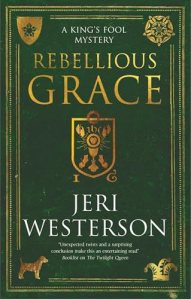 Christmas is a time of merriment and joy unless you are in the court of Henry VIII in 1536. Then it is a time of stress and murder. Henry’s second wife Anne Boleyn has only been dead for a few months while his third wife Jane Seymour is slowly adjusting to her new role as queen. A rebellion known as the Pilgrimage of Grace is taking over northern England and the leader Robert Aske wants to visit the court to discuss matters with King Henry VIII. To top it all off, a servant of Queen Jane has been murdered and the only one who can solve the crime is a fool, Will Somers. Can Will Somers connect the dots and save those closest to him, or will the treasonous act be another downfall in such a tumultuous year? This is the premise for the third book in the A King’s Fool Mystery series, “Rebellious Grace” by Jeri Westerson.
 Treason is the crime of betraying one’s country or monarch by trying to overthrow the government or kill a sovereign. While many English dynasties dealt with treason in their ways, the most infamous were the Tudors and how they dealt with the nobility. By the end of 1572, there were no more dukes in England, until 1623 when George Villiers became the Duke of Buckingham. What was classified as treason during the Tudor dynasty and why did the members of the nobility have to die? Helene Harrison hopes to answer these questions in her latest book, “Tudor Executions: From Nobility to the Block.”
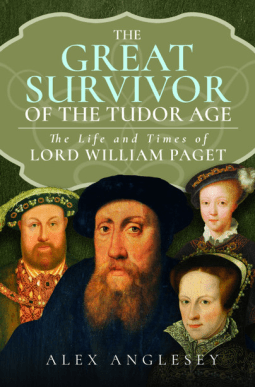 Rulers cannot govern alone. They require a team of men and women behind them to operate as a cohesive unit. The same can be said for rulers during the Tudor dynasty. We know the stories of men like Cardinal Wolsey and Thomas Cromwell, two men who rose through the ranks to prominent seats of power to ultimately have disastrous falls from grace. However, there was a third Tudor politician who should be in this discussion about rags-to-riches stories. He was the son of a common merchant who went to serve most of the Tudor monarchs as an advisor. Conspiracies and rebellions kept him on his toes, but he ultimately survived the Tudor dynasty, which was a difficult thing to achieve. His name was Lord William Paget and his story is told by his descendant Alex Anglesey in his debut book, “The Great Survivor of the Tudor Age: The Life and Times of Lord William Paget.”
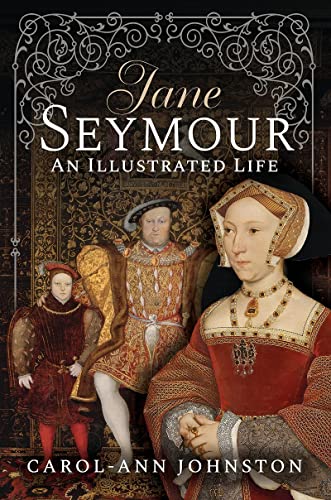 King Henry VIII’s six wives each have their unique story that transcends time. Katherine of Aragon was his first wife, the mother of Mary Tudor, and the one Henry left behind after 24 years to marry his mistress Anne Boleyn, the most famous of his wives and the mother of Elizabeth Tudor. Anna of Cleves had the shortest marriage to Henry VIII and ended up with an excellent annulment deal. Catherine Howard was young and a bit naive when it came to the ways of men, which led to her downfall while Catherine Parr survived until the end of Henry VIII’s reign. These five women are stories we know by heart, but the one whose story remains a mystery is Jane Seymour, Henry’s third wife, and the mother of the future King Edward VI. In her debut book, “Jane Seymour: An Illustrated Life” Carol-Ann Johnston tells the story of the wife who gave Henry his desired son.
 Two women who served Anne Boleyn must deal with the ramifications of staying on opposite sides of the queen’s downfall. One is the next bride of King Henry VIII, who must give the king the son he desires or suffer the consequences. The other is a lady in waiting who holds a dark secret and a relic of the past that could be dangerous to both women. Many of us know the story of Jane Seymour, but is there more to the queen who was able to give King Henry VIII the son he desired? What about the mysterious Margery Horsman? What role did she play in Anne Boleyn’s and Jane Seymour’s inner circles? In her third book, “Keeper of the Queen’s Jewels,” Adrienne Dillard tells the tale of these women bonded by fate to work together to survive such a tumultuous time.
 Many actors and actresses have portrayed the lives of Henry VIII and his six wives in modern films and dramas. When asking Tudor nerds which Henry VIII stood out the most, the most popular response is Keith Michell in the 1970s BBC series, “The Six Wives of King Henry VIII.” I had not heard about this series until I started “Adventures of a Tudor Nerd.” Many people have wanted me to watch the series solely for the performance of Keith Michell, so when a coworker allowed me to borrow her DVD copy of the series, I finally decided it was time to tackle this legendary series.
 In 1547, young Prince Edward is having the time of his life studying and hoping to one day take part in a tournament. He has not a care in the world. That is until his beloved father King Henry VIII passes away, and the 9-year-old boy is now Edward VI, King of England. He must navigate family drama between his older half-sister Mary Tudor and his uncles, Edward and Thomas Seymour while maintaining order throughout the kingdom. To top it all off, he is trying to reform the entire country and convert Catholics into the Protestant faith. His short life and reign are portrayed in Janet Wertman’s third book in The Seymour Saga, “The Boy King”.
 The year is 1543 and King Henry VIII is looking for his sixth and final wife; the recent widowed Catherine Parr has caught his eye. It is her reformist values that make her a valuable asset for Archbishop Cranmer and his faction at court, and a target for others. A friend of Matthew Shardlake is viciously murdered, leading to a horrific discovery of a killer is on the loose. On top of that, Shardlake must defend a young man who has been placed in the Bedlam insane asylum for his radical beliefs. It is up to Shardlake and his intrepid assistant Barak, along with the former monk turned physician Guy Malton, to solve both cases before anyone else becomes the next victim. This is the world that readers are plunged to in the next book in C.J. Sansom’s Shardlake series, “Revelation”.
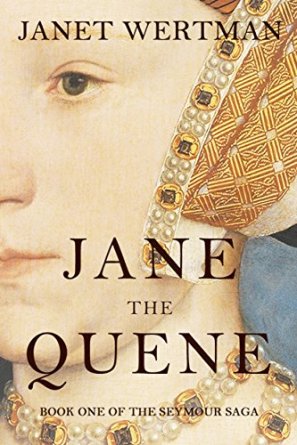 Henry VIII may have had six wives, but only one could give him the desired son that he wanted. She was kind, demure and everything that Henry VIII’s second wife Anne Boleyn was not. Her name was Jane Seymour, Henry’s third wife. Sadly, she is often remembered for the birth of her son and her death. However, there was a lot more to Jane’s story than the ending. What was her relationship with her family like? How did she fall in love with the King? And how was her relationship with her romantic rival, Anne Boleyn? These are just some of the questions that Janet Wertman strives to answer in her first novel of her new Seymour Saga called, “Jane the Quene”.
  Adventures of a Tudor Nerd