
 The Plantagenets, a dynasty that ruled England for over three hundred years. At least that is if you include the Lancastrian and Yorkist kings. Otherwise, the reign of the Plantagenets ended with Richard II being overthrown. So, how did the Plantagenets fall? How did wars, favoritism, and the plague factor into the fall? Helen Carr examines these questions and the rule of three kings over the fourteenth century in her latest book, “Sceptred Isle: A New History of the Fourteenth Century.”
I have really enjoyed Helen Carr’s insight into medieval English history in her book, The Red Prince, so when I heard she was writing a book about the Plantagenets again, with a focus on the fourteenth century, I was excited to read it. The idea in this book that caught my attention was the idea that the Plantagenet dynasty ended when Henry of Bolingbroke overthrew Richard II. As someone who believes that the Plantagenet dynasty ended with the death of Richard III, the concept that it ended almost a century earlier is intriguing.
We begin our adventure with a double reburial of King Arthur and Queen Guinevere, the idea of King Edward I and his wife Eleanor of Castile. It was a kind gesture, but the prophecy that was left behind would be almost prophetic. With the death of King Edward I, the Hammer of the Scots, the throne passed to his son Edward II. While Edward I was a strong warrior, Edward II was a handsome prince who only cared about his favorites, Piers Gaveston and Hugh Despenser the Younger. It would cause those around him, including his wife, Isabella of France, and her lover, Roger Mortimer, to take action against him. Isabella and Mortimer placed Edward III on the throne, but they would soon learn that Edward III was not as passive as his father.
Edward III would return to the warrior state of mind like his grandfather Edward I. With his wife Philippa of Hainault, they would have a large family with many sons, including John of Gaunt and Edward the Black Prince. It would be Edward III who would try to take the French throne for England in a conflict known as the Hundred Years’ War (not the quickest war, and it didn’t go the way Edward III envisioned it). And to top it all off, Edward III had to deal with the emergence of the Black Death and how it affected not only his own family but England and Europe as a whole.
Before Edward III died, his heir, the Black Prince, died, which meant that the Black Prince’s son, Richard II, was destined to be the next king. However, youth and favoritism failed the king as chaos reigned ever since the start of his reign, with the Peasants’ Revolt, and ended with Henry of Bolingbroke becoming the first Lancastrian King, Henry IV.
This was another wonderful book by Helen Carr. It demonstrates Carr’s ability to balance extensive research with a narrative format to create an accessible history book that novices and experts will equally enjoy. My only qualm with this book, if you can call it an issue, is that I wanted it a bit longer so we get more analysis of how this one century affected English and European history as a whole. If you want a book that dives into the history of one of England’s most tumultuous centuries, I highly recommend you read “Sceptred Isle: A New History of the Fourteenth Century” by Helen Carr.
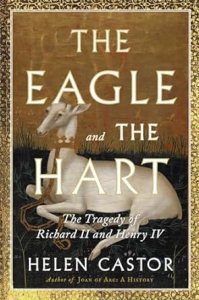 The story of the Plantagenets is filled with high triumphs and devastating tragedies. It is a story of families torn apart for a crown and the desire to either rule with an iron fist for the glory of England or live a life of luxury at the expense of their citizens. The story explored in this particular book is the tale of two cousins born months apart, Richard of Bordeaux and Henry Bolingbroke. Richard and Henry were not born to become King of England, but Fortune’s Wheel had a different plan for the cousins. So how did these cousins become kings and how did their tale turn to tragedy not only for their relationship but for all of England? Helen Castor tells the tale of these two Plantagenet kings in her latest book, “The Eagle and the Hart: The Tragedy of Richard II and Henry IV.”
 The year is 1342 in the sleepy coastal English town of Hookton when marauders attack and steal a precious relic. Thomas, a young archer, is the only survivor. With his father’s dying breath, he has given Thomas a mission to carry out, retrieve the relic, and avenge his family’s honor. The hunt for the man responsible takes Thomas to France during the beginning of the conflict that will be known as the Hundred Years’ War. Can Thomas of Hookton find the relic he was tasked to find or will another quest drag him into an even darker path? Thomas’s tale begins in the first book of the Grail Quest trilogy by Bernard Cornwell called, “The Archer’s Tale.”
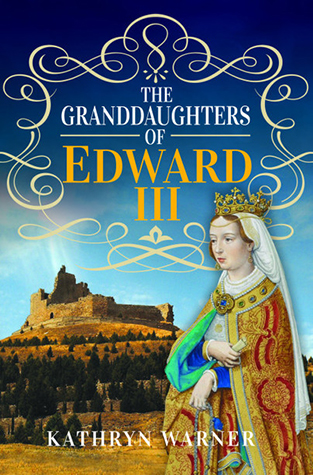 When we think about the legacy of Edward III, we often think about a warrior king who became king after his father, Edward II’s disastrous fall from grace. We know about his sons that he had with his beloved wife, Philippa of Hainault: Edward the Black Prince, Lionel of Antwerp, Duke of Clarence, John of Gaunt 1st Duke of Lancaster, Edmund of Langley, 1st Duke of York, and Thomas of Woodstock, Duke of Gloucester. Famously, we get the 15th-century conflict known as the Wars of the Roses through the descendants of Edward III. However, the male descendants only tell half the story of Edward III and Philippa of Hainault’s legacy in England and throughout Europe. In her latest book, “The Granddaughters of Edward III,” Kathryn Warner examines the lives of Edward III’s female descendants to better appreciate the strength of this group of branches of the Plantagenet family tree.
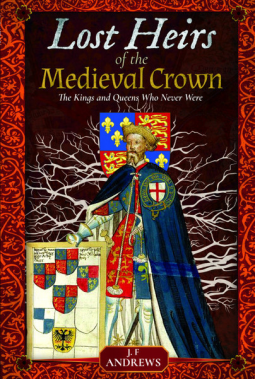 In history, we tend to focus on those who were crowned kings and queens of different nations. Their strengths and their weaknesses. Their accessions and the legacies that they left behind. With every story of someone who triumphed in gaining the throne, there are tales of those who were close to the throne but were never able to achieve the ultimate goal of ruling a nation. These “lost heirs” fall into two categories; either their names live on in infamy or they are thrown into the dust of the past. Who were these men and women and why did they lose their chances to sit on the throne? These questions are explored in J.F. Andrews’ book, “Lost Heirs of the Medieval Crown: The Kings and Queens Who Never Were”.
 Adventures of a Tudor Nerd