 Many actors and actresses have portrayed the lives of Henry VIII and his six wives in modern films and dramas. When asking Tudor nerds which Henry VIII stood out the most, the most popular response is Keith Michell in the 1970s BBC series, “The Six Wives of King Henry VIII.” I had not heard about this series until I started “Adventures of a Tudor Nerd.” Many people have wanted me to watch the series solely for the performance of Keith Michell, so when a coworker allowed me to borrow her DVD copy of the series, I finally decided it was time to tackle this legendary series.
For those unfamiliar with the older Tudor dramas like this series, it should be noted that the focus is not on sex or bloody battles but on the relationships between Henry and his six wives. Therefore, the costumes and the scenery take a step back in quality that one would expect when compared with modern dramas. I think the English brides’ outfits are well done, but the native gowns for Katherine of Aragon and Anne of Cleves felt a bit off for me.
Keith Michell plays the titular king, but I will discuss his performance later. I want to look at the actresses who played Henry’s six wives. Each episode focuses on each wife’s story, how they became his wife, and how their story ended.
We begin with Katherine of Aragon, played by Annette Crosbie, who was the wife of Prince Arthur, but when he died, Katherine struggled to survive in a foreign land until it was decided that she would marry her former husband’s brother, Henry VIII. The couple seems to be in love until Katherine cannot deliver a son for the king, so he decides it’s time for a divorce, which we call The Great Matter. With Katherine out of royal favor, it is time for Henry’s second wife, Anne Boleyn, played by Dorothy Tutin, to make her appearance. When it comes to Anne Boleyn’s performances, I don’t know if I like Tutin’s portrayal; it just rubbed me the wrong way.
My favorite episode of this series was Jane Seymour, played by Anne Stallybrass, who shows a more complex side to Jane’s story. We see her interacting with the Seymour family and her desire to reunite Henry VIII and his daughter Mary. The way the episode was structured with Jane on her death bed and witnessing flashbacks to her time with Henry VIII, the issue of the Pilgrimage of Grace, and the birth of her beloved son Edward. With Jane’s death, we see the more human side of Henry as he is in deep mourning for his beloved queen.
It would be several years until he married again to Anne of Cleves to secure a German Protestant alliance. Anne of Cleves, played by Elvi Hale, is a young woman of average looks and very little money who wants to learn everything she can about England. I like how we are introduced to Hans Holbein in this episode and to see how Anne felt about her marriage and ultimate divorce from Henry VIII.
With the divorce of Anne of Cleves settled, Henry VIII turned his gaze on the young Catherine Howard, played by Angela Pleasence. Catherine is young, naive, and only concerned about being queen and having men fawn over her. It was interesting to see Catherine Howard as a nursemaid to the King and how angry he was with her uncle after her execution. Finally, we are introduced to Henry’s final wife, the devout reformer Catherine Parr, played by Rosalie Crutchley. We witness the end of the King’s reign and the rise of the Seymour family to help the young king Edward VI.
Of course, these stories could not be told without side characters like Thomas Wolsey, Thomas, and Edward Seymour, King Henry VII, Eustace Chapuys, Jane Boleyn, and Will Somers. I was a little surprised that they included torture scenes for Anne Askew and Mark Smeaton, especially since they did not show the execution scenes for Anne Boleyn and Catherine Howard. Several small Easter eggs for Tudor fans sprinkled in are quite delightful to discover.
Now, it’s time to discuss the big guy, King Henry VIII, played masterfully by Keith Michell. Before watching this drama, I was only familiar with Keith Michell from his performances in Murder She Wrote and the episodes I would watch with my mom. We begin with Henry as a young king enchanted with Katherine of Aragon. They are madly in love, and it is hard to believe they would ever separate, but they eventually do when Anne Boleyn catches his eye.
Throughout this entire series, we see Michell’s acting range through the rapid emotional change of the king. One minute he could be lovey-dovey, the next raging mad, and then bawling his eyes out. What impressed me the most about Michell’s performance was how we saw Henry VIII’s size and shape change in each episode. As Tudor fans, we have screamed at the TV when we see modern adaptations of Henry VIII that do not meet our standards for what older Henry should look like. Michell exceeds all expectations and gives his audience one of the most believable King Henry VIII performances in modern history.
Overall, I found this a decent show where the political and romantic drama of the reign of King Henry VIII shines through the screen. The queens and the counselors did take a back seat to the titular king, but I did not mind that. If you want to watch a legendary series about the reign of King Henry VIII that does not have the sex and scandals of a modern drama, I highly recommend you watch the BBC series, “The Six Wives of King Henry VIII,” starring Keith Michell.
Casting Source:
https://www.imdb.com/title/tt0066714/?ref_=tt_mv_close

 Have you ever watched a historical drama and wondered what it might have been like to wear the outfits for that period? You see so many reenactment groups online and you are envious of their talents for being able to bring clothing from the past, especially clothes from the 16th century, to life in the modern age. What might it have been like to dress like a lord or a lady? What about a commoner or a monk? How did fashion change throughout the Tudor dynasty? Judith Arnopp answers all of these questions and more in her latest book, “How to Dress Like a Tudor.”
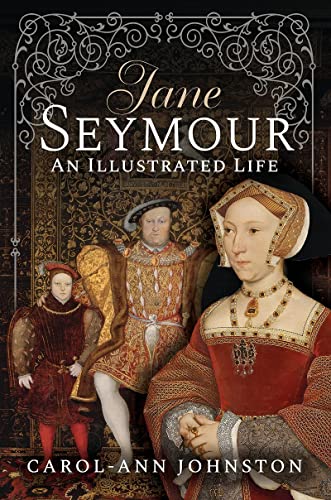 King Henry VIII’s six wives each have their unique story that transcends time. Katherine of Aragon was his first wife, the mother of Mary Tudor, and the one Henry left behind after 24 years to marry his mistress Anne Boleyn, the most famous of his wives and the mother of Elizabeth Tudor. Anna of Cleves had the shortest marriage to Henry VIII and ended up with an excellent annulment deal. Catherine Howard was young and a bit naive when it came to the ways of men, which led to her downfall while Catherine Parr survived until the end of Henry VIII’s reign. These five women are stories we know by heart, but the one whose story remains a mystery is Jane Seymour, Henry’s third wife, and the mother of the future King Edward VI. In her debut book, “Jane Seymour: An Illustrated Life” Carol-Ann Johnston tells the story of the wife who gave Henry his desired son.
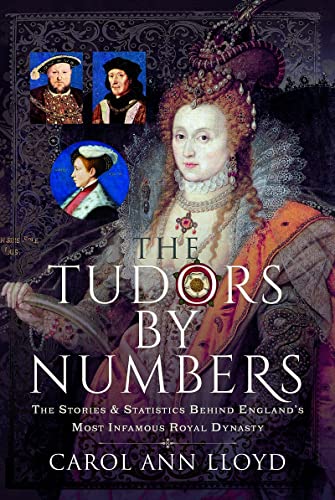 The story of the Tudor dynasty has been told in numerous different ways. We know the major figures, the significant events, and the stories of their love lives. We understand how they changed the history of England and Europe forever, but these are just the basic facts. If we look at the numbers surrounding the dynasty, what type of story does it tell? This is the approach Carol Ann Lloyd has taken in her debut book, “The Tudors by Numbers: The Stories and Statistics Behind England’s Most Infamous Royal Dynasty.”
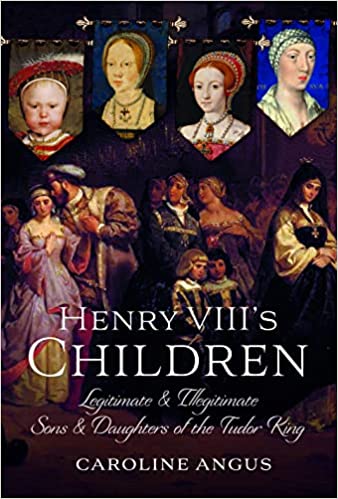 When we think about the title royal children, images of children who get whatever they want, being spoiled with gems and gowns, and ruling kingdoms, they are married to create alliances. In that sense, it would define a life of luxury. However, for the children of King Henry VIII, luxury was not always in their dictionary. What was life like for the legitimate and illegitimate children of Henry VIII? Caroline Angus explores this question in her latest book, “Henry VIII’s Children: Legitimate and Illegitimate Sons and Daughters of the Tudor King.”
 What was the first book you read that excited you so much about the historical figure that you wanted to continue studying history? You would read any text you could get ahold of that mentioned their name, including encyclopedia entries. You have fond memories of that book and wish to reread it as an adult to see if it is still a great book with all its charms. I have noted numerous times that the book series that enticed me to study history was The Royal Diaries Series. The book that started my fascination with the Tudors was “The Royal Diaries- Elizabeth I: Red Rose of the House of Tudor” by Kathryn Lasky.
 When we think of the word “education,” images of sitting in school rooms for hours, listening to lectures, and doing endless homework pop into our minds. Our modern education system tends to focus on math, science, language arts, and history as the core subjects we study, with music and physical education as something that we in America call an “elective.” But have you ever wondered what education looked like in the past? How did the Tudors pass on their knowledge to future generations? What subjects did the Tudors consider essential, and how did the amount of education you received change depending on your class? Amy McElroy explores these questions in her book, “Educating the Tudors.”
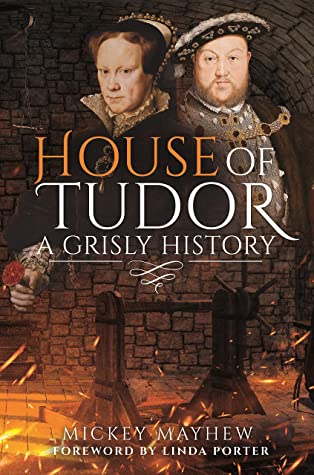 The glitzy, glamorous life of the Tudors portrayed in popular TV shows and novels mask the truth of this infamous dynasty. It is more bloody than what has been described. It is filled with grotesque executions, deadly diseases, bloody battles, and bloody battles. What happened to Richard III’s remains? What was Tudor torture like for those unfortunate victims? What were other devious tales at play in 16th-century Europe? Mickey Mayhew has worked hard to answer these questions by combining 45 of the most gruesome stories from this dynasty into one book, “The House of Tudor: A Grisly History.”
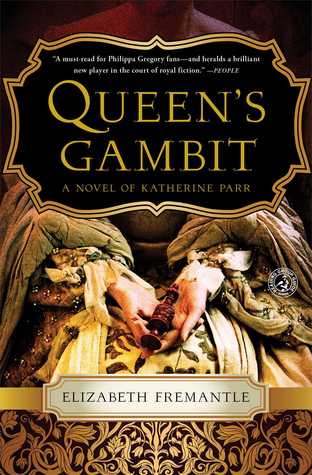 To be married to a king may seem like a dream, but reality can be cruel. Take the wives of Henry VIII. After saying ” I do,” each wife had to deal with complex challenges after saying “I do.” We all know the poem; divorced, beheaded, died, divorced, beheaded, survived, but does that define these queens? After the death of her second husband, Katherine Parr must choose between Henry VIII and Thomas Seymour, the man who has captured her heart. She must navigate love, court intrigues, and the treacherous religious landscape of England in the 1540s to survive. Katherine’s life as Queen of England and how close she came to a disastrous fall from grace are explored in Elizabeth Fremantle’s first novel, “Queen’s Gambit: A Novel of Katherine Parr.”
 When we think about the Tudor dynasty, we think about the monarchs who made the dynasty, but we also pay attention to those around the king or queen who sat on the throne. There were families like the Boleyns, the Howards, and the Seymours who stood on the sidelines for a short amount of time, but one family saw the majority of the dynasty through highs and extreme lows. The Dudleys have been seen as a power-hungry family who would do anything to sit on the throne of England, but is there more to their story? In her debut book, “The House of Dudley: A New History of Tudor England,” Joanne Paul explores the lives of this extraordinary family to find the truth about their ambitions and their resilience.
 Adventures of a Tudor Nerd