
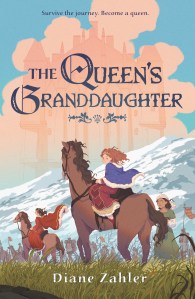
 When a medieval princess married, most of the time, she had to take an arduous journey to their new country. For many of these royal ladies, they had an idea that this would be their fate at a young age, but for others, it would come as a complete surprise. Take, for example, Blanca (Blanche) of Castile. She was the granddaughter of the indomitable Eleanor of Aquitaine. When it is time to create a marriage alliance between Castile and France, Blanca believes that her sister Urraca will be the one who will become Queen of France. However, Eleanor has other plans. How will the journey change Blanca and get her ready to rule a nation? Diane Zahler tells the tale of Blanca’s journey to the throne in her middle grade novel, “The Queen’s Granddaughter.”
I would like to thank Roaring Brook Press and Net Galley for sending me a copy of this novel. I tend to read books tailored towards young adults and adults, but I wanted to see how middle grade books handle historical figures. My love of history started with a middle grade book, so I wanted to see how middle grade books are for the next generation of history nerds.
We are introduced to Blanca of Castile when she was twelve years old. As the daughter of Alfonso VIII of Castile and Eleanor of England, Blanca realizes that she will have to marry one day, but she wants to stay with her family in Castile. With the arrival of her grandmother, Eleanor of Aquitaine, from England to discuss a match between Castile and the French dauphin Louis. Blanca believes that the intended bride will be her elder sister Urraca, but she doesn’t want her sister to leave. Grandmother Eleanor has a different plan and says that the bride to be is Blanca.
To say Blanca is shocked will be an understatement, but after spending time with her best friend Suna and her family, who are Almohads, Blanca decides that she will go to France. Suna, grandmother Eleanor, and Sir William Marshal join Blanca in her journey over the Pyrenees Mountains to France. The journey is arduous as they encounter a snow storm that lands the party in a cave while grandmother Eleanor recovers from an illness. They also face off against Hugh de Lusignan, a man who is seeking vengeance. Throughout the journey, Blanca learns that a queen must make difficult decisions and say the hardest goodbyes for the good of her new kingdom.
This was a great novel to get younger future history nerds interested in history. It was well researched and even gives Zahler’s readers mini biographies about the main characters so that they can begin their own journey into medieval European history. If you want a book for a young history lover in your life that focuses on medieval Castile and France, I recommend you check out “The Queen’s Granddaughter” by Diane Zahler.
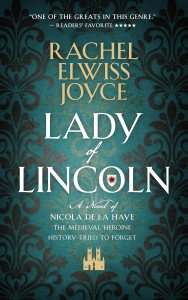 Medieval England, under the reign of Henry II and Eleanor of Aquitaine, was a turbulent time. The focus tends to be on the rebellion of Henry’s sons against their father and how Eleanor sided with her sons. This story has been told, but there is a story of another woman who was caught directly in the middle of the entire ordeal. Her story is most known for her role during the reign of King John and the Magna Carta, but that was when she was an older woman. The story of Nicola de la Haye and Lincoln Castle has been told in biographies and nonfiction books, but not really in historical fiction novels. Rachel Elwiss Joyce hopes to change that with her novel, “Lady of Lincoln.”
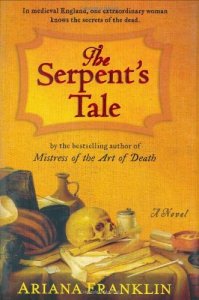 The story of Henry II and Eleanor of Aquitaine is legendary. The queen of France decided to divorce her first husband and marry the young upstart Henry Plantagenet. But things turned disastrous for the couple when Eleanor sided with their sons in a revolt against Henry later in life. At this time, Henry took a mistress named Rosamund Clifford, but when Rosamund was found dead in her tower, it is believed that Eleanor exacted her revenge on the poor woman. It is now up to Adelia Aguilar to solve the case before another civil war breaks out. This is the premise of book two in the Mistress of the Art of Death series by Ariana Franklin, which is entitled “The Serpent’s Tale.”
 When we consider the issue of succession, we often imagine the crown being passed to the next legitimate heir, regardless of gender, but that was not always the case. We think about the struggles that women like Mary I and Elizabeth I endured to secure and stay on the throne, but one woman came before them so close to becoming England’s first ruling queen. She was the daughter of King Henry I and the next in line to the throne after her brother tragically died, but after her father passed away, it was her cousin Stephen who usurped the throne. The war for the crown which would last decades would be known as The Anarchy is the primary focus for Sharon Kay Penman’s novel, “When Christ and His Saints Slept.”
 The Crusades were conflicts predominantly focused on the stories of knights, kings, popes, Christians, and Muslims. We have some stories of women like Eleanor of Aquitaine who joined their husbands in battle. However, some women’s stories tend to get lost in the sands of the past. Take, for example, Eleanor of Aquitaine’s daughter-in-law, Berengaria of Navarre, the wife of Richard the Lionheart. Amid the Third Crusades, she must join Eleanor of Aquitaine on a treacherous journey to meet her husband while he battles for Jerusalem. Can Richard and Berengaria survive the journey to and from the Holy Land and produce the desired heir for the English throne before their enemies can claim victory? Carol McGrath has chosen to tell the tale of the forgotten queen Berengaria of Navarre in her latest novel, “The Lost Queen.”
 Author Bio – Following a first degree in English and History, Carol McGrath completed an MA in Creative Writing from The Seamus Heaney Centre, Queens University Belfast, followed by an MPhil in English from the University of London. The Handfasted Wife, first in a trilogy about the royal women of 1066 was shortlisted for the RoNAS in 2014. The Swan-Daughter and The Betrothed Sister complete this highly acclaimed trilogy. Mistress Cromwell, a best-selling historical novel about Elizabeth Cromwell, wife of Henry VIII’s statesman, Thomas Cromwell, was republished by Headline in 2020. The Silken Rose, the first in a medieval She-Wolf Queens Trilogy, featuring Ailenor of Provence, saw publication in April 2020. This was followed by The Damask Rose. The Stone Rose was published in April 2022. Carol is writing Historical non-fiction as well as fiction. Sex and Sexuality in Tudor England was published in February 2022. The Stolen Crown 2023 and The Lost Queen will be published on 18th July 2024. Carol lives in Oxfordshire, England, and in Greece.
 Blurb
Blurb Author Bio:
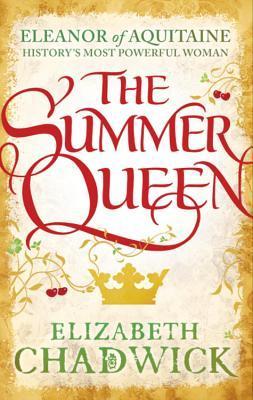 A legendary Queen of both France and England. A wife who went on the Crusades with her first husband and chose her second husband. A fierce mother who defended her Plantagenet children no matter the cost. Eleanor of Aquitaine has been revered and reviled for centuries, some saying she was a powerful woman ahead of her time while others considered her someone who could manipulate those around her by having affairs, including supposedly with her uncle in Antioch. Her story has been told in numerous ways through different mediums throughout the centuries, but now Elizabeth Chadwick has decided to write her interpretation of Eleanor of Aquitaine’s life in a trilogy of historical fiction novels. The first in the series, “The Summer Queen,” explores Eleanor’s early years, her marriage to a young French king, and the man destined to become King of England.
 Civil wars, clashes between cousins, are known to be full of battles between men on foot and horseback, with their eyes set on the throne of their desired country. Many stories of civil wars tend to leave out the women who often were left on the sidelines, ready to pick up the pieces. The story of the Anarchy is a bit different than other civil wars as one of the main figures was not a man, but Empress Matilda, the daughter of King Henry I and the rightful heiress of England facing off against the man who stole the throne from her, her cousin, King Stephen. However, it was not just Empress Matilda who defined what it meant to be a woman during the Anarchy. In her latest book, “Women of the Anarchy,” Sharon Bennett Connolly tells the stories of the mothers, sisters, and wives who defined this turbulent period that saw the end of one dynasty and the beginning of another.
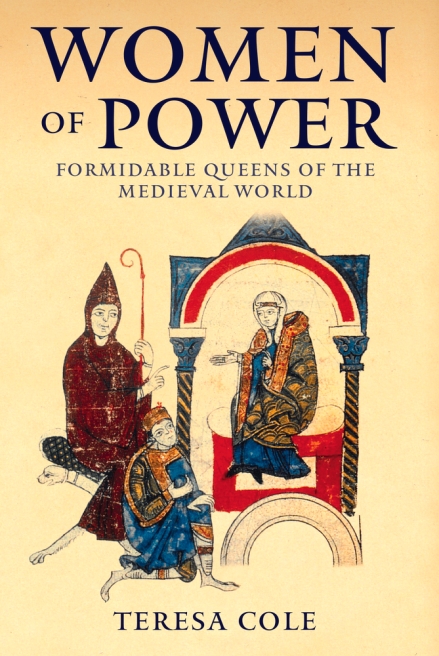 When we think about medieval women, we often think about very pious figures who relied on men, had numerous children, and would often fade into obscurity when they died. While this would be the ultimate fate for many women, it was not so for those close to thrones worldwide. In times of war and political upheaval, the daughters, the wives, and the queens picked up the pieces and patched their respective kingdoms back together. In her latest book, “Women of Power: Formidable Queens of the Medieval World,” Teresa Cole has chosen a select group of women to highlight her point about the strength of women who held power in the Middle Ages.
 When we think of the infamous queens of England, some names come to mind, but one rises to the top for the number of black myths and influence surrounding her name: Eleanor of Aquitaine. The orphaned Duchess of Aquitaine, who married the future King Louis VII of France, went on the Second Crusades with her husband, survived battles and kidnappings, and ended up divorcing her first husband because she couldn’t give a male son. So, she married the young Count of Anjou, who would become the first king of the Plantagenet dynasty, King Henry II, who had a large family and split her time between England and France. Eleanor would eventually side with her sons, rebel against Henry, and spend 15 years in prison. A fire-cracker of a queen, but how many of the stories surrounding the titular queen are true? In her latest biography, “Eleanor of Aquitaine: Queen of France and England, Mother of Empires,” Sara Cockerill dives deep into the archives to tell the true story of this much-maligned queen of England and France.
 Adventures of a Tudor Nerd