
 The Plantagenets, a dynasty that ruled England for over three hundred years. At least that is if you include the Lancastrian and Yorkist kings. Otherwise, the reign of the Plantagenets ended with Richard II being overthrown. So, how did the Plantagenets fall? How did wars, favoritism, and the plague factor into the fall? Helen Carr examines these questions and the rule of three kings over the fourteenth century in her latest book, “Sceptred Isle: A New History of the Fourteenth Century.”
I have really enjoyed Helen Carr’s insight into medieval English history in her book, The Red Prince, so when I heard she was writing a book about the Plantagenets again, with a focus on the fourteenth century, I was excited to read it. The idea in this book that caught my attention was the idea that the Plantagenet dynasty ended when Henry of Bolingbroke overthrew Richard II. As someone who believes that the Plantagenet dynasty ended with the death of Richard III, the concept that it ended almost a century earlier is intriguing.
We begin our adventure with a double reburial of King Arthur and Queen Guinevere, the idea of King Edward I and his wife Eleanor of Castile. It was a kind gesture, but the prophecy that was left behind would be almost prophetic. With the death of King Edward I, the Hammer of the Scots, the throne passed to his son Edward II. While Edward I was a strong warrior, Edward II was a handsome prince who only cared about his favorites, Piers Gaveston and Hugh Despenser the Younger. It would cause those around him, including his wife, Isabella of France, and her lover, Roger Mortimer, to take action against him. Isabella and Mortimer placed Edward III on the throne, but they would soon learn that Edward III was not as passive as his father.
Edward III would return to the warrior state of mind like his grandfather Edward I. With his wife Philippa of Hainault, they would have a large family with many sons, including John of Gaunt and Edward the Black Prince. It would be Edward III who would try to take the French throne for England in a conflict known as the Hundred Years’ War (not the quickest war, and it didn’t go the way Edward III envisioned it). And to top it all off, Edward III had to deal with the emergence of the Black Death and how it affected not only his own family but England and Europe as a whole.
Before Edward III died, his heir, the Black Prince, died, which meant that the Black Prince’s son, Richard II, was destined to be the next king. However, youth and favoritism failed the king as chaos reigned ever since the start of his reign, with the Peasants’ Revolt, and ended with Henry of Bolingbroke becoming the first Lancastrian King, Henry IV.
This was another wonderful book by Helen Carr. It demonstrates Carr’s ability to balance extensive research with a narrative format to create an accessible history book that novices and experts will equally enjoy. My only qualm with this book, if you can call it an issue, is that I wanted it a bit longer so we get more analysis of how this one century affected English and European history as a whole. If you want a book that dives into the history of one of England’s most tumultuous centuries, I highly recommend you read “Sceptred Isle: A New History of the Fourteenth Century” by Helen Carr.
 Medieval Europe was inundated with strong rulers and dominant figures who made a difference in how the policies of certain countries were formed. We tend to focus on the male figures, from kings to lords and rebels, when we study medieval European history. Still, the women in their lives significantly influenced how their countries were governed. Although many women stood by the side of their husbands and didn’t make much of an impact on European history, some women chose to stand out from the crowd and make a name for themselves. Rebecca Holdorph has chosen to highlight a handful of these dynamic women throughout medieval Europe in her book, “Women in the Medieval Court: Consorts and Concubines.”
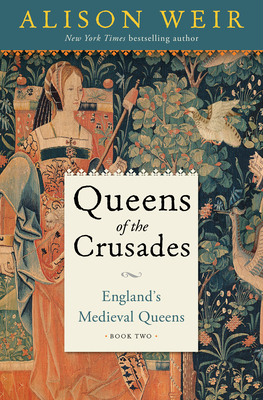 One of the most prominent royal families of English history was the Plantagenets, who reigned for over three hundred years. In the first one hundred years of this family’s infamous history, five kings ruled (the first two are considered kings of the Angevin dynasty): Henry II, Richard I, John, Henry III, and Edward I. These five kings saw England change drastically, but they also participated in the international political landscape of the day, which involved the series of wars that today we simply refer to as the Crusades. The early Plantagenet kings saw much bloodshed and war, but they were not alone in their struggle to keep the dynasty going. These men would not have gotten as far as they did without their wives who stood by their sides. In Alison Weir’s latest installment of England’s Medieval Queens series, “Queens of the Crusades”, she takes a deep dive into the lives of the first five Plantagenet queens to show how remarkable these women truly were to stand beside their husbands during the times of the Crusades in Europe.
 Being part of a royal family has its perks, like power and prestige. However, especially in medieval Europe, it meant that you could not marry the person you loved. Marriage was used as a tool to create strong alliances and the women from royal families were used as extremely powerful pawns to strengthen these connections. During the reigns of King Edward II and Edward III, three sisters proved to be very valuable pawns in the marriage market. They were the Clare sisters, Eleanor, Margaret, and Elizabeth. Their stories of their numerous marriages and abductions help to tell the tale of English politics during the reigns of their uncle King Edward II and his son Edward III. Kathryn Warner’s latest book, “Edward II’s Nieces The Clare Sisters: Powerful Pawns of the Crown” explores how these sisters and their families helped transform England during this transformative time in history.
 Adventures of a Tudor Nerd