
 Have you ever watched a historical drama and wondered what it might have been like to wear the outfits for that period? You see so many reenactment groups online and you are envious of their talents for being able to bring clothing from the past, especially clothes from the 16th century, to life in the modern age. What might it have been like to dress like a lord or a lady? What about a commoner or a monk? How did fashion change throughout the Tudor dynasty? Judith Arnopp answers all of these questions and more in her latest book, “How to Dress Like a Tudor.”
I would like to thank Pen and Sword Books and Net Galley for sending me a copy of this book. I am not usually one who has an interest in fashion, but historical fashion and its evolution is an area that does pique my interest. When I heard that there was going to be a book about Tudor fashion by Judith Arnopp, I jumped at the opportunity to read it.
Arnopp begins by explaining how the Tudor dynasty marked a big change when it came to fashion and the sumptuary laws that determined what people could and could not wear according to their social status. We see how different the clothing styles were during the reign of Henry VII compared to his over-the-top son Henry VIII and how Edward VI acted like his father in portraitures. Mary I paved the way for what it meant to be a female ruler in England, but it was Elizabeth I who exemplified the importance of iconography and one’s legacy through fashion and portraits.
The bulk of this book focuses on the individual clothing items for each gender, age, and social status in Tudor England. We begin with Tudor women and their garments, the type of materials that would be used to create the garments, and what colors and different flowers symbolized. Arnopp explores menswear, including the infamous codpiece in both court dress and on the battlefield. We see how the typical court dress differs from how children and clergy dress every single day. Finally, Arnopp shares her tips as an experienced reenactor to help novices get into the field of reenactments.
Overall, I found this book rather enjoyable and an easy-to-understand guide to 16th-century English fashion. I would read novels about the Tudor era and I would get confused about the individual garments, so this helped me with the terminology. The part that was a little flat for me was the practical element where Arnopp would describe step by step how to make each garment. I am not versed in sewing terminology so it was a bit hard for me to follow along. However, I think if you are interested in reenactments or just Tudor fashion in general, I would highly suggest you read, “How to Dress Like a Tudor” by Judith Arnopp.
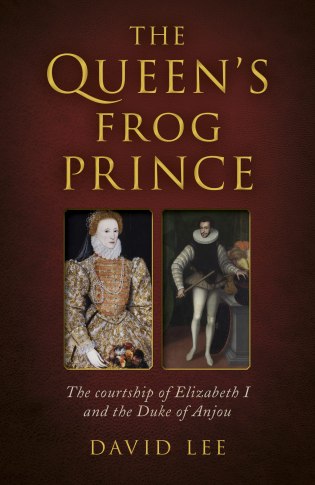 Romances in the Tudor era are legendary for their effects on English, European, and world history. From international matches to domestic love stories, the Tudors had a way of capturing our attention with whom they married. The one Tudor whose relationships caught everyone’s attention just as much as Henry VIII is his daughter with Anne Boleyn, Elizabeth I. The legendary “Virgin Queen” did have some men who caught her eye and some that she even considered marrying. There was Robert Dudley, but the one who may surprise a lot of people is the French prince, Francis Duke of Anjou. So how did this whirlwind romance begin and why did Elizabeth choose to stay single instead of marrying to secure a strong alliance with France? In his latest book, “The Queen’s Frog Prince: The Courtship of Elizabeth I and the Duke of Anjou,” David Lee explores the heart of this long-forgotten international romance.
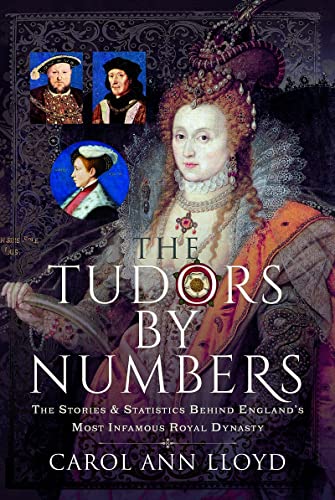 The story of the Tudor dynasty has been told in numerous different ways. We know the major figures, the significant events, and the stories of their love lives. We understand how they changed the history of England and Europe forever, but these are just the basic facts. If we look at the numbers surrounding the dynasty, what type of story does it tell? This is the approach Carol Ann Lloyd has taken in her debut book, “The Tudors by Numbers: The Stories and Statistics Behind England’s Most Infamous Royal Dynasty.”
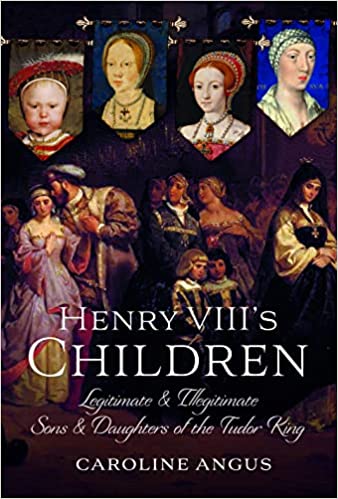 When we think about the title royal children, images of children who get whatever they want, being spoiled with gems and gowns, and ruling kingdoms, they are married to create alliances. In that sense, it would define a life of luxury. However, for the children of King Henry VIII, luxury was not always in their dictionary. What was life like for the legitimate and illegitimate children of Henry VIII? Caroline Angus explores this question in her latest book, “Henry VIII’s Children: Legitimate and Illegitimate Sons and Daughters of the Tudor King.”
 Two women destined to be rivals for one man’s affection. One is the daughter of royalty, destined to become Queen of England since she was a baby. Her first husband died suddenly, and she married her brother-in-law, the young King Henry VIII. The other woman is the daughter of a family on the rise at court. She has been educated in courts abroad but has returned to her native England to serve the Queen of England, but King Henry VIII falls in love with this young woman. Catherine of Aragon and Anne Boleyn; are two women destined to be rivals, but a new museum exhibit uncovers these women’s similarities. In this corresponding book, “Catherine and Anne: Queens, Rivals, Mothers,” Owen Emmerson, Kate McCaffrey, and Alison Palmer share the latest academic research to understand better these two queens who dominated the 16th century.
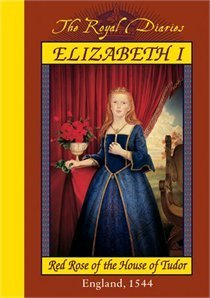 What was the first book you read that excited you so much about the historical figure that you wanted to continue studying history? You would read any text you could get ahold of that mentioned their name, including encyclopedia entries. You have fond memories of that book and wish to reread it as an adult to see if it is still a great book with all its charms. I have noted numerous times that the book series that enticed me to study history was The Royal Diaries Series. The book that started my fascination with the Tudors was “The Royal Diaries- Elizabeth I: Red Rose of the House of Tudor” by Kathryn Lasky.
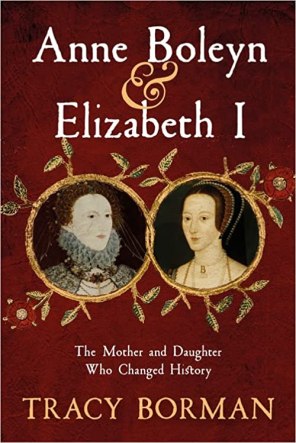 The year is 1536. A young woman climbs the scaffold for her execution while her three-year-old daughter is miles away, not knowing what will happen to her mother. Never speaking about her mother in public for decades, it would seem that the bond between mother and daughter broke that fateful day. Still, Elizabeth I kept the memory of her influential mother, Anne Boleyn, close to her heart. How did Anne prepare her beloved daughter for the complex nature of the Tudor court, and how did Elizabeth keep the memory of her mother alive? This bond is explored in depth in Tracy Borman’s latest book, “Anne Boleyn & Elizabeth I: The Mother and Daughter Who Changed History.”
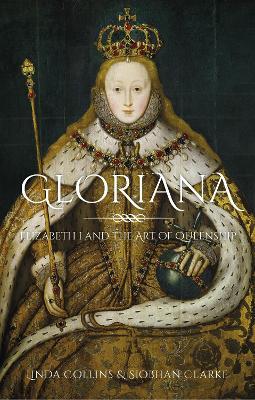 A queen locked in a struggle of being a single woman and the sole ruler of her kingdom must create the image that would help lead her divided country to a golden age. This image must comfort her people while showing strength and perseverance to her enemies who would try to take the throne from her. Elizabeth I worked hard with artists, poets, playwrights, and musicians to create the almost mythological image of “Gloriana,” the virgin goddess. Linda Collins and Siobhan Clarke explore how this image was created throughout Elizabeth’s reign in their latest book, “Gloriana: Elizabeth I and the Art of Queenship.”
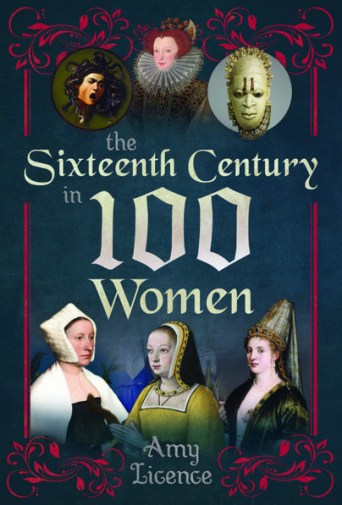 When we think of the phrase “16th-century women,” we often consider those from royal or noble houses throughout Europe. We tend to think of women like the six wives of Henry VIII, Mary I, Elizabeth I, Catherine de Medici, Mary Queen of Scots, and others associated who made an impact during the Renaissance and the Reformation. However, the 16th century did not stop at the borders of Europe; it extended all over the globe. There are many stories of women from all over the world and from different social classes that can help us understand how the world changed in the 16th century. Amy Licence took this concept and decided to write her latest book about a variety of women from around the world who lived in the 16th century, “The Sixteenth Century in 100 Women.”
 When we think of the word “education,” images of sitting in school rooms for hours, listening to lectures, and doing endless homework pop into our minds. Our modern education system tends to focus on math, science, language arts, and history as the core subjects we study, with music and physical education as something that we in America call an “elective.” But have you ever wondered what education looked like in the past? How did the Tudors pass on their knowledge to future generations? What subjects did the Tudors consider essential, and how did the amount of education you received change depending on your class? Amy McElroy explores these questions in her book, “Educating the Tudors.”
 Adventures of a Tudor Nerd