
 The life of a medieval princess was not a life of luxury that we often see in fantasy films. It can be filled with lovely gowns and castles, but it can change in an instance. Take, for example, the lives of the daughters of King Edward IV and Elizabeth Woodville. One minute their father was King of England and life was comfortable; the next minute, they were in the sanctuary, hoping and praying that they would be able to be reunited with their father one day. Their lives were planned out for them when their father was alive, but when Edward IV died unexpectedly in April 1483, the princesses found their world taking another turn. We know what happened with the eldest daughter, Elizabeth of York, as she married Henry VII and became the first Tudor queen, but what about her sisters? In her second book, “The York Princesses: The Daughters of Edward IV and Elizabeth Woodville”, Sarah J. Hodder explores what happened to Elizabeth of York and her sisters once the House of York fell and the Tudors became the new dynasty.
I would like to thank Chronos Books for sending me a copy of this book. I have read Sarah J. Hodder’s previous book, “The Queen’s Sisters” and I enjoyed it. When I saw that Hodder was going to release this book, I knew that I wanted to read it.
I knew quite a bit about Elizabeth of York as she was the eldest child of Edward IV and Elizabeth Woodville and the wife of Henry VII. Hodder knew that she was the most popular of the princesses so she gave a brief overview of her life and moved onto the sisters who do not get enough attention. For those who are not familiar with this family, the other sisters are Mary, Cecily, Margaret, Anne, Katherine, and Bridget. Although Elizabeth’s sisters did not win a crown, it does not mean that their lives were not exciting.
To make sure that the sisters’ stories were told in an equal manner, Hodder dedicated a chapter to each one of their tales. From the youngest who died shortly after they were born to those who lived to see Henry VIII crowned King of England. The men who they married ranged from those who backed the Yorkist cause, leading to a very awkward family clash, to those who proved extremely loyal to the young Tudor dynasty. The sisters would never share the joys and heartbreaks that Elizabeth experienced as a mother (especially Bridget of York who would become a nun), but they were eyewitnesses to dramatic changes in England’s history.
I found it remarkable that Elizabeth accepted her sisters with open arms after she became Queen of England, even when their husbands disagreed with Henry VII. Elizabeth supported her sisters and their families whenever she could.
Hodder tells the story of strong family bonds that connected these sisters through the good times and the bad. You can tell that Hodder was passionate about the subject she was writing about as this book was very well researched. It is often difficult to tell the stories of siblings of monarchs as their sibling who sits on the throne tends to overshadow them, but Hodder brought the stories of the York princesses into the light. “The York Princesses: The Daughters of Edward IV and Elizabeth Woodville” by Sarah J. Hodder may be small in size, but it is full of information for those who want to know more about this extraordinary royal family.
 The year 1483 proved to be a pinnacle point of change for the short-lived Yorkist dynasty. After finally defeating the Lancastrian army, King Edward IV and his family bring peace and order to England, but even their happiness cannot last as King Edward IV dies unexpectedly on April 9, 1483. A power struggle ensues between Richard Duke of Gloucester and Elizabeth Woodville over who should be King of England. Most of Elizabeth Woodville’s children side with her, but there is one child who is staunchly loyal to the Yorkist cause and her uncle Richard; Cecily of York. In her latest novel, “Princess of Thorns”, Saga Hillbom tells the heartbreaking tale of Cecily of York showing how deep her loyalty to her family was and how loyalty came with a cost.
 A young woman separated from her only son as a war divides the nation that she dearly loves. The struggle between York and Lancaster, the Wars of the Roses, grows in intensity and the only hope for the Lancastrians is the son of Margaret Beaufort, Henry Tudor. To keep him safe, Margaret must allow him to go into hiding as she adapts to the court of Edward IV and his wife Elizabeth Woodville. Margaret’s journey through love, death, and court intrigue continues in Judith Arnopp’s second book in her Beaufort Chronicle, “The Beaufort Woman”.
 The story of the Woodville family has fascinated those who study the Wars of the Roses for centuries. Their mother Jacquetta of Luxembourg married Richard Woodville because she loved him, even though he was the chamberlain of her late husband. Jacquetta and Richard had numerous children, notably Elizabeth Woodville, who would marry the first Yorkist king, Edward IV. Elizabeth and her brothers are often talked about when discussing the Woodville children, however, Elizabeth had several sisters who married relatively powerful men. The stories of the sisters are rarely told, until now. Sarah J. Hodder has decided to take on the task of exploring the lives of these hidden figures in her debut book, “The Queen’s Sisters: The Lives of the Sisters of Elizabeth Woodville”.
 The romanticized conflict that was known as the Wars of the Roses had numerous colorful figures. From the sleeping king, Henry VI and his strong wife Margaret of Anjou to the cunning Kingmaker Warwick and the hotly debated figure Richard III, these men and women made this conflict rather fascinating. However, there was one man who would truly define this era in English history, Edward IV. He was a son of Richard duke of York who fought to avenge his father’s death and the man who would marry a woman, Elizabeth Woodville, who he loved instead of allying himself with a European power. These are elements of his story that most people know, but he was first and foremost an effective general, which is a side that is rarely explored when examining his life. David Santiuste decided to explore this vital part of Edward’s life in his book, “Edward IV and the Wars of the Roses”.
 There are many noble or royal families that truly were the backbone of the English society and that could help or hinder the monarchy. One such family was the Greys, who started as a baronial family and rose through the ranks by good marriages and staying loyal to those who were in power. Of course, when one rises high, there is also the risk of falling low spectacularly, which happens when Lady Jane Grey becomes Queen of England for a mere 9 days. The story of the house of Grey is complex, yet it has never been told in its entirety, until now. This extraordinary family saga is told in Melita Thomas’s latest book, “The House of Grey: Friends and Foes of Kings”.
 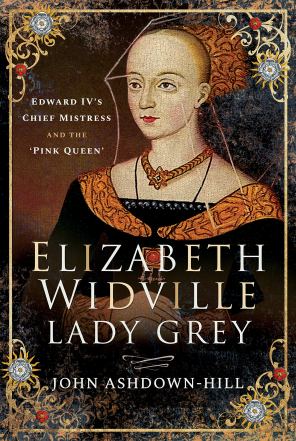 The English conflict known as the Wars of the Roses is filled with dynamic figures whose stories are those of legends. None more so than the wife of Edward IV and the mother of Elizabeth of York and the princes in the Tower, Elizabeth Woodville. She has been known in popular culture as the commoner turned “White Queen” consort, but do we really know the true story about her life? Was she really Edward IV’s wife? How much influence did she actually carry? These questions and more are tackled in Dr. John Ashdown-Hill’s latest book, “Elizabeth Widville Lady Grey: Edward IV’s Chief Mistress and the ‘Pink Queen’.
 When one thinks about the Wars of the Roses, we often think about the adults who fought against each other. However, there were also children who were stuck in the middle of the conflict. Two of the most famous children of this time were Edward V and Richard of Shrewsbury, Duke of York, the sons of Edward IV and Elizabeth Woodville. Today, we refer to these brothers as “the Princes in the Tower”. The disappearance of these two boys has sparked so much debate over the past five centuries as to who killed them or if they did indeed escape the tower, yet we have no way to know what happened to them. What we do have is the physical locations that were part of the young princes’ lives. Instead of diving into the quagmire that is the mystery of the princes’ lives, Andrew Beattie takes a different approach in his book, “Following in the Footsteps of the Princes in the Tower.”
 By the year 1470, England had been embroiled in a civil war between the houses of York and Lancaster for nearly 20 years. Edward IV was king until he was driven out of the country by his former best friend Warwick and Edward’s own brother, George Duke of Clarence. The House of Lancaster is back in charge with Henry VI, but Edward IV and his other brother Richard Duke of Gloucester are not giving up without a fight. However, there is another family who wants to fight for the throne, the Tudors. How will it come to an end? Who will become King of England when all the major battles come to an end? These questions are answered in Conn Iggulden’s thrilling conclusion to his Wars of the Roses series, “Ravenspur- Rise of the Tudors.”
 The deaths of the Duke of York, Earl Salisbury and Edmund Earl of Rutland at the Battle of Wakefield at the end of 1460 marked a changing point for how the Wars of the Roses was fought. Now it was not going to be simply a matter of who was going to be the King of England, but it was a war of revenge. What the Lancastrians did not realize at the time was the fact that these deaths would unleash two men who would mark the destruction of the Lancastrian cause; Edward Duke of York, the future King Edward IV, and Richard Neville Earl of Warwick “the Kingmaker”. In the third book of Conn Iggulden’s Wars of the Roses series called “Bloodline”, Iggulden explores the rise of these two dynamic men and how family matters tore the two best friends apart.
 Adventures of a Tudor Nerd