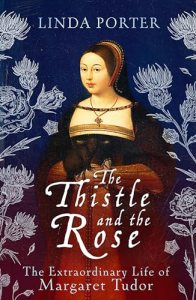
Book Review: “The Thistle and The Rose: The Extraordinary Life of Margaret Tudor” by Linda Porter

The Tudors have been an area of fascination for historians and history nerds alike for centuries. The attention tends to focus on either Henry VIII and his six wives or his daughter, Elizabeth I, but we need to remember that they were not the only Tudors. In fact, we should remember that Henry VIII had siblings, Arthur, Margaret, and Mary. While Arthur and Mary tend to get more attention due to their proximity to Henry VIII and his marital life, Margaret Tudor had her own eventful life as Queen of Scotland and the mother of King James V. Linda Porter tells Margaret’s story in her latest biography, “The Thistle and the Rose: The Extraordinary Life of Margaret Tudor.”

I had heard that Porter was writing a new biography about Margaret Tudor, so I knew I wanted to read it. I have read a few books about Margaret Tudor, but they have been relatively short, so I wanted to see what new information Porter would include in this book.

Margaret Tudor was the second child of King Henry VII and Queen Elizabeth of York. As such, she was destined to marry a foreign prince and create a strong alliance for the brand-new Tudor dynasty. Since her brother Arthur was betrothed to Catherine of Aragon, Margaret’s parents chose a match with Scotland and King James IV, who was twice the age of Margaret. As Queen of Scotland, Margaret did her best to bridge the gap between England and Scotland, deal with her husband’s mistresses and illegitimate children, and be a mother to her son, King James V.

Everything changed when James IV died at the Battle of Flodden. Margaret was now a widow and regent for the young King James V. To protect her family, Margaret decided to marry Archibald Douglas, 6th Earl of Angus, which turned out to be a trainwreck. Although Archibald did give Margaret her daughter, Margaret Douglas, he was stealing from Margaret’s own properties, which was a jerk move. Margaret wanted a divorce, but her dear brother Henry VIII was against the idea. A bit hypocritical, especially since he would divorce Catherine of Aragon a few years later. Eventually, Margaret would divorce Archibald and marry a third time to Henry Stewart, Lord Methven.

Throughout history, Margaret Tudor has been viewed negatively because she married Archibald so quickly, but Porter showed that Margaret should be applauded for how she survived during difficult circumstances. She fought for herself and her children, even if it meant that she was at odds with her husbands or her brother. Through her letters, we see how Margaret was a diplomat trying to make peace between England and Scotland.

Porter does an excellent job telling Margaret’s story in a respectful manner. This book is extremely well researched and easy to read. If you are a Tudor fan and you want to learn more about Henry VIII’s sister Margaret Tudor, I highly recommend you read “The Thistle and the Rose: The Extraordinary Life of Margaret Tudor” by Linda Porter.

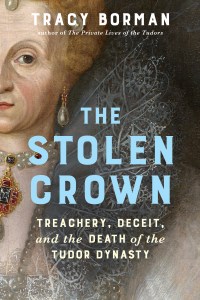
Book Review: “The Stolen Crown: Treachery, Deceit and the Death of the Tudor Dynasty” by Tracy Borman

It is March 1603, and the Virgin Queen is dying. She has no children to inherit her throne directly, so she must choose a successor. She chooses the son of Mary Queen of Scots, the queen who had been executed a few years before. James VI of Scotland will become James I of England, but was it as easy as William Camden makes it in his account? What does a recent discovery about Camden’s original manuscript of Annales tell us about James’ succession to the throne of England? Tracy explores the messy conflict to find an heir to the English throne in her latest book, “The Stolen Crown: Treachery, Deceit and the Death of the Tudor Dynasty.”
I would like to thank Grove Atlantic and Net Galley for sending me a copy of this book. I have been a fan of Tracy Borman’s books for a few years now because of how she is able to present new information about stories from the past that I already know and give them a fresh look. When I heard that James might have stolen the crown from Elizabeth I, that thought intrigued me so much that I knew I wanted to read this book.

So how did the Stuarts come into power, and why did Elizabeth have James as her successor? To understand that question, we have to explore briefly the origins of the Tudor dynasty and how Elizabeth I came to the throne. After we are firmly established in the reign of Elizabeth I, Borman goes through why Elizabeth needed to elect a successor and the nominees. Those up for Elizabeth’s throne were: James VI, Arbella Stuart, Lady Katherine Grey, Mary Grey, and Henry Hastings, Earl of Huntingdon. We get to see how Elizabeth handled each of her potential choices as the next ruler of England, but the two that are highlighted significantly in this book are Arbella Stuart, the daughter of Charles Stuart, 5th Earl of Lennox, and Elizabeth Cavendish, and the man who would become King James VI of Scotland.

Borman shows her readers the complex relationship between Elizabeth and James, a tumultuous relationship, especially after the death of James’ mother, Mary Queen of Scots. It was not the most cordial relationship that has been shown in history, including the Annales written by William Camden. However, due to extraordinary research that was revealed in 2023, it was shown that Camden’s writing had serious revisions to paint James in a better light during the fight for succession. In fact, there were attempts on Elizabeth’s life that James knew about, including one incident where he might have been directly involved. Just because James became King of England after Elizabeth’s death does not mean that he had an easier time in England. In fact, the Stuarts lasted less than a hundred years before the monarchy was dissolved with the execution of James’s son Charles I in 1649.

This is another spectacular book by Borman, one that changed how I viewed the relationship between Elizabeth and James in the final years. It reads like a political thriller and offers a deeper appreciation for Elizabeth’s fight for the English throne, while also highlighting how the Stuarts employed similar tactics to the Tudors in securing their right to rule England. Suppose you want an extremely well-researched book that provides great insight into the end of Elizabeth’s reign and provides new information about this period. In that case, I highly recommend you read “The Stolen Crown: Treachery, Deceit and the Death of the Tudor Dynasty” by Tracy Borman.

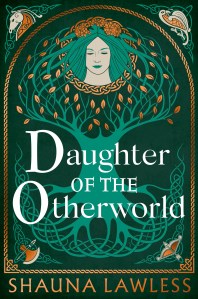
Book Review: “Daughter of the Otherworld” by Shauna Lawless

When we think about the Norman Conquest, we often think about how it impacted England, Wales, and Scotland, but we tend to forget about Ireland. Early medieval Ireland  do not get a whole lot of attention in historical fiction. That is, until Shauna Lawless’s Gael Song trilogy. Now, fifty years after the events of the original trilogy, Lawless has brought in a new cast of characters, as well as old characters, into the fight between the Descendants of the Tuatha De Danann and the Fomorians. When a child of prophecy is introduced into the mix that is said to be able to defeat the Fomorians, the race is on to protect the child or to kill her. Will the Descendants survive, or will the Fomorians torch the land and the Descendants’ hope? Shauna Lawless jumps back into this work with the Gael Song Era 2 book 1, “Daughter of the Otherworld.”
I would like to thank Bloomsbury USA and Net Galley for sending me a copy of this novel. I am new to this series, but I wanted to read it because I have never read a book about medieval Ireland or about Irish mythology, so when I saw this book available, I decided to give it a shot, especially with such a stunning cover.

We pick up fifty years after the Battle of Clontarf, and a man named Donnchad is on the run from Broccan of the Tuatha De Danann. Donnchad is a Fomorian, which means he can use fire magic and is the mortal enemy of those descendants of the Tuatha De Danann. Donnchad can reunite with his mother, Gormflaith, in Rome. Meanwhile, Broccan has a dream that tells him that he must go back to Rathlin Island and protect the daughter of Fodla, who has been in the Otherworld for a long time. The daughter, Isolde, is destined to defeat the fire, which might be a reference to the Fomorians.

Broccan raises Isolde as his own daughter until she is 17, but he never tells her who she is or her purpose in this giant conflict. But that all changes when the Fomorians find out about Isolde and decide to attack Rathlin Island. They believe that the threat has been neutralized, but Isolde lives and must travel to the mainland to find her cousin Colmon in Seir Kieran. While Isolde is searching for family and to figure out who she is, the Fomorians seek to control Ireland with the Norman lords of England.

This is a novel full of conflict, both magical and mortal, romance and heartbreak. Lawless does a great job of not only balancing numerous perspectives but also balancing mythology with historical battles and figures to create an original story. While I did enjoy the story, it did take me a while to figure out who the characters were and the overall conflict. I think after reading this particular book, I want to read the previous books in the series before I jump into the latest one. If you have read the previous books in the Gael Song trilogy, I think you will enjoy “Daughter of the Otherworld” by Shauna Lawless.

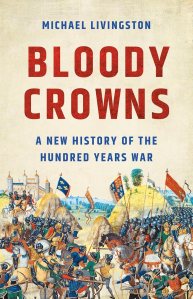
Book Review: “Bloody Crowns: A New History of the Hundred Years War” by Michael Livingston

Medieval Europe was a time of conflicts and change. While smaller disputes between countries or civil wars would define borders, the most prominent conflict during this period was the Hundred Years’ War. A conflict that has been traditionally taught to have lasted 116 years between England and France. It is often told from the English perspective, with battles such as Agincourt, Crecy, and Poitiers celebrated. But what if we look at the bigger picture and expand our lens to the whole of Europe while keeping a neutral approach to the France vs England conflict? What if the conflict did not last a mere hundred years, but in fact two hundred years? What type of story would this kind of approach tell when it comes to medieval European history? Michael Livingston takes on the mammoth challenge of telling the tale of how this war changed European history forever in his latest book, “Bloody Crowns: A New History of the Hundred Years War.”

I would like to thank Basic Books and Net Galley for sending me a copy of this book. I enjoyed the previous book that I read by Michael Livingston on the Battle of Crecy, so when I heard that he was writing a new book about the Hundred Years’ War, I was intrigued. I wanted to see what new information he could provide for a conflict that has been discussed heavily for centuries.

Livingston delivers with a plethora of information. He begins by explaining that the term Hundred Years’ War came from a French textbook in 1823. We often think that it began when King Philippe VI of France declared English lands forfeit on May 24, 1337, so King Edward III declared that he was the rightful king of France; and the end of the war was when the French seized the city of Bordeaux on October 19, 1453. However, Livingston argues that the war began in 1292 and ended in 1492, which means it was a two-hundred-year war. Livingston then goes into explaining the origins of France and England to explain how on earth they even got to a state of strife.

While the study of the conflict between France and England tends to focus on these countries, Livingston expands his view to include a pirate war between English and Norman merchants, wars in Portugal, the Burgundian Wars, fights between England, Scotland, and Wales, peasant revolts of all varieties, and wars with the Flemish. We also see a few civil wars in both France and England, including the Wars of the Roses. There are also colorful characters, including a couple of mad kings, the Black Prince, Henry V, Joan of Arc, William Wallace, earls and dukes of every variety, knights who were loyal to a fault, queens who fought for their families, heiresses fighting for their land rights, and a ton of family squabbles. And of course, Livingston focuses on the battles that defined the period, including Crecy, Poitiers, Agincourt, and Orleans, as well as lesser-known battles that helped shift the momentum for either side. Livingston can provide such vivid details that it feels like you are on the battlefield, even when it comes to the more obscure battles.

In my opinion, Livingston is one of the finest medieval military historians right now, and this is his magnum opus. I learned so much by reading this book that it kind of redefined what I think of the Hundred Years’ War. This is one of the best books I have read this year. If you want a book about medieval Europe that will challenge your way of thinking about one of the biggest conflicts of the age, I highly recommend you read “Bloody Crowns: A New History of the Hundred Years War” by Michael Livingston.

Book Review: “Medieval Christmas: The Origins and Traditions of Christmas in the Middle Ages” by Toni Mount

The weather is getting colder, and life is getting a bit busier in preparation for winter and family gatherings. It’s time to get ready for the holiday season, and there is one that is universally loved. No, it’s not Halloween, even though it is October when I am writing this review. No, I am talking about Christmas. But one wonders what the origins of Christmas and how our traditions evolved? Toni Mount explores this most important holiday time in her latest book, “Medieval Christmas: The Origins and Traditions of Christmas in the Middle Ages.”

I would like to thank Toni Mount for sending me a copy of her latest book. I am always interested in learning the origins of holidays, especially Christmas, so when she sent me a copy of her book, I was excited to read it so that I can get into the holiday mood a bit early.

Since this book is relatively short, I will keep the review short. Mount explores the different aspects of Christmas and its origins in short sections. We begin with the origins of the holiday itself and how it went from Midwinter/ the Winter Solstice/ festival of Yule and Saturnalia to Christmas through the expansion of the Christian faith. In England, the first Christian Christmas was celebrated in 597 AD with Saint Augustine and King Aethelberht, but it was not until King Alfred that Christianity became the religion of England.

Christmas is not only a solemn day in the Christian calendar, but in the Middle Ages, it was an entire season full of feasting, music, and pageants. We also see how the concept of Santa Claus morphed overtime from Father Christmas and Old Man Winter to Saint Nicholas. We also learn the importance of gift giving and how politics would play a huge part in how Christmas was celebrated, or in the case of the Puritans, banned for many years.

I found this book enjoyable and extremely cozy in the vibes. I did wish it was a bit longer as I did enjoy learning about this topic and did not want it to end. Overall, I think “Medieval Christmas: The Origins and Traditions in the Middle Ages” by Toni Mount, was a delightful book and the perfect choice for medievalists who want to get into the holiday spirit.

Book Review: “To Kill a Queen” by Amie McNee

When we think of Elizabethan England, we tend to think of the Golden Age of England. A time of discoveries and for the arts to flourish under the Virgin Queen, Elizabeth I. However, there is a darker side. It was also a time of espionage, fears of invasions from other countries, and the hatred between Catholics and Protestants. The dangers of the Elizabethan underworld have reached the queen, as there is an attempt on her life. Can Jack, the son of a crime boss, change his life and find the culprit before they find him, or will he be betrayed by those he calls his friends? Amie McNee explores the seedy underworld of Elizabethan England in her novel, “To Kill a Queen.”

I would like to thank Crooked Lane Books and Net Galley for sending me a copy of this novel. I am a sucker for a good historical mystery, and if it is set in Tudor England, even better. I read the premise of this novel and decided to give McNee a try.

The year is 1579, and Queen Elizabeth I is entertaining her final suitor, the Duke of Anjou. The city is all abuzz with rumors of wedding bells. Everyone except Jack, a young coroner apprentice, who is the son of a crime boss. Jack is helping the Justice of the Peace, Ben, and his mentor, coroner Damian, try to solve a case of a wife beaten to death by her husband. It is a pretty open and shut case, so Jack was surprised to receive another case so soon. A soldier died protecting the queen from an assassin. Now, Jack, Ben, and Damian must find the assassin before it’s too late.

It seems like your typical murder case set in a period setting, but that’s where McNee mixes things up. We get to meet Jack’s father, Axe, the crime boss, and we find out that Jack is not their real identity. Not many know Jack’s true identity, except for his lover Jenny and Damian. Jack’s friend Harry is a common resident of Bedlam, but he is now out, and Jack has to take care of him. When associates close to Jack end up being killed, there is a sense of urgency that Jack has to find the murderer before they find Jack. There are a lot of twists and turns, and the reveal of the whodunnit was shocking, but the conclusion of the book did not fit well with the tone of the rest of the book.

Overall, it was a decent novel, even though it felt more Oliver Twist than Tudor. It was nice to see the typical Tudors step to the side so that we can focus on other stories in Elizabethan London. If you want a detective novel with an unlikely protagonist, filled with twists and turns, and set during the Tudor age, I recommend you read “To Kill a Queen” by Amie McNee.

Book Review: “Circle of Days” by Ken Follett

Stonehenge, a marvel of the ancient world that still stands centuries after it was built. It has been the center of mystery and wonder for all who gaze upon it. A gigantic monolithic structure, whose purpose has been a source of discussion since its origins, but that raises another quandary: who were the people who built such an impressive landmark? This single question presents a grand opportunity for historical fiction writers as we don’t have many written records for this period of time, which means authors have room to play. Ken Follett took on the daunting task of telling the tales of those who built this imposing monument in his latest novel, “Circle of Days.”

I would like to thank Grand Central Publishing and Net Galley for sending me a copy of this novel. I have been a fan of Ken Follett’s historical fiction novels since I read “A Column of Fire” and then the first two books of the Kingsbridge series, “The Pillars of the Earth” and “World Without End.” A bit out of order, but I am loving that series. When I heard that he was writing a brand new historical fiction novel about Stonehenge, it was such an intriguing idea that I knew I wanted to read it.

Like Follett’s previous historical fiction novels, he focuses on several protagonists from different walks of life to create a cohesive story. In the case of this novel, the three main groups; herders, farmers, and woodlanders. Seft, our first main character, is a bit of an outsider. He is the son of a miner who abuses him, but Seft yearns to start a new life and he wants to build things that will help his community. Seft falls in love with a herder girl named Neen, the daughter of a herder elder named Ani. Neen’s sister Joia is a priestess who dreams of a stone monument so that they can keep their traditions alive for generations.

The dreams of Seft and Joia are ambitious in nature, especially because there are those who want to stay in the old ways instead of moving forward. They include Cog, Seft’s abusive father who wants Seft to remain a minder the rest of his life, Troon, the leader of the farmers who refuses to work with the herders and is the enemy of Scagga, an elder of the herders, and finally Baz, once an ally but who turned into an enemy when disaster strikes. From drought and famine to raids and wars, the people of the Great Plains fight for what they believe in while falling in love, starting their own families, and striving to fulfill their ambitions in life.

This is another masterpiece by Ken Follett. Not only are the characters so dynamic, but their world feels so believable. You can tell Follett was meticulous when it came to the research as he made the world of 2500 BC vibrant and so real. I would have liked to have seen a historical note at the end of this particular novel to explain how he was able to create this ancient world. Overall, I loved every moment of this book and I was genuinely sad when it came to an end. I cannot wait to see what Follett will write about next. If you are a fan of Ken Follett or just want a historical fiction novel that explores one of England’s oldest monuments, I highly recommend you read “Circle of Days.”

Book Review: “Nemesis: Medieval England’s Greatest Enemy” by Catherine Hanley

The Plantagenets, one of England’s most dynamic dynasties, were always in the middle of some sort of conflict. Whether they were fighting foreign adversaries, their own people, or their own family, it felt like the Plantagenets were always getting into some sort of trouble. And there was one king who knew how to use the weaknesses of the kings of England to his advantage. He was King Philip II of France, also known as Philip Augustus. He had to deal with four different Plantagenet kings and had a strategy for each one of them. Just what were Philip II’s strategies, and how did his reign affect English/French relationships as a whole? These questions are answered in Catherine Hanley’s book, “Nemesis: Medieval England’s Greatest Enemy.”

I would like to thank Osprey Publishing and Net Galley for sending me a copy of this book. I enjoy reading about the Plantagenets and their impact on England and Europe as a whole. When I saw that this book took a French approach to the Plantagenets and focused on Philip Augustus, it was an intriguing premise to me.

As Hanley states in the introduction, this book is not your typical biography, as she focuses on the relationship between Philip Augustus and his Plantagenet opponents. That does not mean that we do not get biographical information for Philip, who was the son of Louis VII and Adela of Blois. Per tradition, as the heir to the French throne, Philip was crowned as Junior King of France on November 1, 1179, which meant that his father was still alive when he was crowned, and he trained to become the proper King of France.

While Philip knew that he had factions to deal with inside of France, his main concerns were overseas with the Plantagenets, primarily King Henry II and his sons. Over the course of his forty-year reign, Philip dealt with Henry II, Richard I the Lionheart, John, and Henry III. Each English king presented his own challenges for Philip, but Philip took them in stride and worked hard to make France stronger. At the same time, Philip had to deal with his own family dramas. He was married three times to Isabelle of Hainault, Ingeborg of Denmark, and Agnes of Merania. It was his marriage to Agnes of Merania that gave Philip his heir, the warrior King Louis VIII of France. However, it was Ingeborg of Denmark who gave Philip the biggest headache as she never gave up fighting for her marriage.

From military to political strategies, Hanley shows how Philip maneuvered against the English, and yet she shows that he was not a perfect person or a king. Philip was a flawed human who had to deal with the cards he was dealt like anyone else. Hanley presents a comprehensive book that explores the complex nature of medieval politics and how one man battled against an entire dynasty during his reign. If you are someone who wants to explore the early Plantagenets from the eyes of their enemy, King Philip II of France, I recommend you read “Nemesis: Medieval England’s Greatest Enemy” by Catherine Hanley.

Book Review: “Great Harry’s Navy: How Henry VIII Gave England Sea Power” by Geoffrey Moorhouse

One would assume that, since England is an island nation, its navy has been its strength since its foundation. That, however, was not always the case. While there were naval battles during the Middle Ages, it was not a navy like we know today. The concept of the Royal Navy was founded during the time of the Tudors, especially under the reign of Henry VIII. So, how did Henry VIII turn a navy from 7 ships to over fifty ships that could stand with other European navies? Geoffrey Moorhouse examines the creation of the English navy in his book, “Great Harry’s Navy: How Henry VIII Gave England Sea Power.”

This particular title was a used bookstore find for me. I saw that it was about the Tudors, and an aspect that I am not super familiar with. I don’t read a lot of nautically-based books, especially nonfiction, so I decided to go on a whim and try it out.

Moorhouse recognizes that this is a highly specialized book, so before delving into the history, he includes an extensive glossary at the beginning of the book to assist those unfamiliar with nautical terminology. He then dives into the origins of the English navy pre-Henry VII, and we can see that Henry VII did not leave his son, Henry VIII, many ships. However, Henry VIII had such a passion for ships that he got to work right away making shipbuilding centers and making sure that the right men were in the positions of power to make his navy superior to those in Europe. Moorhouse goes into minute detail to show how the Tudor navy rose, fell, and rose again to create a foundation that Henry’s children, Edward VI, Mary I, and Elizabeth I would build upon to create a sea superpower.

I am a fan of challenging books and discovering new topics in history. I wanted to learn more about naval history, presented in an easy-to-follow writing style. While Moorhouse does attempt to do this, his exuberant nerdy side for naval history comes out, and it felt like he was having a conversation with experts, not novices. It was one of those books that took me a long time to read because there was so much information that I was trying to digest as a novice.

I think this book is definitely written for a specific group of people, and they are those who love nautical history and learning about the Tudors. For novices, like myself, it may be quite a trial to read. If you are in the latter category and you want to read this, take your time and take notes if need be. I think this is a book that could be a great resource for historical fiction authors and just those who want a different approach to the Tudors. If that is you, “Great Harry’s Navy: How Henry VIII Gave England Sea Power” by Geoffrey Moorhouse might be a book to add to your collection.

Book Review: “Daughter of the Tarot” by Clare Marchant

A single deck of cards changed the fate of generations of women. The tarot cards, created in 16th-century Italy, will connect two women separated by centuries. One was a woman in 17th-century London, originally from Milan, who used the cards to rescue women from abusive relationships. The other is a woman from modern-day London starting her life anew when she comes across an old tarot card deck with a missing card. What began as a hunt for a missing card will connect the two women and change lives forever. The cards hold secrets to the past, but will they bring hope or disaster? This is the premise for Clare Marchant’s latest dual-timeline novel, “Daughter of the Tarot.”

I would like to thank Boldwood Books and Net Galley for sending me a copy of this novel. I recently read her novel, “The Shadow on the Bridge,” which I enjoyed, so when I saw this novel, it had such an intriguing description that I wanted to read it. I am not familiar with the history of tarot cards, and I have not read many novels set in the 17th century, so I was excited for a new adventure.

As this is a dual-timeline novel, there are two protagonists from two different periods: Portia from 17th-century England and Beatrice from 21st-century England. We begin in Milan in 1629, which has just been hit by the plague, where we are introduced to Portia and her baby daughter, Vittoria, who are struggling to survive. The next time we see Portia and Vittoria, iits 1644 and they are living in London. Vittoria is 15 years old, and Portia is using her talent with tarot cards to help those in need. What Vittoria does not know is that Portia uses her readings to help women escape abusive relationships by using the Devil’s Card as a message for the boatsman Jack, who is in love with Portia. Secrets and truths slowly begin to reveal themselves as someone from Portia’s past has come to London and may destroy her relationship with Vittoria.

In the modern storyline, we meet Beatrice, or Bea, who is starting a new life in London and is opening her own antiques shop. Bea has been avoiding her father and his new love interest since her mother died. She has the gift of reading tarot cards, and one day, she comes across an old deck of cards. The only problem is that it is missing a key card, the Devil’s Card. Bea and her landlord, Jack, search high and low for the missing card and find exactly what they are searching for, and some surprises.

It took me a while to get into this book as it was a slower pace than the previous novel that I read by Marchant. While I enjoyed the modern storyline, the 17th-century portion felt a bit slower, and it didn’t feel like the 17th century to me, but more like the 16th century. Overall, I think it was a decent novel with an interesting pair of protagonists. If you want a story about the 17th century with a unique premise, I recommend you read “Daughter of the Tarot” by Clare Marchant.