
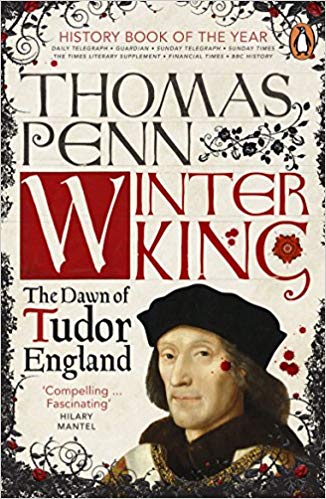
 The Tudor Dynasty and its beginning has often been viewed as a glorious dawn after the dark period that we call the Wars of the Roses. It established a firm foundation that the kingdom lost during the 30 years of civil war. It took a lot of effort from the victor of this tumultuous time, Henry VII, to transform England back to a relatively stable country. To some, Henry VII was a virtuous leader who cared about his family and his country, saving money to make sure the dynasty was secure. For others, Henry VII was a figure who clung to his crown and his kingdom no matter the cost, which included conspiracies and underhanded methods. But what did Henry VII do in order to bring back order to England and how did he convince others that the Tudors were the rightful rulers? These are the questions that Thomas Penn wanted to answer in his book, “Winter King: The Dawn of Tudor England.”
Penn explains the premise of his book and why he chose to explore the last years of this particular king’s reign:
The last, claustrophobic decade of Henry VII’s reign, with an ageing, paranoid king and his dynamic young son at its heart, forms the focus of this book. It is one of the strangest episodes in English history. An atmosphere of fear and suspicion radiated from the royal court into the streets and townhouses of London and throughout England’s far-flung estates and provinces. Established forms of rule and government were bent out of shape, distorted in ways that people found both disorienting and terrifying. But these are also the dawning years of a dynasty. They see the coming of age of Catherine of Aragon, the young Spanish princess who would become Henry VIII’s first wife, and of Henry VIII himself- or rather, Prince Henry, as he is here. To explore these precarious years, and to gain a sense of how and why Henry VII behaved and ruled in the way he did, is to reveal much about the house of Tudor, the family that would, over the course of the sixteenth century, dominate and transform England. (Penn, xxi).
Penn begins his book by explaining how Henry came to the throne after defeating Richard III at the Battle of Bosworth Field and how he proved that the Tudors had royal blood within their veins, therefore they were able to rule England. Henry and his beloved wife, Elizabeth of York, would have four children who would survive infancy; Arthur, Margaret, Henry, and Mary. It is really Henry’s relationships with his two sons, Arthur and Henry, that Penn focuses on when it comes to Henry’s family. Arthur is married to the beautiful Spanish princess Catherine of Aragon in order to establish a strong alliance with Spain. Their marriage would not last long. Arthur tragically died a few months into their marriage, sending Henry VII into a deep despair, which only deepened when Elizabeth of York died a year later. Henry VII’s only heir was his son Prince Henry, a son who Henry VII did not really have a relationship with and now had to teach him how to become king.
On top of all the personal tragedies during the last decade of Henry VII’s reign, we see men in England and around Europe, trying to earn the king’s trust in order to gain prestige and power. One of these men was Sir Richard Empson who was in charge of the Council Learned, which was a legal committee who collected feudal dues and kept a close eye on the king’s land. Empson, as Penn explains, tended to use underhanded ways to get what he wanted, not only for his king but for himself. Henry VII also used his vast network of connections across Europe in order to gain information about those who wanted to remove him from power. Penn’s view of Henry VII is of a king who was extremely suspicious, aloof and a Machiavellian ruler. A man who trusted no one and valued financial gains over his own people. To Penn, Henry VII’s reign was dark and full of fear.
This is my first time reading a book by Thomas Penn and I must say it was a unique experience. I have to applaud Penn for the amount of details that he used when it came to ceremonial events at the court, such as the arrival of Catherine of Aragon and when Philip of Habsburg, Duke of Burgundy arrived in England. The way Penn described these events was quite enlightening. Penn also introduced a bunch of figures, from England to Italy, which are all fascinating and play a role in the running of Henry VII’s England. However, for those who are not familiar with these particular people might get confused. I know it was difficult for me to figure out who was who, which is why I wished Penn had a list of important people located somewhere in this book that the reader could refer to if they got lost. Overall, I thought Thomas Penn’s book, “Winter King: The Dawn of Tudor England”, was a fascinating and different, darker view of the founder of the Tudor Dynasty as well as what the relationship between Henry VII and his heir Henry VIII was like.
 England is on the brink of civil war. Families with royal blood in their veins are fighting amongst each other as King Henry VI has fallen ill. Mistrust runs rampant and sacrifices are made in order to gain the throne. This is the England of 1454 and the beginning of the period in English history that we know today as the Wars of the Roses. Families like the Nevilles, the Percys, and the houses of York, Lancaster, and Tudor would gain fame and infamy during this time. Conn Iggulden decided to explore this tumultuous time after the Jack Cade rebellion, which he explored in his first book “Stormbird”, in the second book of his “Wars of the Roses” series called “Trinity”.
 We think of her as the barren wife of a notorious king; but behind this legacy lies a fascinating story. Katherine of Aragon is born Catalina, the Spanish Infanta, to parents who are both rulers and warriors. Aged four, she is betrothed to Arthur, Prince of Wales, and is raised to be Queen of England. She is never in doubt that it is her destiny to rule that far-off, wet, cold land. Her faith is tested when her prospective father-in-law greets her arrival in her new country with a great insult; Arthur seems little better than a boy; the food is strange and the customs coarse. Slowly she adapts to the first Tudor court, and life as Arthur’s wife grows ever more bearable. But when the studious young man dies, she is left to make her own future: how can she now be queen, and found a dynasty? Only by marrying Arthur’s young brother, the sunny but spoilt Henry. His father and grandmother are against it; her powerful parents prove little use. Yet Katherine is her mother’s daughter and her fighting spirit is strong. She will do anything to achieve her aim; even if it means telling the greatest lie, and holding to it.
 stratospheric rise to power in Tudor England. Margaret Pole spends her young life struggling to free her brother, arrested as a child, from the Tower of London. The Tower – symbol of the Tudor usurpation of her family’s throne – haunts Margaret’s dreams until the day that her brother is executed on the orders of Henry VII. Regarded as yet another threat to the volatile King Henry VII’s claim to the throne, Margaret is buried in marriage to a steady and kind Tudor supporter – Sir Richard Pole, governor of Wales. But Margaret’s quiet, hidden life is changed forever by the arrival of Arthur, the young Prince of Wales, and his beautiful bride, Katherine of Aragon, as Margaret soon becomes a trusted advisor and friend to the honeymooning couple. Margaret’s destiny, as an heiress to the Plantagenets, is not for a life in the shadows. Tragedy throws her into poverty and rebellion against the new royal family, luck restores her to her place at court where she becomes the chief lady-in-waiting to Queen Katherine and watches the dominance of the Spanish queen over her husband, and her fall. As the young king becomes increasingly paranoid of rivals he turns his fearful attention to Margaret and her royal family. Amid the rapid deterioration of the Tudor court, Margaret must choose whether her allegiance is to the increasingly tyrannical king, Henry VIII, or to her beloved queen and princess. Caught between the old world and the new, Margaret has to find her own way and hide her knowledge of an old curse on all the Tudors, which is slowly coming true . . .
 After the death of Henry VIII and Edward VI, there was an explosion of religious intolerance, not just in England, but in Europe as a whole. Many believe that it was Mary I “Bloody Mary” who really started this trend, however, the fires of hatred between Protestants and Catholics extended further into the reigns of Elizabeth I and James I of England. We often focus on the monarchs and their inner circles during this time and how the religious persecutions affected the decisions that they made. That tells only part of the story, but how did this religious fighting between Protestants and Catholics affect the normal person? What were their lives like? Ken Follett explores this topic in his third book in his historical fiction series, the Kingsbridge Series, “A Column of Fire”.
  The houses of York, Lancaster, the Nevilles, the Howards, the Mowbrays, the Percys, and the Tudors are often recognized as the families involved in the Wars of the Roses. However, there was one more house that was just as important as the others; the Beauforts. The Beauforts were the sons and daughters of John of Gaunt, Duke of Lancaster and his mistress Katherine Swynford. They were considered bastards since they were born out of wedlock, yet they were connected to the house of Lancaster and rose to power by their own right. They would help change not only English history but the history of Europe forever. The Beauforts made a huge impact during the Hundred Years War and the Wars of the Roses, yet many people only recognize Margaret Beaufort and Edmund Beaufort 2nd Duke of Somerset. The Beauforts don’t get much attention. Nathen Amin, the founder of The Henry Tudor Society, wanted to tell the story of this remarkable family. It is in his book “The House of Beaufort: The Bastard Line that Captured the Crown”, that the Beauforts are given the attention that they rightfully deserve.
  Henry VIII is one of the most notorious kings who ever ruled England. He had six wives, two of which were executed, three legitimate children who would change England forever, and he decided to break from Rome and create his own church. Henry was such a larger than life figure, yet when it comes to historical fiction, he tends to play a smaller part in books about his six wives and is often portrayed as a villain. Henry doesn’t get to have his own voice, in historical fiction, on some of the most important parts in his life, so Margaret George decided to give him one in her book, “The Autobiography of Henry VIII: With Notes by His Fool, Will Somers,” to explain what could have been going on in his mind during these pivotal moments.
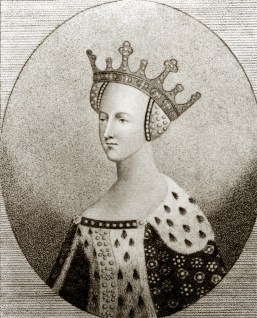 (Born October 27, 1401- Died January 3, 1437).
  Owen Tudor, the second husband of Catherine of Valois and the father of Edmund and Jasper Tudor. His affair with Catherine changed English history forever, yet not much is known about his past before he met Catherine. Was he married before he met Catherine and after she died? What must have been like for him as the Wars of the Roses began to take hold of England and everything he worked hard for began to fade away. The man who started as a Welsh servant turned step- father to King Henry VI and the grandfather of King Henry VII, the patriarch of the Tudor Dynasty, this is the protagonist in Tony Riches’ book, “Owen: Book One of the Tudor Trilogy”.
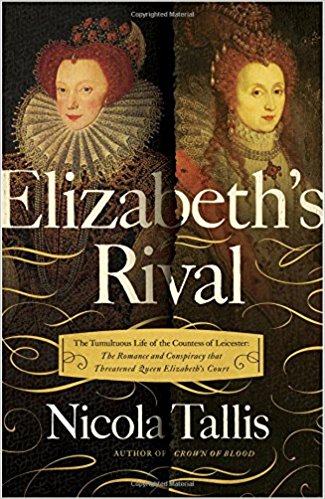 When we think of Lettice Knollys, we often think about the kinswoman who made Elizabeth I really mad when she married Robert Dudley, Elizabeth’s favorite. These two women were once best of friends, but that one event torn then apart forever. However, there is more to Lettice Knollys than this one event. She was married three times, survived seven different monarchs, and lived well into her nineties. Her story has always been hidden, until now. Lettice Knollys story is finally being told in “Elizabeth’s Rival: The Tumultuous Life of the Countess of Leicester: The Romance and the Conspiracy that Threatened Queen Elizabeth’s Court” by Nicola Tallis.
 The man who would become king of England and the patriarch of the Tudor dynasty.
 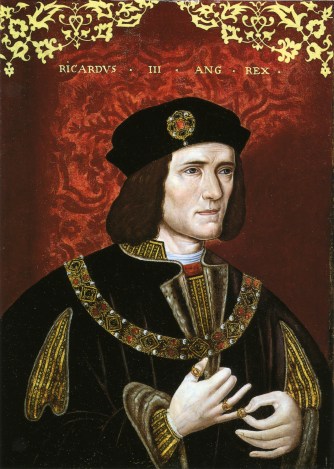 served a Tudor king so why is he on this list? To me, Richard has just as much influence in creating the Tudor dynasty as the Tudors themselves. If you think about it, if he didn’t take the throne, then Henry wouldn’t have marched against him at the Battle of Bosworth Field. It was his death that helped start the Tudor dynasty.
 The man. The myth. The legend.
 Adventures of a Tudor Nerd