
 When we think of Elizabethan England, we tend to think of the Golden Age of England. A time of discoveries and for the arts to flourish under the Virgin Queen, Elizabeth I. However, there is a darker side. It was also a time of espionage, fears of invasions from other countries, and the hatred between Catholics and Protestants. The dangers of the Elizabethan underworld have reached the queen, as there is an attempt on her life. Can Jack, the son of a crime boss, change his life and find the culprit before they find him, or will he be betrayed by those he calls his friends? Amie McNee explores the seedy underworld of Elizabethan England in her novel, “To Kill a Queen.”
I would like to thank Crooked Lane Books and Net Galley for sending me a copy of this novel. I am a sucker for a good historical mystery, and if it is set in Tudor England, even better. I read the premise of this novel and decided to give McNee a try.
The year is 1579, and Queen Elizabeth I is entertaining her final suitor, the Duke of Anjou. The city is all abuzz with rumors of wedding bells. Everyone except Jack, a young coroner apprentice, who is the son of a crime boss. Jack is helping the Justice of the Peace, Ben, and his mentor, coroner Damian, try to solve a case of a wife beaten to death by her husband. It is a pretty open and shut case, so Jack was surprised to receive another case so soon. A soldier died protecting the queen from an assassin. Now, Jack, Ben, and Damian must find the assassin before it’s too late.
It seems like your typical murder case set in a period setting, but that’s where McNee mixes things up. We get to meet Jack’s father, Axe, the crime boss, and we find out that Jack is not their real identity. Not many know Jack’s true identity, except for his lover Jenny and Damian. Jack’s friend Harry is a common resident of Bedlam, but he is now out, and Jack has to take care of him. When associates close to Jack end up being killed, there is a sense of urgency that Jack has to find the murderer before they find Jack. There are a lot of twists and turns, and the reveal of the whodunnit was shocking, but the conclusion of the book did not fit well with the tone of the rest of the book.
Overall, it was a decent novel, even though it felt more Oliver Twist than Tudor. It was nice to see the typical Tudors step to the side so that we can focus on other stories in Elizabethan London. If you want a detective novel with an unlikely protagonist, filled with twists and turns, and set during the Tudor age, I recommend you read “To Kill a Queen” by Amie McNee.
 Stonehenge, a marvel of the ancient world that still stands centuries after it was built. It has been the center of mystery and wonder for all who gaze upon it. A gigantic monolithic structure, whose purpose has been a source of discussion since its origins, but that raises another quandary: who were the people who built such an impressive landmark? This single question presents a grand opportunity for historical fiction writers as we don’t have many written records for this period of time, which means authors have room to play. Ken Follett took on the daunting task of telling the tales of those who built this imposing monument in his latest novel, “Circle of Days.”
 The Plantagenets, one of England’s most dynamic dynasties, were always in the middle of some sort of conflict. Whether they were fighting foreign adversaries, their own people, or their own family, it felt like the Plantagenets were always getting into some sort of trouble. And there was one king who knew how to use the weaknesses of the kings of England to his advantage. He was King Philip II of France, also known as Philip Augustus. He had to deal with four different Plantagenet kings and had a strategy for each one of them. Just what were Philip II’s strategies, and how did his reign affect English/French relationships as a whole? These questions are answered in Catherine Hanley’s book, “Nemesis: Medieval England’s Greatest Enemy.”
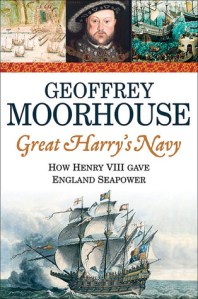 One would assume that, since England is an island nation, its navy has been its strength since its foundation. That, however, was not always the case. While there were naval battles during the Middle Ages, it was not a navy like we know today. The concept of the Royal Navy was founded during the time of the Tudors, especially under the reign of Henry VIII. So, how did Henry VIII turn a navy from 7 ships to over fifty ships that could stand with other European navies? Geoffrey Moorhouse examines the creation of the English navy in his book, “Great Harry’s Navy: How Henry VIII Gave England Sea Power.”
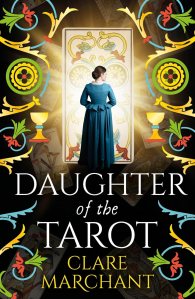 A single deck of cards changed the fate of generations of women. The tarot cards, created in 16th-century Italy, will connect two women separated by centuries. One was a woman in 17th-century London, originally from Milan, who used the cards to rescue women from abusive relationships. The other is a woman from modern-day London starting her life anew when she comes across an old tarot card deck with a missing card. What began as a hunt for a missing card will connect the two women and change lives forever. The cards hold secrets to the past, but will they bring hope or disaster? This is the premise for Clare Marchant’s latest dual-timeline novel, “Daughter of the Tarot.”
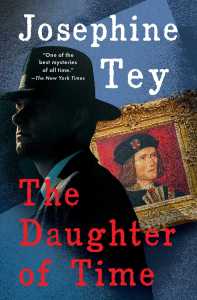 Have you ever read about a historical mystery that captivated you so much that you spent your available free time trying to solve the case? Who was the man in the iron mask? Were the casket letters real? Who built Stonehenge and why? And yet, one of the greatest mysteries in all of history revolves around two missing princes who were last seen in the Tower of London. Nearly five hundred years later, an inspector from Scotland Yard named Alan Grant decides to take on the case. Can the inspector solve the ultimate cold case? Josephine Tey tells the tale of the detective and the mystery of the Princes in the Tower in her most famous novel, “The Daughter of Time.”
 Throughout history, women have had one major job: giving birth and raising future generations. Each new generation had different ways of dealing with childbirth and raising children, and the Tudors were no exception. While the Tudors lived in the 16th century, the joys and fears of being a mother were similar to those of the modern age. However, the way women approached different stages of life in the 16th century is unique compared to the ways of modern women. So, how did Tudor women approach motherhood? Stephanie Kline hopes to answer this question in her latest book, “Raising the Tudors: Motherhood in Sixteenth-Century England.”
 The Plantagenets, a dynasty that ruled England for over three hundred years. At least that is if you include the Lancastrian and Yorkist kings. Otherwise, the reign of the Plantagenets ended with Richard II being overthrown. So, how did the Plantagenets fall? How did wars, favoritism, and the plague factor into the fall? Helen Carr examines these questions and the rule of three kings over the fourteenth century in her latest book, “Sceptred Isle: A New History of the Fourteenth Century.”
 The island we know as England is on the cusp of the 10th century. King Alfred is dead, and his son Edward now rules. The kingdom of Wessex is still standing strong, and it looks like the Danes are behaving themselves and keeping the peace, for now. Unfortunately, things are not going smoothly for Uhtred of Bebbanburg. He gets into a bit of mischief and becomes a target of Cnut Longsword, the Viking leader, all while trying to fight for his right to rule his beloved Bebbanburg. Can Lord Uhtred survive his latest adventure, or will his Saxon allies save him in the nick of time? This is the premise of Uhtred’s latest adventure, “The Pagan Lord,” Book 7 in the Saxon Stories series by Bernard Cornwell.
 Throughout history, pandemics have ravaged human populations and changed the course of history. None more so than the Bubonic Plague, also known as the Black Death. It devastated entire families and altered entire countries, primarily in Europe. Although England is an island nation, that does not mean it could not escape the pandemic’s horrors for long. In her latest book, “The Black Death in England: Journal of the Plague Years in the Fourteenth Century, “ Kathryn Warner explores the lives of the victims of the Black Death throughout England during this century.
 Adventures of a Tudor Nerd