
Book Review: “The Secrets of the Rose” by Nicola Cornick

Have you ever researched one person from the past for an assignment and found yourself gravitating toward another historical figure from a different era? Hannah Armstrong knows this feeling very well. She returns to her home in Bamburgh to write a biography about Grace Darling but is instead pulled towards an equally fascinating story of a Jacobite rebel. Dorothy Forster is a young woman who is trying to keep her family together as the world around her changes drastically. Can Dorothy protect her loved ones while fighting for her country and can Hannah find the truth hidden for far too long before it’s too late? Two tales of courage, strength, and love are told in Nicola Cornick’s latest novel, “The Secrets of the Rose.”

I want to thank Boldwood Books and Net Galley for sending me a copy of this novel. I have been enjoying Nicola Cornick’s blend of modern-day and stories of the past to create thrilling novels, so when I heard that she had a new one coming out this year, I knew I wanted to read it. When I saw that it took place during the Jacobite Rebellion, it intrigued me because it is a period of English history that I am not familiar with and I wanted to learn more.

Let’s start with our friend from the past, Dorothy Forster. She was the daughter of Sir William Forster, the sister of Thomas and Nicholas Forster, and the niece of Lord Crewe. Dorothy is a strong independent young lady who does not want to get married and instead help her ailing father. It was a peaceful life until Earl Derwentwater convinced her brothers Thomas and Nicholas to the Jacobean cause to return Prince James Stuart to the throne, culminating in the Jacobite Rebellion of 1715. To top it all off, Dorothy finds out that her family, primarily the women in her family, are the Keepers of the Rose, a mythical talisman that both sides believe will make sure their victory is assured. When Dorothy’s brothers are taken prisoner, she must choose whether to leave her father and her beloved blacksmith John Armstrong, and travel to London or stay where it is safe.

Flash forward to the modern-day with Hannah Armstrong, a historian who came back home to study her latest subject, Grace Darling, a Victorian woman who saved her family and others from a shipwreck. It’s been many years since Hannah has been home and there is a lot of tension once she arrives. Her step-mother Diana is hiding both medical and personal secrets from Hannah and her friends Alice and Aaron welcomes Hannah back with open arms. However, her estranged brother Brandon lurks in the shadows, searching for a particular portrait of Dorothy Forster and the Rose. Hannah has to piece the clues together while balancing her crazy social and romantic life before it is too late.

I found this a rather enjoyable novel and it was so fascinating to learn about not only Dorothy Forster and the Jacobite Rebellion but Grace Darling and her daring rescue. It was a thrilling romantic read full of twists, turns, and callbacks to Cornick’s previous novels. I hope that this novel will inspire more authors to explore the Jacobite Rebellion. If you want a novel that explores a moment in English history that does not get much attention with dynamic characters, I suggest you read, “The Secrets of the Rose” by Nicola Cornick.

Book Review: “When Christ and His Saints Slept” by Sharon Kay Penman

When we consider the issue of succession, we often imagine the crown being passed to the next legitimate heir, regardless of gender, but that was not always the case. We think about the struggles that women like Mary I and Elizabeth I endured to secure and stay on the throne, but one woman came before them so close to becoming England’s first ruling queen. She was the daughter of King Henry I and the next in line to the throne after her brother tragically died, but after her father passed away, it was her cousin Stephen who usurped the throne. The war for the crown which would last decades would be known as The Anarchy is the primary focus for Sharon Kay Penman’s novel, “When Christ and His Saints Slept.”
I found this particular novel when I was going used book shopping and after so many people said that it was their favorite novel by Penman after “The Sunne in Splendour,” I knew that I wanted to buy and read it. I have been a fan of books about the struggle between Empress Matilda and King Stephen and the birth of the Plantagenet dynasty, so I wanted to see what kind of spin Penman would give to this story.

Penman begins her novel with a flashback to the last time Stephen saw his father before he went on Crusade in 1101, which was an influential moment in his young life. We then jump forward to Barfleur, Normandy in November 1120, which is where the legitimate male heir of Henry I, William, boarded the White Ship on a voyage he would not survive. The only legitimate child of Henry I, because the man had quite a few illegitimate children, was Empress Matilda (Maude). Her 1st husband, the Holy Roman Emperor died and since they did not have any children, Henry decides that she needs to remarry and his choice for her next husband is Geoffrey of Anjou. To say their relationship was tempestuous would be an understatement, but they were able to have a large family including Henry Plantagenet, the future King Henry II.

It seemed like all Matilda (known as Maude in this novel) had to do in order to secure the crown was sail to England for her coronation. But that’s not what happened. Instead, her dear cousin Stephen and his wife Matilda, stole her crown. If you think Maude is going to let Stephen do what he wants with her inheritance left to her by her father, you thought wrong because instead Maude decides to fight for her rights in the conflict known as the Anarchy. It was a bloody couple of decades for England full of betrayals and sieges. It will soon turn to not only a fight between Maude and Stephen but between their sons Henry and Eustace. This was not just a battle between nobility but, as we see with one of my favorite characters Ranulf Fitz Roy (a fictional character), it was a battle between barons and the illegitimate children of the old king for the future of England.

This was another absolutely brilliant book by Penman. The way she was able to craft such believable characters based on the historical records is nothing but awe-inspiring. It was a mammoth tome but it needed every single page to develop this rich story that I did not want to end. If you are like me and you crave a thrillingly vivid historical fiction novel, you must check out “When Christ and His Saints Slept” by Sharon Kay Penman.

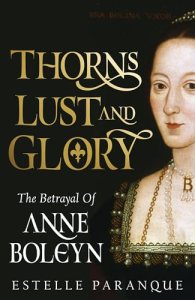
Book Review: “Thorns, Lust, and Glory: The Betrayal of Anne Boleyn” by Estelle Paranque

A young woman catches the attention of a king already married to a princess from a faraway kingdom. The king desires the young lady and divorces his wife to marry her. However, there is a catch. The young lady spent some time in the French court of Francis I and Claude of France, whereas the king’s wife was the daughter of the Spanish King and Queen as well as the aunt of the Holy Roman Emperor. The Great Matter of Henry VIII, Anne Boleyn, and Catherine of Aragon is considered one of the messiest divorces in English history and rightfully so when you consider the diplomatic consequences that this divorce would have across Europe. Estelle Paranque highlights the connection between Anne Boleyn and the French court in her latest book, “Thorns, Lust, and Glory: The Betrayal of Anne Boleyn.”

I want to thank Hachette Books and Net Galley for sending me a copy of this book. I heard that Estelle Paranque was writing a new book about the 16th century, but when I heard that it dealt with Anne Boleyn’s connections with the French court, I jumped at the chance to read it. While I do know quite a bit about the rise and fall of Anne Boleyn, it is her connection with the French court that I have never really explored in depth.

Paranque begins her book by examining the meeting between King Henry VIII and King Francis I with Anne Boleyn at Calais between October 25th and 27th, 1532. This was a significant meeting as it was right before Henry and Anne married in secret and they desired that Francis would support their side in the Great Matter. But how did they get to this meeting in Calais? This is where this book shines as Paranque takes the time to show her audience what life was like for Anne in the French court and the connections that she forged with women like Louise of Savoy, Claude of France, and Marguerite of Angouleme Queen of Navarre. It was fascinating to see how the Boleyns were able to use their connections to forge alliances with the French court that would prove useful in the future.

Possibly my favorite part of this book was seeing how the diplomatic channels across Europe interacted with one another during the Great Matter, the queenship of Anne Boleyn, and the fall of the Boleyns. I think we so often overlook that there were diplomats who were working on the sidelines to convey messages between kings and emperors to form or strengthen alliances. While many might consider the way Paranque wrote the correspondence and dialogue between diplomats and the monarchy as hard to get used to because she does insert emotions, I believe it adds depth to the story because they were human beings not in a vacuum. They had feelings about what was happening around them, passionate feelings in fact, and that should be displayed to readers.

While the actual events of this book were not new to me, the way that Paranque was able to present the information and show the men behind the scenes was fascinating. It presents the relationship between Henry VIII and Anne Boleyn in a different more complex light. If you want a different angle to the rise and fall of Anne Boleyn, I recommend you read, “Thorns, Lust, and Glory: The Betrayal of Anne Boleyn” by Estelle Paranque.

Book Review: “Queen Bess: A Tudor Comes to Save America” by Maria Vetrano

Have you ever read about a historical figure and wondered what it would be like to interact with them in the present day? How would they deal with modern problems and technology? Could they function in the 21st century or would they become overwhelmed? And even if they could come to the 21st century, how would it affect their timeline and history? This intriguing premise plays out in Maria Vetrano’s novel, “Queen Bess: A Tudor Comes to Save America,” which sees Queen Elizabeth I coming forward about 400 years in time to become the President of the United States in the 2028 election.
I want to thank Maria Vetrano for sending me a copy of her novel. When I read the description of this novel, it was an intriguing concept to me. I do enjoy a modern tale from time to time and I was interested to see how Queen Elizabeth I of England could become a US President and how she would adjust to life in the modern world.

We begin our adventure with Dakota Wynfred, a self-made billionaire in the cybersecurity field, whose only desire is to go back in time to see her mother one more time and potentially bring her mother back to the year 2027. As Dakota and her mother are discussing matters, she tells her mother that the political environment is a mess thanks to President Robert Vlaskas, who Dakota cannot stand. Dakota believes that there is no one capable in modern time to defeat Vlaskas so a plan is formulated to use Dakota’s time travel machine to go back in time even further to get a leader who she believes can defeat Vlaskas. She has chosen Gloriana herself, Queen Elizabeth I from 1588. While transporting the queen from the Tudor era is easy, acclimating her to the ways of the 21st century proves a challenge, especially knowing that they have a limited window to make sure Elizabeth is ready to run for president.

While I thought the concept of this book was unique, the execution for me is what let this book down. I’ll start with the time travel element. As someone who watched Star Trek and the Librarians, I know there are some rules of time travel like not telling the people in the period of the past you are visiting you are from the future (or giving them a biography about their life), and you don’t bring anyone into the future from the past as there could be consequences to history in general. I wanted to see more of how Elizabeth being in the 21st century would affect the 16th century and the idea of technology not working in the 16th century as it was not invented during that time, but that is not what I got as a reader. When Elizabeth did arrive in the year 2027, we see her getting used to the world of technology, fashion, and popular culture, which did not seem to help with running a political campaign and Elizabeth’s accent in this book bothered me quite a bit. I feel like Vetrano should have done more research into the 16th century and Elizabeth’s reign to make this version of Elizabeth I more believable. Finally, I think the ending is rushed and left me questioning this book and what the point of this novel truly was.

Overall, this was a frustrating read for me as I saw the potential for a cool book, but it stumbled so many times. It felt like the Tudor/historical elements were sprinkled in a modern sci-fi/political fantasy novel, which just did not work well for me as a reader. This may not have been the book for me, but if you want a different take on the Tudors, a time travel novel with modern political elements, “Queen Bess: A Tudor Comes to Save America” by Maria Vetrano might be a book for you.

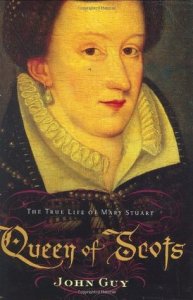
Book Review: “Queen of Scots: The True Life of Mary Stuart” by John Guy

Women rulers in the past have either been praised or pushed down. They are either seen as ideal women or power-hungry villains. One such figure who suffered the worst from having her image raked through the mud for centuries was Mary Stuart, known throughout history as Mary, Queen of Scots. The Queen of Scotland who was married three times, was once the Queen of France, the mother of the future King of both England and Scotland, accused of having a hand in her second husband’s murder, plotted to overthrow Elizabeth I, and was executed for treason. Her story is well known, but what does the archival information tell us about Mary Stuart? John Guy scoured the archives to find the truth about this queen and presented his research in his biography, “Queen of Scots: The True Life of Mary Stuart.”
I have heard about this particular title for a few years, as it inspired the Mary Queen of Scots movie. I have read similar books about Mary Queen of Scots, but this biography is so revered that I wanted to give it a shot. 

Guy begins at the end of Mary’s life, with the day of her execution and the details that made her death legendary. Mary Stuart was the daughter of King James V and Mary of Guise of France. Five days after she was born, her father James V died after the battle of Solway Moss, and the young girl was proclaimed Queen of Scotland; it was solidified nine months later at her coronation. She didn’t have much time to enjoy her youth as she had to deal with the Rough Wooing from England, which was Henry VIII’s attempt to have Mary marry his son Edward VI, which did not end well. Guy shows how Mary’s education began in Scotland before she moved to France, where she would continue to learn how to become a queen before she married Francis II. While in France, Mary started to fight for her claim to the English throne as her father James V was the son of Margaret Tudor. Francis II and Mary would become King and Queen of France for a short time as Francis would tragically die from an ear infection, which meant that Mary had to go back to her native Scotland.

It is in Scotland where we get to see Guy’s research truly shine as he shows how Mary had to navigate her tumultuous court. Mary had to navigate being a queen while searching for her next husband, who ended up being Henry Stuart Lord Darnley. To say their relationship was rocky would be an understatement. Even though Henry was the father of the future James VI/I, he was not the most liked person in court and it ended up costing him his life. Shortly after the death of Darnley, Mary married for a third and final time, to James Hepburn Earl of Bothwell, who was one of the men who allegedly was behind Darnley’s murder. It is the last portion of this book where Guy focuses on the trial, the Casket Letters, and the schemes that led to Mary’s imprisonment and ultimate execution. 

I found this a very rich and well-researched biography. I found myself taking my time reading this book as I wanted to fully understand the points Guy was making about Mary and her reign. If you want an excellent biography about a queen whose reputation has been tarnished for centuries, I highly recommend you read, “Queen of Scots: The True Life of Mary Stuart” by John Guy.

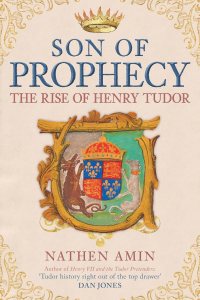
Book Review: “Son of Prophecy: The Rise of Henry Tudor” by Nathen Amin

The date is August 22, 1485, and a young man stands in the middle of a battlefield. He has done what seemed nigh impossible, he defeated the last Plantagenet king Richard III to become the new King of England. His heritage makes this man unique and qualified to start a new dynasty. His mother’s family the Beauforts have been explored quite heavily by historians and authors alike. They see this victory as a change in English history whereas his father’s family sees it as a sign of something deeper. To the Tudors and Henry’s fellow Welshmen, it is the fulfillment of a centuries-old prophecy. So who were Henry Tudor’s ancestors and what did it mean for Henry to be the titular Son of Prophecy? Nathen Amin tells the remarkable story of the Tudors and how their struggles and triumphs led to Henry Tudor taking the throne in his latest book, “ Son of Prophecy: The Rise of Henry Tudor.”

I want to thank Amberley Publishing for sending me a copy of this book. I have enjoyed Amin’s previous books, “The House of Beaufort: The Bastard Line that Captured the Crown” and “Henry VII and the Tudor Pretenders: Simnel, Warbeck, and Warwick,” When I heard that he was writing a book about the origins of the Tudors from the Welsh perspective, I knew I had to read it. I don’t know much about Welsh history, so I was looking forward to learning more. 

Amin begins by explaining that while those who study the life of Henry Tudor know that he was Welsh, they don’t highlight his Welshness as a unique aspect of his life. However, as Amin argues, it is the king’s Welsh heritage that makes his story so fascinating as the Tudor story in Wales spans eight generations and it is the story of warriors and diplomats. We begin with the warrior Ednyfed Fychan, who served Llwelyn ab Iorwerth Prince of Ewynedd during the Welsh War of Independence. Now, for those who are paying attention, you will notice that his surname is not Tudor, but Amin takes the time to explain the origins of the Tudor name as well as how English and Welsh relationships changed over time, starting at the time of the Saxons to the start of the Tudor dynasty. 

What I found fascinating is how the family that would later be known as the Tudors in English history were not afraid to get their hands dirty and be at the forefront of change for Wales. They fought tooth and nail for their Welsh rights and those who considered themselves the Prince of Wales, even if it meant putting their lives at risk. It was the stories of these men who created the foundation for Owen ap Maredudd ap Tudur (Owen Tudor) to leave his native Wales for England, work under Walter Hungerford, fall in love and marry the Dowager Queen Katherine of Valois, and have his sons Edmund and Jasper Tudor. This is the point that most people know as the “origins of the Tudors,” but by going back, Amin is showing his audience the depth of Henry’s Welsh roots and it would be on that battlefield on that August day where that Welsh loyalty would become a defining factor between victory or defeat. 

I was enthralled by this book and the copious amounts of notes that I took while reading. It was so much fun learning about historical events and figures that were unfamiliar to me in the context of the Tudor story. This book will revolutionize how you view the Tudors and how Henry Tudor gained the throne. If you are a Tudor nerd who wants to learn more about the Welsh connections to this dynasty, “Son of Prophecy: The Rise of Henry Tudor” by Nathen Amin is an absolute must-read.

Book Review: “Four Princes: Henry VIII, Francis I, Charles V, Suleiman the Magnificent, and the Obsessions that Forged Modern Europe” by John Julius Norwich

The 16th century is known to be a century full of powerful women rulers; Mary I, Elizabeth I, Catherine de Medici, and Mary Queen of Scots, just to name a few. However, these rulers were towards the end of the 16th century. For the first half of the 16th century, Europe and the Middle East rulers were predominantly male. Four men truly dominated this period, each with their objectives and desire for glory; Henry VIII of England, Francis I of France, Charles V the Holy Roman Emperor, and Suleiman the Magnificent the ruler of the Ottoman Empire. In his book, “Four Princes: Henry VIII, Francis I, Charles V, Suleiman the Magnificent, and the Obsessions that Forged Modern Europe,” John Julius Norwich hopes to shed some light on the relationships of these men and how they shaped the political landscape of Europe.

This book caught my eye when I was used book shopping one day. The cover was beautiful and then when I saw what the book was about, I knew I wanted to read it. The stories of Henry VIII and Francis I are tales that I know pretty well and I know some facts about Charles V, but when it comes to Suleiman the Magnificent, I know very little about his life.

Essentially this book is four biographies of the princes Henry VIII, Francis I, Charles V, and Suleiman the Magnificent. While Norwich could have broken this book into four parts, focusing on each prince individually, he chose to incorporate their stories into one cohesive book, starting with the birth of Francis I and ending with the death of Suleiman. Each man ruled his kingdom in different ways. Francis was the more Renaissance prince who encouraged education and was a patron of the arts. Henry VIII was the second son who was not destined to rule, but when his eldest brother died, Henry was declared King of England and began to rule with an iron fist. Charles V was full of ambition and was industrial which allowed him to become the Holy Roman Emperor. Finally, Suleiman the Magnificent was the outlier of the group as he was the only Muslim leader who brought forth the golden age of the Ottoman Empire.

Norwich was able to keep a balanced approach to this book, never truly favoring one prince over another. I found his narrative easy to follow and pretty well-researched, even though I think what he had to say about the women in the lives of the four princes was a bit dated compared to modern research. I must say that I did enjoy reading about Charles V and Suleiman the Magnificent whereas I found the points about Henry VIII and Francis I a bit of a review. I think if you want a solid book that explores a different aspect of the 16th century, I would recommend you read, “Four Princes: Henry VIII, Francis I, Charles V, Suleiman the Magnificent, and the Obsessions that Forged Modern Europe” by John Julius Norwich.

Book Review: “A Good Deliverance” by Toby Clements

A Good DeliveranceThe world of King Arthur and his Knights of the Round Table is filled with stories of adventures and romance. Many authors have tried to tell these tales in a way that will allow their books to live for centuries, but none were more successful than Sir Thomas Malory and his book Le Morte Darthur. King Arthur, Lady Guinevere, Sir Lancelot, Merlin, and Sir Gawain embark on numerous adventures including the Lady of the Lake, Camelot, the sword Excalibur, and the Quest for the Holy Grail. These tales were the epitome of chivalry and valiant knights in shining armor, but the author behind them was anything but perfect. Sir Thomas Malory has had his fair share of time in a prison cell. Who was Sir Thomas Malory and why did his book about King Arthur and the Knights of the Round Table still resonate with readers centuries after it was written? In his latest novel, “A Good Deliverance,” Toby Clements hopes to reveal the truth of this famous author whose story has been overshadowed by the myths he wrote down in his legendary tome.

I would like to thank Faber Books for sending me a copy of this novel. I have heard about the book Morte Darthur, as it is considered one of the most prominent texts about King Arthur, but when it comes to the author himself, I know nothing about his life. When I heard about this novel, the premise intrigued me enough to read it.

Clements begins his novel with Malory’s surprise arrest at a very old age. Malory is unsure why he has returned to prison as he has tried to live an honest life after he spent some time in the same cell over 20 years ago. He is at the mercy of King Edward IV. While imprisoned, waiting for word from his lawyer, Malory befriends a boy who is the son of one of the jailers named Brunt and he tells the young man his tale. Malory was the son of a knight who fought under King Henry IV in the search for the Welsh miscreant Owen Glendower. We get to see Malory become a knight and his fascination for King Arthur and the Knights of the Round Table that would become his magnum opus Morte Darthur. We see Malory’s moments of glory and utter defeat, his rivals, and the women that he admired from afar. Through Malory, we get to see how England changed, starting with Henry IV to his son Henry V, the young King Henry VI, and finally the first Yorkist King Edward IV. We also get to witness events such as the year of the 3 popes, the coronation of Henry V, Agincourt, the death of Jeanne d’Arc, the coronations of King Henry VI, and the beginning of the conflict known as the Wars of the Roses.

In a way, Clements created his Arthurian legend for Sir Thomas Malory with the way he chose to write this novel. However, it was the structure of this novel that bothered me when I was reading it, specifically the bullet points that Clements chose to include. When I am reading a novel, I want to read a cohesive piece, but the bullet points made it feel messy, which was probably used to simulate Malory as a storyteller figuring out what he wants to say to his young audience and what he wants to omit, however, it was just irritating for me to read. I don’t mind bullet points in nonfiction books, but it just doesn’t work for me in historical fiction. As for the main character, Sir Thomas Malory is okay, but there were moments where he rubbed me the wrong way. I did, however, enjoy his relationship with the boy.

Overall, it was a decent book. I think there were elements that I didn’t enjoy entirely, but the way Clements was able to incorporate the changes of the 15th century with the Arthurian legends to tell the story of this author was very unique. I think if you are a fan of Sir Thomas Mallory, the Arthurian legends, or the events of the 15th century, you might enjoy, “A Good Deliverance” by Toby Clements.

Book Review: “Death of Kings”(Book Six of the Saxon Stories series) by Bernard Cornwell

Death of KingsThe ninth century is coming to a close and England is at a major crossroads. King Alfred the Great is dying and England being unified is still a long-term goal. The only hope for a united England lies in the hands of his son and successor Edward. However, the road to the throne will be challenging as other Saxons and Viking warriors desire the throne. Only one man can help the young king, but which side will Uhtred of Bebbanburg choose? The fight for England’s future continues in book six of the Saxon Stories, “Death of Kings” by Bernard Cornwell.

We begin with Lord Uhtred as he works hard to maintain the lands he earned through fighting for Alfred. But let’s be honest, the quiet life is not for Uhtred of Bebbanburg. A horde of ruffians attack Uhtred at his home, which he can fend off, but he soon finds out that it was a Saxon lord who wishes for his death. At the same time, the dying King Alfred has sent a group to Uhtred to create an alliance with King Eohric to fend off the Danes who are beginning to amass armies against the Saxons.

However, Uhtred soon realizes that Eohric desires power over peace and aligns himself with Sigurd to kill Uhtred. While Uhtred is about to confront Sigurd, he is told about a woman named Aelfadell, who allegedly knows the future. She tells Uhtred of a prophecy that seven kings will die, the women he loves will die, the son of Alfred will not rule, and the Danes will rule all of England. Such a cheerful prophecy that will come into play later on.

As Uhtred deals with the aftermath of all of this, he finds out that Alfred is on death’s door and Edward, his son, and heir, is facing an affair scandal with a woman named Lady Ecgywynn and her children, all while he is betrothed to Aelflaed. With the death of King Alfred, Uhtred is free from his promises to the Saxon king and is given a choice. He can either swear loyalty to the young king and fight for the hope of a united England or he can put down Serpent-Breath and let Alfred’s dream die. I am not going to spoil what choice Uhtred made, but rest assured, his decision will change the course of history, at least this fictional version of Saxon England.

Overall, I found this an enjoyable middle book in a series. It is a solid setup book with a thrilling final battle which helps the readers to realize that the fight for England is not done and that there are many more adventures for Uhtred of Bebbanburg. If you have read the previous five novels in the Saxon Stories series, I would recommend you read, “Death of Kings” by Bernard Cornwell.

Book Review: “Normal Women: Nine Hundred Years of Making History” by Philippa Gregory

Normal WomenThe field of history for centuries has been focused on men and the struggles that mankind has had to endure for society to survive. We tend to get only a mere glimpse at the lives of women when they are next to powerful men. Some will write about women, mostly royal women, who lead extraordinary lives and left an imprint on the past. But what about those who lived ordinary lives? What about the women who lived daily, fighting to survive every obstacle? What can we learn about history through the eyes of ordinary women? Philippa Gregory has taken on the mammoth task of trying to answer these questions and more with her tome, “Normal Women: Nine Hundred Years of Making History.”

I would like to thank Harper Collins and Net Galley for sending me a copy of this book. I have had an interesting background regarding Philippa Gregory’s books. When I was in middle school/ high school, I started reading novels by Gregory and I became fascinated with the stories that she was weaving. It was only when I read other books that disproved some of the things that Gregory had included in her novels that I stopped reading them. When I saw this book and its praise, I decided to give Gregory another shot because, in the end, I enjoyed her writing style.

As the title suggests, Gregory covers over nine hundred years of English women’s history, from the Norman Conquest to the modern day. It is a daunting undertaking, but the way Gregory presents the information is so easy to follow that it allows the depth of the subject material to sink in without it being too overwhelming. Each part of this book focuses on a different era in the history of England and has segments that highlight important developments during the era when it comes to women’s roles in society. As readers, we can see changes in society like how the church accepted women, how society accepted women, what kind of rights women had, what jobs women could do for money, how women viewed relationships with men as well as other women, and how men viewed women’s nature.

Unlike Gregory’s previous books and novels, the focus of this book is not the women who wore crowns, but women who lived everyday lives and survived whatever life handed them. Mothers, wives, daughters, soldiers, protesters, doctors, factory workers, Suffragettes, guild widows, pirates, highwaywomen, and women husbands are all represented in this book. By including small snippets of stories from women of every walk of life over centuries, Gregory allows her readers to discover more about these women for themselves, which is an exciting prospect.

I am so glad I read this book and gave Philippa Gregory a second chance. This book was fresh, innovative, challenging at times, and overall a fascinating read. By letting the facts and the stories of these women speak for themselves, Gregory presents the past in a way that is both inspirational and heartbreaking, raw and real. If you want to learn more about English women’s history or you are a fan of Philippa Gregory, I highly suggest you read, “Normal Women: Nine Hundred Years of Making History” by Philippa Gregory.