 Today, it is my pleasure to welcome Catherine Meyrick to my blog to share an excerpt from her novel, “Forsaking All Other”. I would like to thank Catherine Meyrick and The Coffee Pot Book Club for allowing me to take part in this blog tour.
Excerpt
Wyard studied Lucy Torrington. Was this the manner of woman his mother thought would suit him best? She was well-dowered and, no doubt, malleable. But she was not to his taste, insipid was probably the best way to describe her. It had been a mistake to allow Eloise to talk him into coming here, he should have gone straight to Bucklings Hall.
He glanced at Bess Stoughton. Of all the women present she was the most appealing. Despite his initial misgivings, she seemed honest and sensible. She was not predatory or flirtatious, nothing like that bold piece who had tried to get him to dance last night. Perhaps Bess Stoughton’s relationship with that serving man was some sort of protection—life could be difficult for a widow. And she looked at him with neither pity nor revulsion.
‘You know Mistress Torrington well?’
‘As well as any. Lucy is a good and gentle girl who deserves to be treated with kindness and respect.’
‘Who does not?’
Her eyelashes fluttered as if surprised at his comment. ‘Lucy would bloom best married to someone who loved her.’
‘Few have that blessing. Kindness and respect are the best that most of us can hope for.’
She bit her lip, frowning. ‘Are you considering marrying Lucy?’
Wyard shrugged, ‘She is one of a number of young women my mother thinks would make a suitable bride.’ He gave a wry smile. ‘It may be more accurate to say would make a suitable good-daughter.’
‘Do you have a list of requirements—number of hands high, girth, teeth, temperament? A list such as you would take to a horse market.’
It sounded ridiculous the way she described it. He gave a sudden bark of laughter. ‘In truth, I have no list.’
‘Do you always do as your mother wishes?’
‘Rarely, but it is probably time I married and she fears that, left to my own devices, I will either never marry or choose someone highly unsuitable.’
‘Who would be unsuitable?’
‘From my mother’s position, someone without money or connections.’
‘And from your own?’
‘I have not thought so far.’ If you could not marry the best, the most loving woman you had ever met, it really did not matter.
‘Well you should. Can you imagine what it is like for a woman married to a man who is forcing himself to his duty, who does not like her company or her person, who married her simply because his mother or his father told him to?’
He had never thought of it from a woman’s point of view. ‘Was your own marriage like that?’
‘You lack courtesy, Master Wyard.’
‘But you sound as if you speak from experience.’
‘That is none of your business,’ she snapped, colour flooding her cheeks. ‘If I were a man, if I had your freedom, I would do exactly as I pleased. I would never accept a bride who had been bundled up for me by my mother.’ She glared at him, ‘Now, if you will excuse me.’ She swept away towards the group of singers, her back straight and her head held high.
Wyard wanted to stop her, to explain it was never so easy. He watched her go, wondering why he had never imagined he could truly do as he wished.
 (Blurb)
England, 1585.
Bess Stoughton, waiting woman to the well-connected Lady Allingbourne, has discovered that her father is arranging for her to marry an elderly neighbour. Normally obedient Bess rebels and wrests from her father a year’s grace to find a husband more to her liking.
Edmund Wyard, a taciturn and scarred veteran of England’s campaign in Ireland, is attempting to ignore the pressure from his family to find a suitable wife as he prepares to join the Earl of Leicester’s army in the Netherlands.
Although Bess and Edmund are drawn to each other, they are aware that they can have nothing more than friendship. Bess knows that Edmund’s wealth and family connections place him beyond her reach. And Edmund, with his well-honed sense of duty, has never considered that he could follow his own wishes.
With England on the brink of war and fear of Catholic plots extending even into Lady Allingbourne’s household, time is running out for both of them.
Love is no game for women. The price is far too high.
Buy Links:
Amazon UK • Amazon US • Amazon CA • Amazon AU • Barnes and Noble • Kobo • Apple
Books
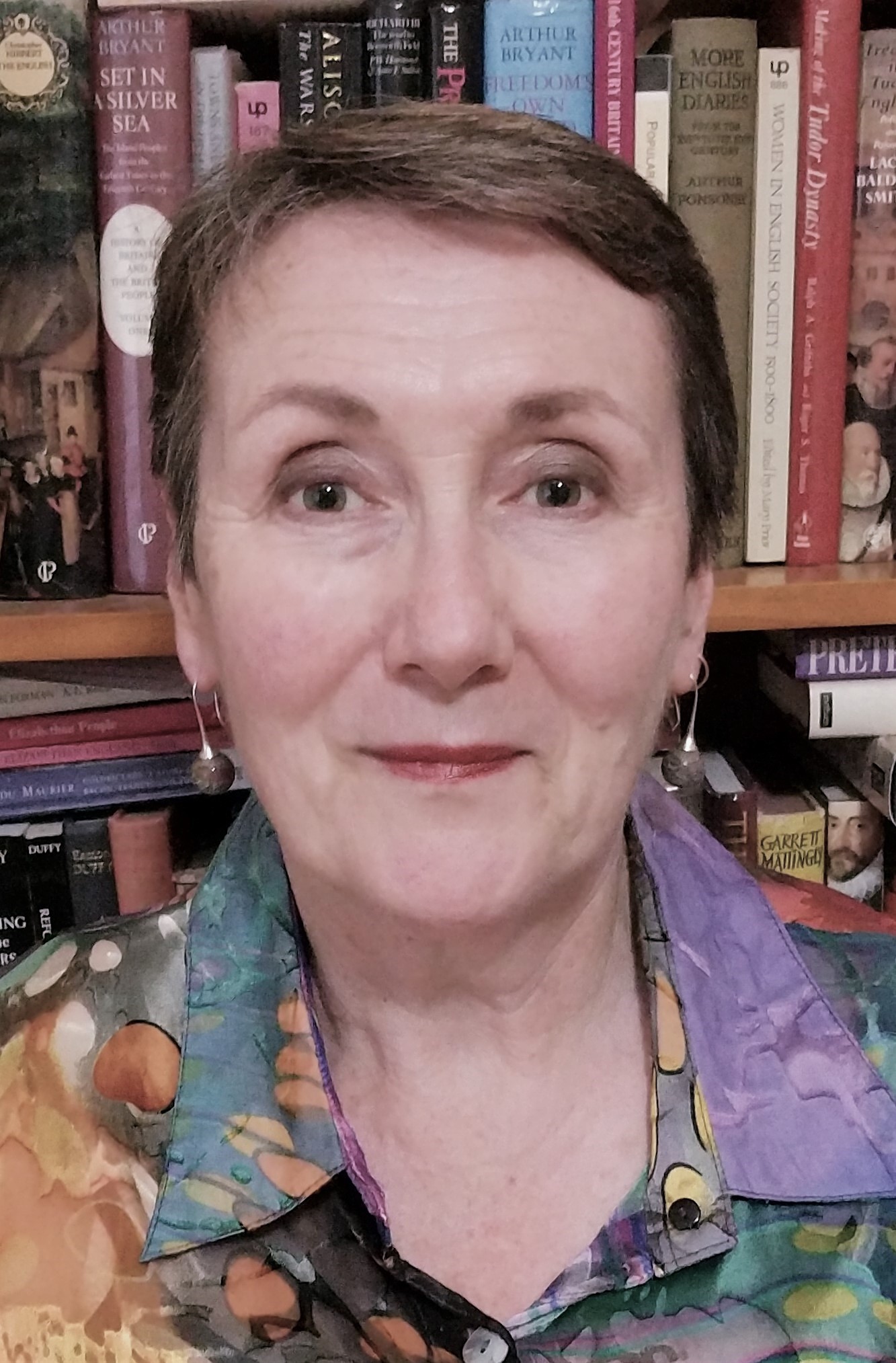 Author Bio:
Catherine Meyrick
Catherine Meyrick is a writer of historical fiction with a particular love of Elizabethan England. Her stories weave fictional characters into the gaps within the historical record – tales of ordinary people who are very much men and women of their time, yet in so many ways are like us today. These are people with the same hopes and longings as we have to find both love and their own place in a troubled world.
Catherine grew up in regional Victoria, but has lived all her adult life in Melbourne, Australia. Until recently she worked as a customer service librarian at her local library. She has a Master of Arts in history and is also an obsessive genealogist. When not writing, reading and researching, Catherine enjoys gardening, the cinema and music of all sorts from early music and classical to folk and country and western and, not least of all, taking photos of the family cat to post on Instagram.
Social Media Links:
Website • Twitter • Instagram • Facebook • Pinterest

 Two cousins fighting for the right to rule England during the 16th century. One was the daughter of Henry VIII and Anne Boleyn who fought tooth and nail to rule without a man by her side. The other was the daughter of Mary of Guise and King James V of Scotland whose marriage record would prove to be fatal. Elizabeth I and Mary, Queen of Scots, may have been sister queens, but the way they were treated in their own countries differed completely. While Elizabeth I was praised and protected from harm in England, Mary was a scapegoat for so many in Scotland. The way that Mary was used as a pawn even though she wore a crown was nothing short of extraordinary. The story of how these two queens came on a collision course that would leave one queen beheaded and the other forever changed has been told in many different ways from both sides of the tale, but it has rarely been told as a cohesive nonfiction book. That is until Kate Williams’ marvelous biography, “The Betrayal of Mary, Queen of Scots: Elizabeth I and Her Greatest Rival”.
 Today, I am pleased to share my book review of the latest Elizabethan novel by Tony Riches as my contribution to his “Essex: Tudor Rebel” blog tour. Thank you to Tony Riches for sending me a copy of his latest novel, and to The Coffee Pot Book Club for allowing me to take part in this tour.
 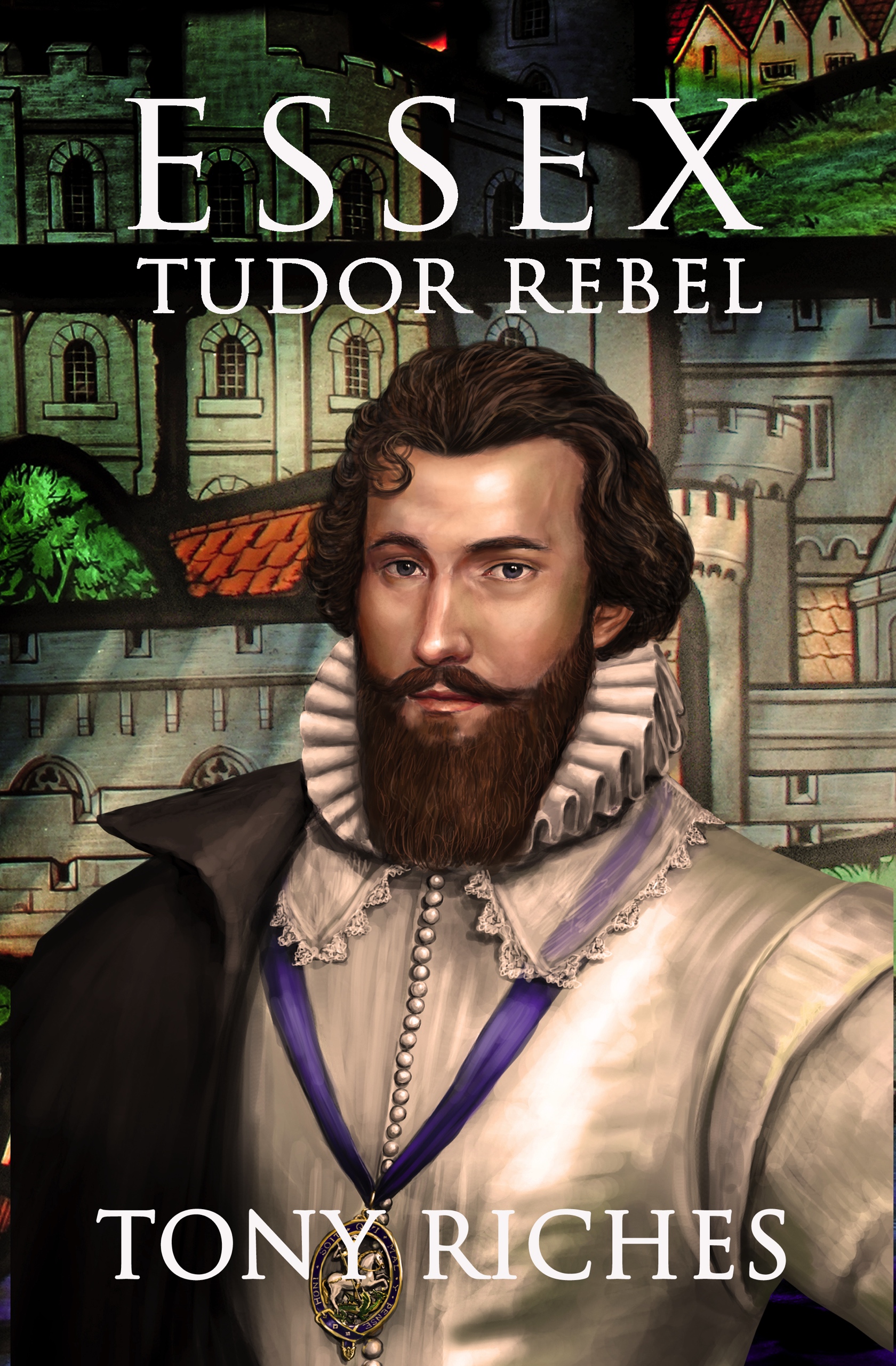 (Blurb)
 Author Bio
 One of the most infamous families in the history of England lasted for over three hundred years and it was filled with numerous princes that fought for their right to rule, much to the chagrin of the Tudor dynasty. The Plantagenet Dynasty was full of scandals and bloodshed, testing the core values of what it meant to be a family and rulers of an emerging country like England. This dynastic clash for power that came to define this dynasty began with Henry II and his sons by his wife Eleanor of Aquitaine. When their father refused to give the boys any true power, which was to be excepted with all princes, his sons waged war against Henry II and their brothers. The stories of these bonds and what ultimately tore them asunder are told in Douglas Boyd’s latest collection of biographies aptly titled, “Plantagenet Princes: The Sons of Eleanor of Aquitaine and Henry II”.
 Margery Kempe, the only daughter of the mayor of Bishop’s Lynn, England has made a tough decision in 1413. She has decided to leave her home, her husband, and her fourteen children to go on a pilgrimage to the holy city of Jerusalem as a way to honor her late father’s dying wishes. As she begins her journey, she meets the famous anchoress Julian of Norwich, who entrusts Margery with an important mission. She gives Margery her book Revelations of Divine Love and tells her to spread her message throughout the world in secret. Margery’s pilgrimage, her connection to Julian of Norwich, and the aftermath of her journey are intricately woven together in Mary Sharratt’s stunning novel, “Revelations”.
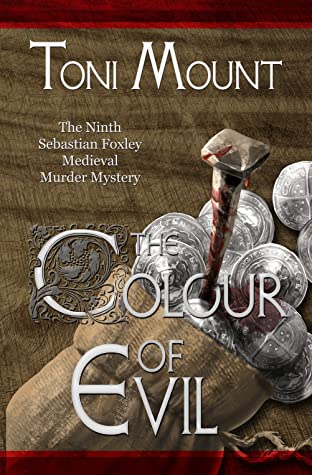 Money problems litter the streets of London like debris. Those who have money have power. Yet, there are those who try to beat the system by making their own counterfeit currency to beat the system. When this counterfeit currency leaves to murder, only Seb Foxley and his merry band of friends and family members can bring justice to those who were killed. When unexpected complications arise, like Seb’s wayward brother Jude coming home with an Italian child bride and a commission from King Edward IV himself, can Seb solve the case before anyone else becomes the next victim in this vicious cycle of greed and exploitation? Toni Mount takes her readers on another thrilling adventure in, “The Colour of Evil”, the ninth installment of the Sebastian Foxley Medieval Murder Mystery series.
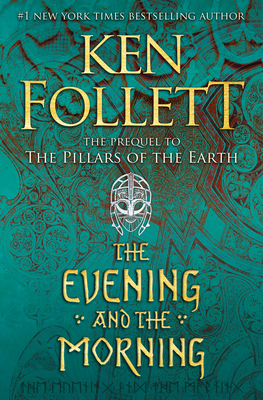 The year is 997 and England is in a dire situation. Fears of invasions from the Welsh and the Vikings leave the Anglo- Saxon residents rattled while those in power take advantage of their citizens. Chaos reigns supreme as those who rule the towns are in constant power struggles between themselves and their king, Ethelred the Unready, with the average villagers caught in the middle, like the villagers of Dreng’s Ferry. It is in this small village where three characters find their lives intertwined with the political and social drama. A young boatbuilder named Edgar endures heartache and sorrow when the Vikings attack his home. A Norman noblewoman named Ragna follows her heart to marry the man she loves and travels to a faraway land but soon finds out how difficult that love can be. Finally, a monk named Aldred works hard for the people while dreaming of transforming his meek abbey into a lively center of learning. Their tales are masterfully woven together in the much-anticipated prequel to the Kingsbridge series by Ken Follett. This is “The Evening and the Morning”.
 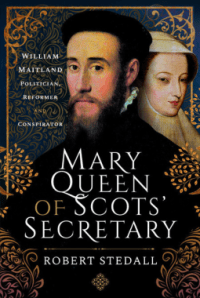 One of the most dynamic queens in 16th century Europe who spent most of her youth in a country that was not her homeland, but was fighting for the right to rule England. Her name was Mary Queen of Scots, the cousin of Queen Elizabeth I. Many know of her tragic tale, but there was a man who was behind the scenes trying to guide Scotland to a brighter future. He was not married to Mary Queen of Scots, but he was influential in her life and choosing who she might marry and who she would end up divorcing. He was a politician and a religious reformer whose decisions would alter history dramatically. His name was William Maitland and he served as Mary’s secretary. He is always mentioned as a footnote in history, until now. Robert Stedall’s latest biography, “Mary Queen of Scots’ Secretary: William Maitland- Politician, Reformer, and Conspirator”, explores the life and legacy of this rather extraordinary secretary.
 One of the most prominent royal families of English history was the Plantagenets, who reigned for over three hundred years. In the first one hundred years of this family’s infamous history, five kings ruled (the first two are considered kings of the Angevin dynasty): Henry II, Richard I, John, Henry III, and Edward I. These five kings saw England change drastically, but they also participated in the international political landscape of the day, which involved the series of wars that today we simply refer to as the Crusades. The early Plantagenet kings saw much bloodshed and war, but they were not alone in their struggle to keep the dynasty going. These men would not have gotten as far as they did without their wives who stood by their sides. In Alison Weir’s latest installment of England’s Medieval Queens series, “Queens of the Crusades”, she takes a deep dive into the lives of the first five Plantagenet queens to show how remarkable these women truly were to stand beside their husbands during the times of the Crusades in Europe.
 Adventures of a Tudor Nerd