
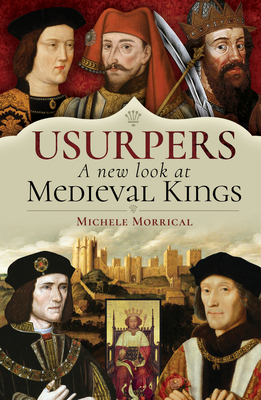
In medieval Europe, to be considered a strong king, you must keep a firm grasp on your crown, or those who see you as weak will take advantage. These men were known as usurpers throughout history who steal the throne through combat or by illegal means. Some of the most well-known kings in English history have been categorized as usurpers, but is this a fair assessment of their mark in history, or is it a case of propaganda changing their legacy? In her debut nonfiction book, “Usurpers, a New Look at Medieval Kings,” Michele Morrical explores the lives of six English kings who bear that title to see if it makes sense with the facts of how they came into power.
I would like to thank Net Galley and Pen and Sword Books for sending me a copy of this book. When I heard this book was published, I wanted to see how Morrical described a usurper and which king she considered usurpers. I have never heard of a book that focused solely on those who stole thrones in England, so I was excited to see how well it read.
Morrical breaks her book into six sections, with each part focusing on one specific king and his rise to power. She focuses on William the Conqueror, Stephen of Blois, Henry IV, Edward IV, Richard III, and Henry VII as examples of rulers in English history known to be usurpers. Morrical writes biography vignettes to give her readers an understanding of how they came to power and who they had to remove from the throne to become the next monarch. In some cases, it meant starting a new dynasty, and in others, it was just a continuation of the family’s lineage, but it was a different branch of the family tree. The biographies tend to get repetitive, especially with the sections dedicated to the Wars of the Roses. If you are new to these kings and the events of their lifetimes, the repetitive nature will help you understand how everything is connected.
I think Morrical can improve if she writes another nonfiction book by using quotes from primary sources and other historians to strengthen her arguments. I wish she had included discussions from chronicles or other primary sources from around the times that these men became rulers to see the consensus of the time towards the new king. It would have added an extra layer to the stories, and readers could see how our definition of a usurper king would have compared or contrasted to the views of the past. I would have also liked Morrical to have discussed whether being a usurper king had a positive or negative connotation. Many kings on this list were considered game-changers when ruling England and transformed how England was viewed in the grander scheme of European politics.
I think for her first book, Morrical does a decent job of presenting her viewpoints about certain kings and presenting the facts about their lives. One can tell that Morrical is passionate about usurpers and understanding why they took the English throne from their predecessors. Overall, I think it is not bad for a book that combines the lives of six kings of England into one text. If you want a good introductory book into the lives of usurper kings, you should give “Usurpers, a New Look at Medieval Kings” by Michele Morrical a try.

 Two cousins fighting for the right to rule England during the 16th century. One was the daughter of Henry VIII and Anne Boleyn who fought tooth and nail to rule without a man by her side. The other was the daughter of Mary of Guise and King James V of Scotland whose marriage record would prove to be fatal. Elizabeth I and Mary, Queen of Scots, may have been sister queens, but the way they were treated in their own countries differed completely. While Elizabeth I was praised and protected from harm in England, Mary was a scapegoat for so many in Scotland. The way that Mary was used as a pawn even though she wore a crown was nothing short of extraordinary. The story of how these two queens came on a collision course that would leave one queen beheaded and the other forever changed has been told in many different ways from both sides of the tale, but it has rarely been told as a cohesive nonfiction book. That is until Kate Williams’ marvelous biography, “The Betrayal of Mary, Queen of Scots: Elizabeth I and Her Greatest Rival”.
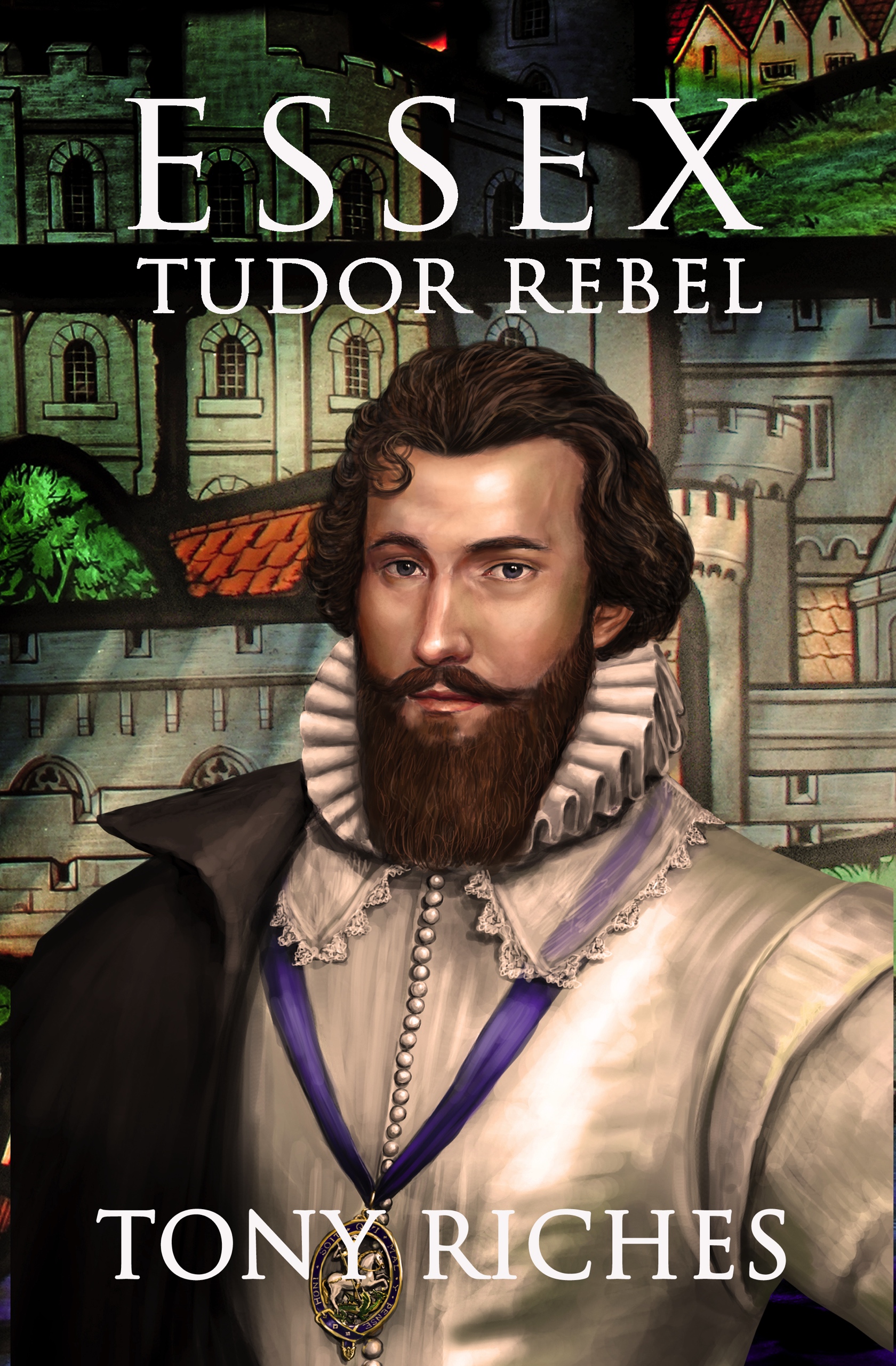
 Today, I am pleased to share my book review of the latest Elizabethan novel by Tony Riches as my contribution to his “Essex: Tudor Rebel” blog tour. Thank you to Tony Riches for sending me a copy of his latest novel, and to The Coffee Pot Book Club for allowing me to take part in this tour.
  (Blurb)
 Author Bio
 One of the most infamous families in the history of England lasted for over three hundred years and it was filled with numerous princes that fought for their right to rule, much to the chagrin of the Tudor dynasty. The Plantagenet Dynasty was full of scandals and bloodshed, testing the core values of what it meant to be a family and rulers of an emerging country like England. This dynastic clash for power that came to define this dynasty began with Henry II and his sons by his wife Eleanor of Aquitaine. When their father refused to give the boys any true power, which was to be excepted with all princes, his sons waged war against Henry II and their brothers. The stories of these bonds and what ultimately tore them asunder are told in Douglas Boyd’s latest collection of biographies aptly titled, “Plantagenet Princes: The Sons of Eleanor of Aquitaine and Henry II”.
 Today, it is my pleasure to welcome Catherine Meyrick to my blog to share an excerpt from her novel, “Forsaking All Other”. I would like to thank Catherine Meyrick and The Coffee Pot Book Club for allowing me to take part in this blog tour.
  (Blurb)
 Author Bio:
 Margery Kempe, the only daughter of the mayor of Bishop’s Lynn, England has made a tough decision in 1413. She has decided to leave her home, her husband, and her fourteen children to go on a pilgrimage to the holy city of Jerusalem as a way to honor her late father’s dying wishes. As she begins her journey, she meets the famous anchoress Julian of Norwich, who entrusts Margery with an important mission. She gives Margery her book Revelations of Divine Love and tells her to spread her message throughout the world in secret. Margery’s pilgrimage, her connection to Julian of Norwich, and the aftermath of her journey are intricately woven together in Mary Sharratt’s stunning novel, “Revelations”.
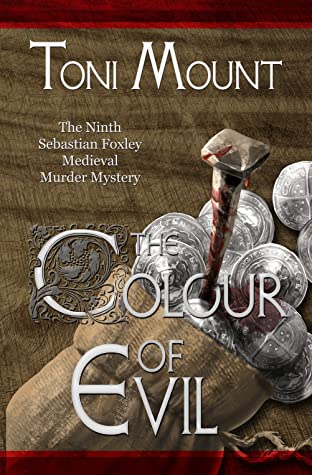 Money problems litter the streets of London like debris. Those who have money have power. Yet, there are those who try to beat the system by making their own counterfeit currency to beat the system. When this counterfeit currency leaves to murder, only Seb Foxley and his merry band of friends and family members can bring justice to those who were killed. When unexpected complications arise, like Seb’s wayward brother Jude coming home with an Italian child bride and a commission from King Edward IV himself, can Seb solve the case before anyone else becomes the next victim in this vicious cycle of greed and exploitation? Toni Mount takes her readers on another thrilling adventure in, “The Colour of Evil”, the ninth installment of the Sebastian Foxley Medieval Murder Mystery series.
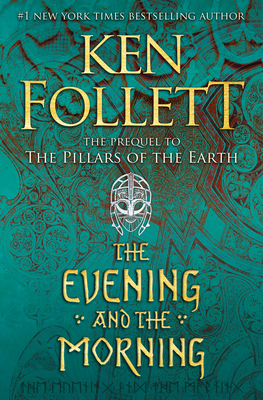 The year is 997 and England is in a dire situation. Fears of invasions from the Welsh and the Vikings leave the Anglo- Saxon residents rattled while those in power take advantage of their citizens. Chaos reigns supreme as those who rule the towns are in constant power struggles between themselves and their king, Ethelred the Unready, with the average villagers caught in the middle, like the villagers of Dreng’s Ferry. It is in this small village where three characters find their lives intertwined with the political and social drama. A young boatbuilder named Edgar endures heartache and sorrow when the Vikings attack his home. A Norman noblewoman named Ragna follows her heart to marry the man she loves and travels to a faraway land but soon finds out how difficult that love can be. Finally, a monk named Aldred works hard for the people while dreaming of transforming his meek abbey into a lively center of learning. Their tales are masterfully woven together in the much-anticipated prequel to the Kingsbridge series by Ken Follett. This is “The Evening and the Morning”.
  Adventures of a Tudor Nerd