
 The 16th century was dominated by powerful women who left their indelible mark on European history. Take, for example, the aunt of Charles V, the Holy Roman Emperor. No, not Catherine of Aragon, the first wife of Henry VIII. I am talking about a woman who was the daughter of Emperor Maximilian I, was married three times, had no children, and helped raise her nephew Charles V, was an essential part of the Ladies’ Peace, taught Anne Boleyn how to live at court, and was a patroness of the arts and literature. Of course, I am talking about Margaret of Austria, the Governor of the Netherlands. A formidable woman who saw much change and chose to be part of politics, even though she was a woman. Her remarkable story is told in Rozsa Gaston’s novel, “Margaret of Austria: Governor of the Netherlands and Early 16th-Century Europe’s Greatest Diplomat.”
I would like to thank Rozsa Gaston for sending me a copy of this novel. I am someone who is always looking for a new aspect of the 16th century. I have heard about Margaret of Austria from other books about Anne Boleyn and the 16th century, but I did not know much about this woman. When Gaston asked if I would like to read and review her novel, I jumped at the chance to read it and learn more about her.
Gaston begins her novel with a chart of important figures that would be featured in this story, which was helpful for me as a reader. Then, we get some basic background information about Margaret of Austria, the daughter of Maximilian I of Austria and Mary of Burgundy (known as Mary the Rich). Margaret’s brother was Philip the Handsome, who was expected to inherit their father’s throne. Margaret was destined to be a bride for King Charles VIII of France, so she left her native Netherlands for France at a young age. Our story begins with Charles VIII rejecting poor Margaret because he was already married to Anne of Brittany. Rejected, Margaret goes home, where another marriage is arranged. Her brother Philip would marry Juana of Castile, and Margaret would travel to Spain to marry Juan, Prince of Asturias. This marriage would not last long as Juan would die young.
Her final marriage would be to Philibert of Savoy, which turned into a love match, but Philibert would die a few years into their marriage. Heartbroken, Margaret goes to live with Philip and Juana, which is a mistake because they are constantly at odds. When Philip dies unexpectantly, Juana, no matter how her mental state may be, rules Castile while her eldest son Charles lives with Margaret. Margaret becomes the Governor of the Netherlands for Charles until he is old enough to rule. For the remainder of her life, politics would play a major part in Margaret’s life as she saw issues like the Great Matter, the Sack of Rome, the League of Cambrai, the rise of Martin Luther, and the Ladies’ Peace.
Margaret of Austria was such a powerful woman who would do anything for her family and her beloved Netherlands. To stand toe to toe with some of these major political figures as a woman during the 16th century took guts, but Margaret showed how formidable she was. Gaston does an excellent job telling Margaret’s story, so much so that I want to read more books about her life. Suppose you want to learn more about the life of Margaret of Austria. In that case, I highly recommend you read “Margaret of Austria: Governor of the Netherlands and Early 16th-Century Europe’s Greatest Diplomat” by Rozsa Gaston.
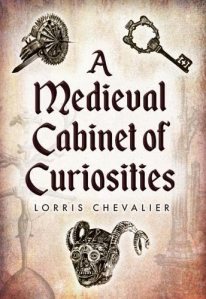 When we think about how we study history, we often consider documents and chronicles that can provide us with dates and the stories of historical figures. However, this is only half the story. We can learn a great deal from the artifacts left behind. Each era left behind its treasure trove of trinkets for archaeologists and historians to discover and interpret their meanings and purposes. One of the most fascinating periods of history was medieval Europe, full of war, religious struggles, artwork, plagues, and technological advances. What types of artifacts were left behind from medieval Europe? Lorris Chevalier explores the trinkets and artifacts left behind in his book, “A Medieval Cabinet of Curiosities.”
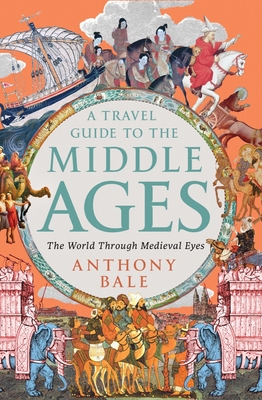 When we think about travel in the Middle Ages, we often think of wealthy nobles or those who went to war fighting in foreign lands. However, that is merely a misconception. Travel was open to everyone, from the wealthy, the poor, the pious pilgrims, and the merchants. Each group had their reasons for traveling to different countries. Still, they all wrote down their experiences to tell future generations about their encounters and encourage others to explore the world, both the known and unknown parts. Anthony Bale has compiled many of these accounts into one comprehensive book called, “A Travel Guide to the Middle Ages: The World Through Medieval Eyes.”
 Medieval Europe was inundated with strong rulers and dominant figures who made a difference in how the policies of certain countries were formed. We tend to focus on the male figures, from kings to lords and rebels, when we study medieval European history. Still, the women in their lives significantly influenced how their countries were governed. Although many women stood by the side of their husbands and didn’t make much of an impact on European history, some women chose to stand out from the crowd and make a name for themselves. Rebecca Holdorph has chosen to highlight a handful of these dynamic women throughout medieval Europe in her book, “Women in the Medieval Court: Consorts and Concubines.”
 When we read about those who lived in past centuries, there is often a disconnect. We know that they were also human beings like we are, but we see how different their ways of life are compared to ours, and it feels incredibly bizarre. We can find wisdom from the past for our more modern lives. One of the most unlikely sources of knowledge for our daily lives comes from the lives of men and women who choose to take a religious path. In her latest book, “How to Live Like a Monk: Medieval Wisdom For Modern Life,” Daniele Cybulskie shows her readers how medieval monks can help us live our best lives here in the present.
 attention towards women like Elizabeth I, Isabella of Castile, Katherine of Aragon, Mary I and Catherine de Medici. These seemed like extraordinary examples of power that stretched the boundaries on what was right and acceptable for women of the time. That, however, couldn’t be further from the truth. In fact, the sixteenth century in Europe was filled with powerful women who do not get the attention that they deserve. In Sarah Gristwood’s book “Game of Queens: The Women who made Sixteenth- Century Europe”, we are shown that it really wasn’t the men who had control, but their wives and daughters.
 Adventures of a Tudor Nerd