
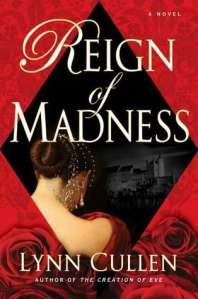
 The daughters of Isabel of Castile and Ferdinand of Aragon lived very interesting lives. Of course, we know what happened to Katherine of Aragon, but her elder sister, Juana, has her own tragic tale. She was known as Juana the Mad because the rumors were that when her husband, Philip the Handsome, died, she carried her coffin around for months and would not let him be buried. Was Juana truly mad, or was it all a ruse by powerful men to steal her lands and titles? Lynn Cullen explores Juana of Castile’s life in her novel, “Reign of Madness.”
This was a book that I found when I was in a used book shop. I saw that it was about Juana of Castile, and I’ll be honest, I have never read a novel that is solely about her life. I know the basic information about her life and reign, but I was hoping that a novel would help me connect to Juana a bit more.
Juana of Castile was the daughter of Isabel of Castile and Ferdinand of Aragon. Since she was the second daughter, she was third in line for the throne of Castile, behind her brother, Juan, and eldest sister, Isabel. She was not destined to become queen, so her parents married her off to Philippe the Handsome, Duke of Burgundy. While it was a marriage for an alliance, love did bloom between Juana and Philippe, even though she did not always get along with Dowager Duchess Margaret of York. Eventually, the honeymoon stage ended, and it was replaced with paranoia and fears of infidelity. At the same time, fortune’s wheel turned in such a way that Juana became her mother’s heir to Castile. Juana doesn’t want power for herself, but Philippe desires power. Juana just wants to take care of her family, which includes her son, the future Charles V. Eventually, the desire for power would become so great that the idea of Juana as mad would overtake her entire life and her legacy.
I had some issues with this book, and there were times when I wanted to throw the book across the room. Some of the biggest ugh moments for me were when she said that bathing was something that only the Spanish were familiar with, and when Philippe kept breaking into Juana’s confinement chamber. These elements, along with a few others, showed me that Cullen didn’t fully grasp the 16th-century European world and its nuances. I also did not like how Juana was portrayed as a mousey character, and her father, Ferdinand, came across as almost a trophy husband.
This novel had the potential to do something groundbreaking when it comes to writing a novel about Juana of Castile by showing that she was sane, but it fell a bit flat. I think if you are someone who is not particular about historical nuances being accurate in a historical novel, and you want something about Juana of Castile, you might enjoy “Reign of Madness” by Lynn Cullen.
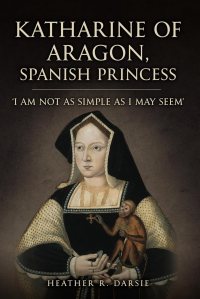 We all know the gist of the tragic tale of Katharine of Aragon. A Spanish princess who was brought to England to marry the heir of the Tudor throne, Prince Arthur Tudor. When the prince died mere months after their wedding day, Katharine was left in limbo and desolate as the Kings of Spain and England bickered over her dowry. Eventually, she would marry King Henry VIII, was his wife for over twenty years, and have numerous miscarriages before Henry decided to divorce her and marry Anne Boleyn. We know how Katharine’s story ends, but how did the stories of her Trastamara family influence her life and her reign as Queen of England? Heather R. Darsie explores Katharine’s Spanish origins in her latest book, “Katharine of Aragon, Spanish Princess: ‘I Am Not as Simple as I May Seem.’”
 Adventures of a Tudor Nerd