
 We all know the story of the last Tudor monarch, Queen Elizabeth I, who often viewed herself as a female king and who remained a virgin for her entire life. With her death, the Tudor dynasty ended, and a brand new dynasty made its mark on English history. It was a dynasty in England that the son of Elizabeth started I’s rival, Mary Queen of Scots, King James VI of Scotland. King James was not just a king, but a man in love with numerous lovers, and when he fell in love, he fell hard. Gareth Russell explores the life of King James VI/I, who ruled two nations while searching for true love in his latest book, “Queen James: A New History About the Life and Loves of Britain’s First King, James Stuart.”
I am a big fan of Gareth Russell’s books, and so when I heard that he was writing a new biography, I jumped at the chance to read it. I didn’t know much about King James VI/I, especially when it comes to his reign in England or his love life, so I was excited to learn more. Plus, I liked the title of this particular edition of this book.
Like any good biography, we have to start at the beginning, or in James’ case, when his mother was still pregnant with him. Even before he was born, some wanted to see James dead, including those who killed David Riccio in front of his mother, Mary Queen of Scots. James would never know his father, Henry Stuart, Lord Darnley, as he was killed at Kirk O’Field when James was very young. Mary Queen of Scots would flee to England, making James King of Scotland. James was raised to be a Protestant king who would navigate plenty of plots against his life. He was not interested in marriage, but he would marry Anna of Denmark, a vivacious queen who brought her love of theater and arts to James’ life, as well as Catholicism and seven children, including Charles I and Elizabeth Stuart, “The Winter Queen” of Bohemia.
When Queen Elizabeth I died in 1603, James took the opportunity and became King of England. James had to deal with the affairs of two nations, try to come up with a brand new translation of the Bible, as well as the witch hunts that were becoming more prevalent during this time. Add to James’ troubles were European politics and the constant fighting between Catholics and Protestants, and you start to understand why he relied so heavily on his favorites, specifically Alexander “Sandy” Lindsay, Robert Carr, 1st Earl of Somerset, and George Villiers, 1st Duke of Buckingham. James’s favorites were his lovers, and they provided him with the love that he was looking for all of his life.
No one writes nonfiction the way Gareth Russell does with such care and an engaging writing style. This is another triumph as he shows that although there were rivalries in love, plots a plenty, and religious ruckus, at the heart of the Jacobean reign was a complex man who had his heart on his sleeve and fell in love quickly and hard. If you want a fabulous biography about a king and the ones he loved the most, I highly recommend you read “Queen James: A New History About the Life and Loves of Britain’s First King, James Stuart” by Gareth Russell.
 When we think of old homes, we often think of the phrase, “If walls could talk,” because the true treasure of any home is not the floorboards or the walls, but rather the stories of those who lived inside its walls. Take, for example, Hampton Court Palace in England. A home for over 500 years that has seen many architectural and artistic changes in its hallowed halls, but it is the stories of those who stayed for brief periods that truly make this palace spectacular. Stories full of salacious scandals, religious implications, and revelations that would shake England to its core through revolutions. Hampton Court Palace has been the center of English court drama for centuries and finally, these tantalizing tales are being told in a truly remarkable book, “The Palace: From the Tudors to the Windsors, 500 Years of British History at Hampton Court” by Gareth Russell.
 Have you ever read a history book or watched a historical drama and dreamed of going back in time to know what the past was like? Since time travel is still something from science fiction, we can only experience history through one sense at a time. There are tons of historical costume designers, musicians who specialize in tunes from the past, dedicated caretakers who work hard to preserve homes from the past, and cooks who want to experience what past delicacies tasted like and understand the diets from centuries long ago. The cooks get a general idea of what kitchens might have smelled like, but what about the average history nerds who want to understand what pleasant scents the past might include? How can a casual history nerd experience a sensory journey from the past?


 Sweet Cacao
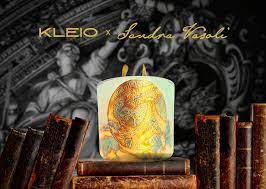 Secret Archives
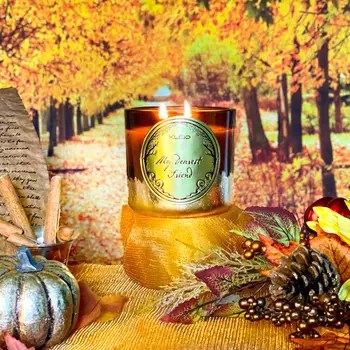 My Dearest Friend
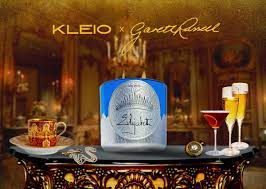 Bowes-Lyon
 The House of Windsor has been attracting worldwide attention in recent decades with scandals, deaths, weddings, and the birth of royal children. As living symbols of England, the Windsors are seen as an above-average family with numerous jobs and responsibilities. We know their names; King George VI, Queen Elizabeth II, Prince Phillip, Prince (now King) Charles, Princess Diana, and Prince William. We know their stories from the numerous books, tabloids, and documentaries about their lives, but what about their lives when they go home to relax? Gareth Russell peels back the gilded curtain to explore the life of Elizabeth Bowes-Lyon, lovingly known as the Queen Mother, in his latest biography, “Do Let’s Have Another Drink: The Singular Wit and Double Measures of Queen Elizabeth The Queen Mother.”
 Divorced, beheaded, died. Divorced, beheaded, survived. For those who study Tudor history, we have heard this unimaginative rhyme to refer to the wives of Henry VIII for the longest time. We all know the stories of the queens, especially Anne Boleyn, but the fifth wife and the second one to be beheaded tend to be cast aside for some of the more intriguing tales. Her name was Catherine Howard, Henry’s youngest bride. Her story is full of rumors and myths, just like her cousin Anne Boleyn. Most know of her romantic dalliances that, in the end, led to her demise, but what was her reign like as queen? What was the court of Henry VIII like during his fifth marriage as his health was failing? In Gareth Russell’s brilliant biography, “Young and Damned and Fair: The Life and Tragedy of Catherine Howard at the Court of Henry VIII”, he dives deep into the archives to shine a light on the life of this tragic and young queen.
 Adventures of a Tudor Nerd