
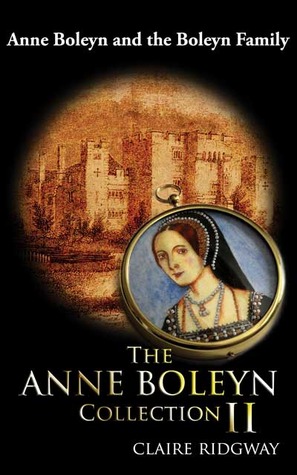
 The Boleyn family have been viewed as social climbers, who only desired power and prestige, in history and novels for centuries; their fall from grace was due to their ambitions. But, is this true? Did Anne Boleyn’s family only care about getting to the top by any means necessary? Were they manipulative, cunning, and cruel like they have been portrayed in dramas and novels? Who were the Boleyns and why have they been so maligned in history? In her second book of this series, “The Anne Boleyn Collection II”, Claire Ridgway of The Anne Boleyn Files examines Anne Boleyn and the truth about her family.
After I had finished the first edition of “The Anne Boleyn Collection”, I did have a conversation with Claire Ridgway about the structure of her book. If you read my review about that particular book, I did have a slight issue with the blog article structure of the book. Claire Ridgway explained that it was intentional as these books are a collection of blog articles from The Anne Boleyn Files, which helped me while reading the second collection of articles.
In my opinion, Ridgway’s structure in this second collection is much better than the first collection. It reads like a book and it is in an order that makes sense. We start our journey with the origins of the Boleyn family, which was fascinating and very informative to read about the different theories of how this family rose to power. Then, it is all about Anne and her life and the myths around her. Compared to her previous book, I found this part well researched and I learned a lot. Anne Boleyn is not exactly my favorite wife of King Henry VIII, but I did feel sympathy for her, and I could see why so many people do defend her while reading about her in this book.
The last section of this book deals with Anne Boleyn’s immediate family. Her father Thomas Boleyn has been viewed as a “power-hungry pimp” who only cared about his position rather than his children, but Ridgway shows that this was not the case. Anne’s mother Elizabeth Boleyn has been a shadowy figure in the past, yet Ridgway dives to find out what kind of parent she was and the rumors around her. Was George Boleyn such a scandalous figure and what was his relationship with his wife Jane Boleyn like? What is the truth about Mary Boleyn’s story? And finally, Ridgway explores the big question about the Boleyns and their religious viewpoints.
This is my favorite book from The Anne Boleyn Collection series so far. Claire Ridgway’s research and writing style has improved significantly between the two books, and it shows. I did thoroughly enjoy this one and I wanted to do my own research into these topics after reading this book. I learned so much about the Boleyns that it made me realize that maybe they were not as bad as novels and dramas have portrayed them. If you think you know the Boleyns, I would suggest you read, “The Anne Boleyn Collection II” by Claire Ridgway. It may change your mind about how you view this hotly debated family of Anne Boleyn.
 The story of Anne Boleyn is one of love, triumph, and tragedy. Her tale has been told in many different ways in the several centuries since her execution by many different people. Except by Anne Boleyn herself. We never truly understood what it might have felt like when she went to court for the first time, what it must have felt like to have fallen in love with King Henry VIII. How she might have felt when she had her daughter and experienced her numerous miscarriages. The devastation she must have felt when she found out about Henry’s abusive side, his mistresses, and her ultimate demise. That is until now. In Holly-Eloise Walters’ debut novel, “The Most Happy”, Anne Boleyn tells her personal story, giving the readers a better understanding of the legend.
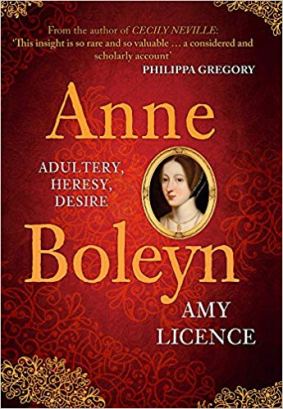 Anne Boleyn, the second wife of Henry VIII and the mother of the future Queen Elizabeth I, is one of the unique characters of the Tudor era. She was the sister of one of the king’s mistresses, Mary Boleyn, which she could have been, but Henry wanted Anne as his queen. Unfortunately, he was married to his first wife, Catherine of Aragon. It is Henry’s divorce to Catherine and his relationship with Anne, the rise and fall, is what many people look at, but there is more to Anne’s story than just her life with Henry. What was Anne’s life really like and what really caused her fall? These are just a few questions that Amy Licence tackles in her latest biography, “Anne Boleyn: Adultery, Heresy, Desire.”
 The rise and fall of the Boleyns have been something that has fascinated those who study the Tudor dynasty for centuries. We often view these series of events from the immediate Boleyn family, but what might it have been like for someone who was married to a Boleyn, like Jane Parker Boleyn, the wife of George Boleyn? Jane is often portrayed in literature as a woman who had a tumultuous marriage who sold out her husband when she was interrogated, someone who helped Katherine Howard with her secret liaisons behind Henry VIII’s back, and a woman who suffered from mental illness while in prison. If you take a look at Jane Boleyn’s life from this lens, she sounds like a troubled woman, but what if there was a different side to her? What if she was a good person who loved her husband and his family? That is the Jane Boleyn that Adrienne Dillard wanted to portray in her latest book, “The Raven’s Widow: A Novel of Jane Boleyn”.
  The age of the Tudors has fascinated historians for centuries. As of recently, there has been a shift in how we view historical figures. Historians have been stripping away the more controversial elements that have been ingrained in how we view historical figures to look for the truth. Historical figures like Anne and Mary Boleyn have been placed under the microscope and have been given a closer look in recent years. But what about the men of Boleyn family, Thomas, and George? What were their lives really like? Did they truly desire power and titles so much that they were willing to do anything to get it? Those are the questions that Lauren Mackay decided to explore in her latest book, “Among the Wolves of Court: The Untold Story of Thomas and George Boleyn.”
 Anne Boleyn, the second wife of Henry VIII and the mother of Elizabeth I. Most of us know her story of how she fell in love with Henry VIII and how their relationship changed England forever as Henry broke off with Rome in order to get a divorce from his first wife Katherine of Aragon so that he could marry Anne. Unfortunately, when Anne couldn’t give Henry the son he so desired, their love began to fade. Anne Boleyn’s story ends in tragedy as she was accused of having multiple affairs, plotting the death of Henry VIII, and witchcraft, Anne was found guilty and was killed. Her fall happened in May 1536, a month that changed everything, but how much of these charges are true? Did she indeed have these affairs? Did she plot to kill her husband? What is the truth behind her fall? These are the questions that Alison Weir try to answer in her book “The Lady in the Tower: The Fall of Anne Boleyn.”
 Adventures of a Tudor Nerd