
 The 1520s in England were a raucous time. As the years pass, King Henry VIII’s desire for a legitimate son grows and his resentment towards his wife Katherine of Aragon increases. Henry has decided to divorce his wife of over 20 years to marry a new fling, Anne Boleyn, who would surely give him the son and heir. All of Europe, especially the Pope, is horrified at the direction Henry is taking, but one man stands firmly on the side of the King. Thomas Cromwell rose through the ranks to become Henry VIII’s right-hand man, even though he had rather humble origins. Can Thomas Cromwell help the man who made him and survive the king’s wrath? Hilary Mantel explores the origins of Cromwell’s rise and The Great Matter in the first book in her Thomas Cromwell trilogy, “Wolf Hall.”
“Wolf Hall” is a novel that I have meant to read for a while now. I have heard from the Tudor community how great this novel is plus I saw the advertisements for the television show of the same name. I just never picked it up until I went into a used bookstore, saw it on a shelf, and decided to give it a try.
We are introduced to our main protagonist Thomas Cromwell, getting beaten bloody by his father, a drunkard blacksmith, Walter Cromwell. His childhood is harsh, but his sister Kat and her husband Morgan Williams convince Thomas to run away from his home. Thomas becomes a soldier fighting for the French and spends some time in Italy before he goes back to his native England to become a lawyer, working his way up to work with Cardinal Thomas Wolsey. Thomas Cromwell married Liz Wykys and had three children; Gregory, Anne, and Grace. The first part of the book focuses on Cromwell’s service to Wolsey, Wolsey’s fall from grace, and the tragic deaths in his family.
The majority of this novel focuses on Cromwell’s rise in power to become King Henry VIII’s right-hand man. The main issue that Cromwell must focus on is The Great Matter, the divorce of King Henry VIII from his first wife Katherine of Aragon so that he could marry Anne Boleyn. It is a taboo topic, but Henry realizes that the Pope will not go with his plan. While navigating the tumultuous Tudor court and his home life, Cromwell also has to come up with a plan to make Anne Queen of England and Henry the Supreme Head of the Church of England. A tall task for anyone, but this is Cromwell, a man who will do whatever it takes to succeed.
Reading this particular novel was a struggle for me, not because of the contents, but rather Mantel’s unique writing style. It took me a long time, almost 200 pages, to get into this novel and become invested in the story. There were points in reading this novel where I wanted to give up and wait until I had access to the audiobook to try again, but I chose to keep reading. Once I did get invested in Cromwell’s tale and the ones who surrounded the powerful figure, I was hooked. I think if the beginning was not so convoluted, this would have been an almost perfect novel, except for how she portrayed figures like Mary Boleyn, Jane Rochford, and George Boleyn, which I did not agree with, but that is my own opinion.
This novel is an arduous adventure, but it almost mirrors the same rigorous journey Cromwell took from the son of a drunkard blacksmith to one of the most powerful men in Tudor England. I think I need to take a break from this trilogy to truly digest what I have read before tackling the other two books, but I understand why Mantel and this novel are so beloved in the community. If you want to tackle this book, I would suggest taking your time in the first two hundred pages of this novel before you dive in completely. “Wolf Hall” by Hilary Mantel is a uniquely complex yet unforgettable look at Thomas Cromwell and the Tudor era that will make you question if you know the truth of Cromwell’s story.
 When we think about the men who surrounded King Henry VIII, a few names come to mind. Cranmer, More, Wolsey, and Wroithesley are just a few, but the man who is synonymous with the infamous king’s reign is Thomas Cromwell. The man who helped Henry get his divorce from Katherine of Aragon saw both the rise and fall of Anne Boleyn. He also assisted in the dissolution of the monasteries and brought reform to England with the break from the Roman Catholic Church. To modern audiences, it feels as if we know everything that there was to know about Thomas Cromwell’s public life, but what was he like in his private life when his friends and family surrounded him? Caroline Angus gives her readers an insight into Cromwell’s personal life in her latest book, “The Private Life of Thomas Cromwell.”
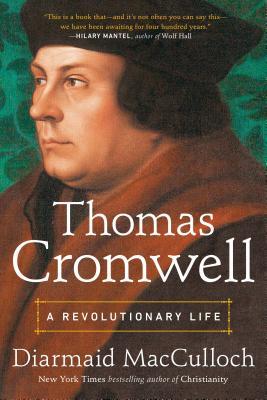 The stories of King Henry VIII and the men around him have fascinated generations of historians, but there was one man who has received a negative reputation for his actions. He was the supposed son of a butcher who rose to be Henry VIII’s right-hand man, until his dramatic fall in July 1540. Thomas Cromwell was credited for helping Henry with his Great Matter, the fall of Anne Boleyn, the establishment of the Church of England, and the disastrous marriage between Henry and Anna of Cleves. Diarmaid MacCulloch has taken on the challenge to figure out who Thomas Cromwell really was by sifting through all remaining archival records that we have from this extraordinary man. It is in this book, “Thomas Cromwell: A Revolutionary Life” that MacCulloch masterfully explores the story of this man who changed English and European history forever.
 Adventures of a Tudor Nerd