
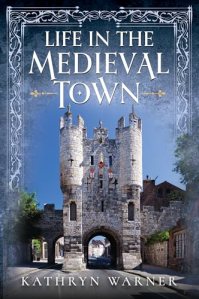
 Have you ever watched a movie, played a video game, or read a novel set in the Middle Ages and wondered if life was really like that? Was it super dirty, grimy, and deadly, or is this a fictional device to show how bad the past was compared to the present? Kathryn Warner has delved into the archives to uncover the truth about what life was like in an average medieval town for her latest book, “Life in the Medieval Town.”
I would like to thank Pen and Sword Books and Net Galley for sending me a copy of this book. I enjoyed the previous books that I have read by Warner about Medieval Europe, so when I saw this title available, it piqued my interest. I have read books about medieval life, so I wanted to see what new information she could provide to this area of social history.
As Warner explains at the beginning of this book, the modern world and the medieval world are opposites. While we in the modern era care about the latest gadgets and an excess of commodities, the medieval era cared about simplicity and owned very little. So, for those of us living in the modern world, Warner treats this book as a sort of time traveller’s guide to a medieval town. Warner chooses to highlight life in London, specifically between the reigns of Henry III and Henry VI, which is quite a range, but it shows how medieval England changed over time.
We start with how medieval people partied after a particular knighting ceremony, before moving throughout the streets of London and exploring the different occupations one could have. We then explore the brothels and the different types of people and languages one might hear on an average day. It shows the diversity of medieval England at this time. Warner also shows her audience the importance of cleanliness and how modern medieval homes could actually be with glass windows, cellars, and latrines. We get to see the different popular names and how job titles were altered in their spelling due to gender. You get to see what curfew meant, what kinds of legal punishments were available, what people ate, drank, and wore on a typical day, plus how medieval people told time, how they handled health, and how they took care of one another, even during the Black Death.
This is such a fantastic resource for medieval novices, writers, and medievalists alike. I knew quite a bit of the information in this book, but I still found some fascinating facts. Warner has an immense knowledge of the medieval era, and it shows throughout this book while maintaining an easy-to-follow writing style. If you are a medieval nerd who wants to learn more about the social history of a medieval town, I highly recommend you read “Life in the Medieval Town” by Kathryn Warner.
 Castles, the monuments of medieval times, are buildings that hold many tales. Tales of sieges and sorrow, triumphs and tribulations. Through the centuries, their stones and foundations held many secrets. Some of the stories are famous, but most are hidden in the shadows of time and are hidden in ruins. Although castles exist in numerous countries and are centuries old, the castles of medieval England tell a story of a country facing turmoil and changing European and world history forever. Malcolm Hislop, a historian and researcher who specializes in architecture and archaeology, has written a single book exploring every medieval castle and its original architecture entitled, “A Guide to the Medieval Castles of England.”
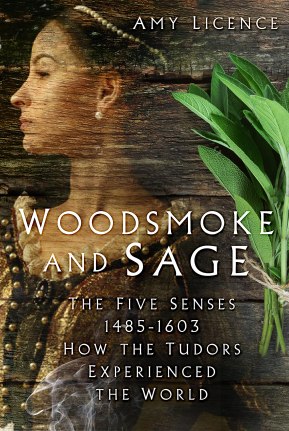 When we study history, we tend to focus on specific dates, certain people, and the stories that transformed countries forever, no matter how much of an impact they made. What is difficult about studying history is understanding how they experienced life. What did they see? How did they communicate? What did they hear during a typical day? What smells wafted through the air? How did their view on how the body worked affected what they ate and how they cured their illnesses? In her latest nonfiction book,” Woodsmoke and Sage: The Five Senses 1485-1603: How the Tudors Experienced the World”, Amy Licence has taken on the challenge of explaining the Tudor world that they knew through their senses.
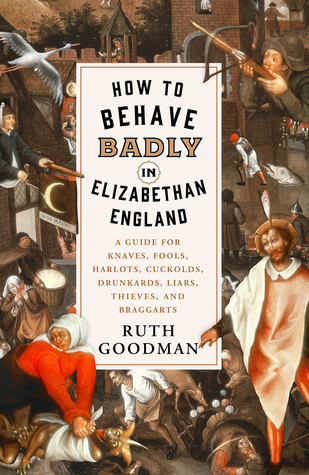 In many books about the different mannerisms and routines of different dynasties, we tend to see how the average person lived in the most prim and proper manner. How they avoided trouble at all costs to provide the best life that they could for their families. Yet, we know that there were those who did not adhere to the rules. They chose to rebel against the natural way of life. Every social echelon had their own rule-breakers, but what were these rules that they chose to break? How are these troublemakers of the past similar and different from our modern-day rebels? Famed experimental archeologist and historian Ruth Goodman takes her readers on a journey through the Elizabethan and the early Stuart eras to show how the drunkards, thieves, and knaves made a name for themselves. The name of this rather imaginative book is “How to Behave Badly in Elizabethan England: A Guide for Knaves, Fools, Harlots, Cuckolds, Drunkards, Liars, Thieves, and Braggarts”.
 Adventures of a Tudor Nerd