
 The Plantagenets, one of England’s most dynamic dynasties, were always in the middle of some sort of conflict. Whether they were fighting foreign adversaries, their own people, or their own family, it felt like the Plantagenets were always getting into some sort of trouble. And there was one king who knew how to use the weaknesses of the kings of England to his advantage. He was King Philip II of France, also known as Philip Augustus. He had to deal with four different Plantagenet kings and had a strategy for each one of them. Just what were Philip II’s strategies, and how did his reign affect English/French relationships as a whole? These questions are answered in Catherine Hanley’s book, “Nemesis: Medieval England’s Greatest Enemy.”
I would like to thank Osprey Publishing and Net Galley for sending me a copy of this book. I enjoy reading about the Plantagenets and their impact on England and Europe as a whole. When I saw that this book took a French approach to the Plantagenets and focused on Philip Augustus, it was an intriguing premise to me.
As Hanley states in the introduction, this book is not your typical biography, as she focuses on the relationship between Philip Augustus and his Plantagenet opponents. That does not mean that we do not get biographical information for Philip, who was the son of Louis VII and Adela of Blois. Per tradition, as the heir to the French throne, Philip was crowned as Junior King of France on November 1, 1179, which meant that his father was still alive when he was crowned, and he trained to become the proper King of France.
While Philip knew that he had factions to deal with inside of France, his main concerns were overseas with the Plantagenets, primarily King Henry II and his sons. Over the course of his forty-year reign, Philip dealt with Henry II, Richard I the Lionheart, John, and Henry III. Each English king presented his own challenges for Philip, but Philip took them in stride and worked hard to make France stronger. At the same time, Philip had to deal with his own family dramas. He was married three times to Isabelle of Hainault, Ingeborg of Denmark, and Agnes of Merania. It was his marriage to Agnes of Merania that gave Philip his heir, the warrior King Louis VIII of France. However, it was Ingeborg of Denmark who gave Philip the biggest headache as she never gave up fighting for her marriage.
From military to political strategies, Hanley shows how Philip maneuvered against the English, and yet she shows that he was not a perfect person or a king. Philip was a flawed human who had to deal with the cards he was dealt like anyone else. Hanley presents a comprehensive book that explores the complex nature of medieval politics and how one man battled against an entire dynasty during his reign. If you are someone who wants to explore the early Plantagenets from the eyes of their enemy, King Philip II of France, I recommend you read “Nemesis: Medieval England’s Greatest Enemy” by Catherine Hanley.
 English kings are some of the most recognizable monarchs in all of European history, and when we think of Kings of England, a few names pop into our minds. Edward, George, and William tend to be popular, but you cannot study English history without Henry. Eight kings of England were Henry, and they would change the history of England forever. These eight kings give us an entire range of what kingship was like in medieval Europe. From men born to be king to opportunists who decided to take the throne as their own, from saints to warrior kings, the Henrys of English history were a colorful group of characters. Each king has had numerous biographies written about him, but there has never been a collection of biographies about the kings named Henry until now. This is “Harry of England: The History of Eight Kings, From Henry I to Henry VIII” by Teresa Cole.
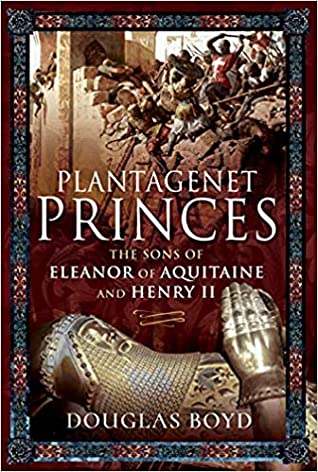 One of the most infamous families in the history of England lasted for over three hundred years and it was filled with numerous princes that fought for their right to rule, much to the chagrin of the Tudor dynasty. The Plantagenet Dynasty was full of scandals and bloodshed, testing the core values of what it meant to be a family and rulers of an emerging country like England. This dynastic clash for power that came to define this dynasty began with Henry II and his sons by his wife Eleanor of Aquitaine. When their father refused to give the boys any true power, which was to be excepted with all princes, his sons waged war against Henry II and their brothers. The stories of these bonds and what ultimately tore them asunder are told in Douglas Boyd’s latest collection of biographies aptly titled, “Plantagenet Princes: The Sons of Eleanor of Aquitaine and Henry II”.
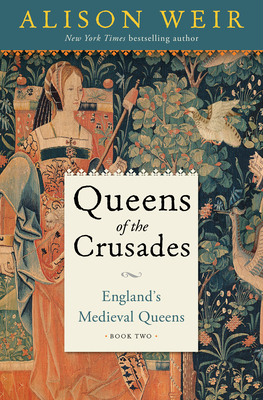 One of the most prominent royal families of English history was the Plantagenets, who reigned for over three hundred years. In the first one hundred years of this family’s infamous history, five kings ruled (the first two are considered kings of the Angevin dynasty): Henry II, Richard I, John, Henry III, and Edward I. These five kings saw England change drastically, but they also participated in the international political landscape of the day, which involved the series of wars that today we simply refer to as the Crusades. The early Plantagenet kings saw much bloodshed and war, but they were not alone in their struggle to keep the dynasty going. These men would not have gotten as far as they did without their wives who stood by their sides. In Alison Weir’s latest installment of England’s Medieval Queens series, “Queens of the Crusades”, she takes a deep dive into the lives of the first five Plantagenet queens to show how remarkable these women truly were to stand beside their husbands during the times of the Crusades in Europe.
 Two women who shared a name, related by marriage but divided by political and monetary motives. In Medieval Europe, this statement could refer to any number of women, but the two women who are the center of this particular story revolve around medieval England and the reign of King Henry III. One was Henry’s sister whose marriages and money problems were a thorn in her brother’s side. The other was Henry III’s wife who stood by his side and protected their children even when the nation despised her. Their names were Eleanor de Montfort and Eleanor of Provence respectfully; their stories are filled with disasters and triumphs that would shape how England was ruled in medieval times. Darren Baker explores their lives and the lives of their families in his latest biography, “The Two Eleanors of Henry III: The Lives of Eleanor of Provence and Eleanor De Montfort”.
 Adventures of a Tudor Nerd