
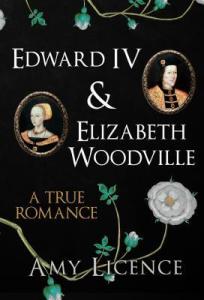
Book Review: “Edward IV & Elizabeth Woodville: A True Romance” by Amy Licence


When we think of a fairy tale romance, we think about stories like Cinderella. A girl of lower status captures the heart of the handsome prince. They overcome the odds and live happily ever after. But that kind of romance only exists in books. The closest story we have to that in medieval English history might be the story of Edward IV and Elizabeth Woodville. A widow who begged the handsome and younger King of England for help, but ended up becoming his wife. It’s a story that any romance-loving history lover will swoon over, but how accurate is that story? What is the real story of Edward IV and Elizabeth Woodville? Amy Licence explores the nature of their relationship in her book, “Edward IV & Elizabeth Woodville: A True Romance.”

I have been reading books by Amy Licence for a few years now, so when I saw this title, I knew I wanted to read it. The Wars of the Roses is one of my favorite areas of history to study, but I have not read a joint biography of Edward IV and Elizabeth Woodville. When I saw this title, I knew that this was a must-read for me.

We begin in 1431 in Rouen, France, where the Maid of Orleans, who we know as Joan of Arc, is about to die on the pyre. In the same town, eleven years later, the future King Edward IV would be born to Cecily Neville and Richard, Duke of York. Edward’s future bride, Elizabeth Woodville, was born around six years after the death of Joan of Arc. Her mother, Jacquetta of Luxembourg, had married below her station after the death of her first husband, John Duke of Bedford passed away; Jacquetta would marry a knight, Sir Richard Woodville, Elizabeth’s father. Jacquetta was close to King Henry VI and Margaret of Anjou, the Lancastrian rulers of England, and Edward IV’s father, Richard, Duke of York, would fight against the Lancastrians for the right to rule England during the conflict that we know today as the Wars of the Roses. To top it all off, Elizabeth was married to Sir John Grey of Groby Old Hall, a man who fought and died for King Henry VI.

In other words, Edward and Elizabeth were on different sides of the Wars of the Roses, but somehow these two found each other after Edward IV became king. The obvious choice for Edward’s bride should have been a foreign princess to create an alliance, but there was something about Elizabeth that convinced Edward to forgo the wisdom of Warwick and marry her. Their court was based on the Burgundian court. They had a large family, but the fight for the crown with the Lancastrian cause and Edward’s own family continued. Just when the throne is secure, Edward passes away. Elizabeth had to fight for her children, fight against her brother-in-law, and join forces with her enemy Margaret Beaufort to help usher in the Tudor dynasty.

Licence was able to present the information not only about this period, but also about Edward and Elizabeth in such a comprehensive way that both novices and experts can understand. She can present theories that she either agrees with or disagrees with respectfully. I thoroughly enjoyed this joint biography as it gave me a better appreciation for the reign of Edward IV and Elizabeth Woodville. If you want to learn more about the Wars of the Roses, the first Yorkist king, and his wife, I highly recommend you read “Edward & Elizabeth Woodville: A True Romance” by Amy Licence.
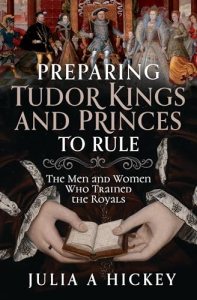
Book Review: “Preparing Tudor Kings and Princes to Rule: The Men and Women Who Trained the Royals” by Julia A. Hickey

In life, when it comes to a new skill or job, you must be trained to become good at it. The same can be said for the monarchy, which in a sense is a job that encompasses one’s entire life. You have to understand different languages, rhetoric, the arts of dancing, and music, as well as diplomacy and physical activities if you want to rule a nation. It may seem like a lot for one person to handle, but from the moment of their birth, a prince or princess has a team of people behind them to make sure that they are ready to either rule their home country or create an alliance with other nations. The Tudors knew how important educating their future monarchs was for the survival of the dynasty. Julia A. Hickey examines the people behind the teams raising the future Tudor monarchs in her book, “Preparing Tudor Kings and Princes to Rule: The Men and Women Who Trained the Royals.”
I want to thank Pen and Sword Books and Net Galley for sending me a copy of this book. The premise of this book was fascinating to me and I wanted to see if Hickey would introduce any new people from the Tudor dynasty in this book.

Hickey begins her book by exploring the origins of the Tudor family, starting with the matriarch herself Margaret Beaufort, followed by Owen, Edmund, and Jasper Tudor, and concluding with how Henry Tudor’s education and his lifestyle shaped him to become the first Tudor king. While I do enjoy a review section about the Wars of the Roses, I felt like this section went a bit too long.

Once we see Henry Tudor on the throne, we get to see how the Tudor dynasty grew with the children of Henry Tudor and Elizabeth of York. We get to see how Arthur Tudor as the heir had a much different education than his brother Henry, who was deemed a spare. The education of the princes was vastly different than the education allocated to the princesses even though it was based on humanism. With the death of Prince Arthur, Henry had to go through a crash course on how to rule a country before his father died in 1509. Hickey also shows her audience how the children of Henry VIII, Mary I, Henry Fitzroy, Elizabeth I, and Edward VI, were raised and educated. She also takes the time to show what happens to his children after Henry VIII’s death. Finally, we do get appendixes that feature mini-biographies for all the men and women who are featured in this book to show a different aspect of the Tudor court.

Overall, I found this a rather nifty little book about the Tudor court. Hickey does a decent job of telling the stories of these men and women who trained the Tudor rulers, both male and female. If you want a book that explores what it takes to rule England during the Tudor dynasty, you should check out “Preparing Tudor Kings and Princes to Rule: The Men and Women Who Trained the Royals” by Julia A. Hickey.

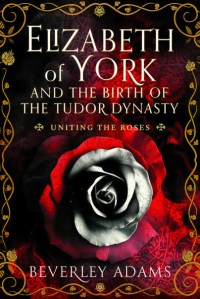
Book Review: “Elizabeth of York and the Birth of the Tudor Dynasty: Uniting the Roses” by Beverley Adams

Throughout English history, some of the most famous queens have been associated with the Tudor dynasty. We have the six wives of Henry VIII (Catherine of Aragon, Anne Boleyn, Jane Seymour, Anna of Cleves, Catherine Howard, and Catherine Parr), Queen Mary I, and Queen Elizabeth I. However, one Tudor queen is often overlooked for her daughters-in-law and granddaughters, the first Tudor queen, Elizabeth of York. So who was Elizabeth of York and what role did she play in the transition between the Plantagenet dynasty and the Tudor dynasty? Beverley Adams hopes to enlighten readers about this remarkable queen in her latest book, “Elizabeth of York and the Birth of the Tudor Dynasty: Uniting the Roses.”

I want to thank Pen and Sword Books and Net Galley for sending me a copy of this book. While I know quite a bit about Elizabeth of York, the Wars of the Roses, and the origins of the Tudor dynasty, I wanted to see how Adams would portray these topics for beginners. 

To begin with, Adams lays out the origins of the conflict that we know today as the Wars of the Roses with Edward III and his sons, John of Gaunt 1st Duke of Lancaster, and Edmund of Langley, 1st Duke of York. This led to a clash between King Henry VI and Richard Duke of York. Elizabeth of York’s father, the future King Edward IV, was the son of Richard Duke of York and he had to fight for his throne. Adams explores Elizabeth’s childhood as the eldest child of Edward IV and his wife Elizabeth Woodville during this tumultuous period of English history, which would form the foundation of what kind of queen she would be in the future.

Everything changed when Edward IV died suddenly, which meant that Elizabeth’s younger brother became Edward V and left Richard Duke of Gloucester as Lord Protector. For some reason, Richard Duke of Gloucester decided to take matters into his own hands, took control of the country, declared the children of Edward IV and Elizabeth Woodville illegitimate (including Elizabeth of York), and was crowned King Richard III in a matter of months. Some resisted the new king including the son of Margaret Beaufort and Edmund Tudor, Henry Tudor. Margaret Beaufort and Elizabeth Woodville arranged a marriage between Henry and Elizabeth that would occur if Henry was able to defeat Richard III and become King of England, which he did at the Battle of Bosworth Field. The rest of this book is dedicated to showing how Elizabeth of York was as a wife, queen, and mother as she dealt with death, treachery from Lambert Simnel and Perkin Warbeck, and triumphs as she was able to see the start of the Tudor dynasty.

I think Adams does a decent job with a book that is an introduction to Elizabeth of York, the Wars of the Roses, and the beginning of the Tudor dynasty. There are some myths that she repeats to debunk, but I feel like, in some places, Elizabeth of York was not the main focus, which was a bit disappointing. Overall, if you want a solid introductory book to the life and times of the first Tudor queen, I would recommend you read, “Elizabeth of York and the Birth of the Tudor Dynasty: Uniting the Roses” by Beverley Adams.

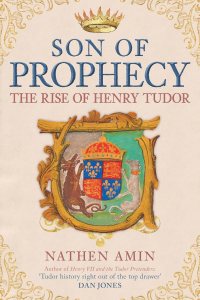
Book Review: “Son of Prophecy: The Rise of Henry Tudor” by Nathen Amin

The date is August 22, 1485, and a young man stands in the middle of a battlefield. He has done what seemed nigh impossible, he defeated the last Plantagenet king Richard III to become the new King of England. His heritage makes this man unique and qualified to start a new dynasty. His mother’s family the Beauforts have been explored quite heavily by historians and authors alike. They see this victory as a change in English history whereas his father’s family sees it as a sign of something deeper. To the Tudors and Henry’s fellow Welshmen, it is the fulfillment of a centuries-old prophecy. So who were Henry Tudor’s ancestors and what did it mean for Henry to be the titular Son of Prophecy? Nathen Amin tells the remarkable story of the Tudors and how their struggles and triumphs led to Henry Tudor taking the throne in his latest book, “ Son of Prophecy: The Rise of Henry Tudor.”

I want to thank Amberley Publishing for sending me a copy of this book. I have enjoyed Amin’s previous books, “The House of Beaufort: The Bastard Line that Captured the Crown” and “Henry VII and the Tudor Pretenders: Simnel, Warbeck, and Warwick,” When I heard that he was writing a book about the origins of the Tudors from the Welsh perspective, I knew I had to read it. I don’t know much about Welsh history, so I was looking forward to learning more. 

Amin begins by explaining that while those who study the life of Henry Tudor know that he was Welsh, they don’t highlight his Welshness as a unique aspect of his life. However, as Amin argues, it is the king’s Welsh heritage that makes his story so fascinating as the Tudor story in Wales spans eight generations and it is the story of warriors and diplomats. We begin with the warrior Ednyfed Fychan, who served Llwelyn ab Iorwerth Prince of Ewynedd during the Welsh War of Independence. Now, for those who are paying attention, you will notice that his surname is not Tudor, but Amin takes the time to explain the origins of the Tudor name as well as how English and Welsh relationships changed over time, starting at the time of the Saxons to the start of the Tudor dynasty. 

What I found fascinating is how the family that would later be known as the Tudors in English history were not afraid to get their hands dirty and be at the forefront of change for Wales. They fought tooth and nail for their Welsh rights and those who considered themselves the Prince of Wales, even if it meant putting their lives at risk. It was the stories of these men who created the foundation for Owen ap Maredudd ap Tudur (Owen Tudor) to leave his native Wales for England, work under Walter Hungerford, fall in love and marry the Dowager Queen Katherine of Valois, and have his sons Edmund and Jasper Tudor. This is the point that most people know as the “origins of the Tudors,” but by going back, Amin is showing his audience the depth of Henry’s Welsh roots and it would be on that battlefield on that August day where that Welsh loyalty would become a defining factor between victory or defeat. 

I was enthralled by this book and the copious amounts of notes that I took while reading. It was so much fun learning about historical events and figures that were unfamiliar to me in the context of the Tudor story. This book will revolutionize how you view the Tudors and how Henry Tudor gained the throne. If you are a Tudor nerd who wants to learn more about the Welsh connections to this dynasty, “Son of Prophecy: The Rise of Henry Tudor” by Nathen Amin is an absolute must-read.

Book Review: “The Godmother’s Secret” by Elizabeth St. John

62232439When one says “the Princes in the Tower,” a few images pop into our mind. Two young boys were killed in the Tower by their evil uncle, who would become King Richard III. At least, that is the image that the Tudors wanted the world to see, and for centuries, that story has often been told. However, as research has expanded into who Richard III was, the tale of these two boys and their ultimate fate has become even murkier with new suspects and the question of whether the boys were murdered. Elizabeth St. John decided to take on the mystery of the Princes of the Tower with her twist to the tale in her latest novel, “The Godmother’s Secret.”

Thank you, Elizabeth St. John, for sending me a copy of your latest novel. I have found the mystery of the Princes of the Tower fascinating, and when I heard that this novel had a different angle to their tale, I knew I wanted to read it.

We begin our journey by introducing Lady Elysabeth Scrope, the wife of John Scrope and the half-sister to Margaret Beaufort, going into the sanctuary with Elizabeth Woodville. She is there to act as the godmother for Elizabeth Woodville’s first son, the future King Edward V, at the request of King Henry VI. Elysabeth is reluctant to help the Yorkist cause, as she was raised as a Lancastrian, but her husband is loyal to the Yorkists. She promises to keep Edward safe from harm, which would prove more challenging with the death of King Edward IV in 1483.

This should be a happy time for Elysabeth, John, and the new King Edward V, but a sermon and a coup caused everything to come crashing down. Edward and his brother Richard are removed to the Tower of London while their uncle becomes King Richard III. Along the way, Margaret Beaufort schemes to get her beloved son, Henry Tudor, to become the next king of England. Torn between her blood family and her family built by loyalty, Elysabeth must navigate the ever-changing political field of 1483-1485 to protect the princes, no matter the cost.

I thoroughly enjoyed being introduced to Lady Elysabeth Scrope and John Scrope and seeing the events unfold while they weathered the political storm the best they could. St. John has created a believable and compelling story about what might have happened to these two boys whose disappearance has captured our imaginations for centuries. She attempts to answer some age-old questions, like what might have happened to the boys, did Richard III have them killed, and did Margaret Beaufort have something to do with the princes’ disappearance? Suppose you want an engaging novel that gives a different perspective about what might have happened to the Princes in the Tower. In that case, I highly recommend you read “The Godmother’s Secret” by Elizabeth St. John.

Book Review: “The Last White Rose: A Novel of Elizabeth of York” by Alison Weir

58735042During medieval wars, one’s fate is often determined by the spin of the Wheel of Fortune, even for those who did not fight a single battle. One could be living a life of luxury, stability reigning supreme, and is destined to marry a foreign king or prince, but when the wheel begins to spin, all seems lost, and the things that once were as good as guaranteed fall by the wayside. This description could fit any number of stories from the past. Still, the one highlighted in this particular novel is the story of the eldest daughter of King Edward IV and Elizabeth Woodville and the first Tudor queen. In the first book of her latest book series, “The Last White Rose: A Novel of Elizabeth of York,” Alison Weir shows how one woman was able to ride the highs and lows of life to secure her family’s legacy and transform English history forever.
I want to thank Penguin Random House- Ballantine Books and NetGalley for sending me a copy of this novel. I am always thrilled when a new Alison Weir book is announced, whether fiction or nonfiction. I thoroughly enjoyed the Six Tudor Queens series, so when I heard that there would be a new book series with the story of Elizabeth of York being the first novel, I knew I wanted to read it. Of course, I had read her biography of Elizabeth of York, so I wanted to see how her research would translate into a historical fiction novel.

Elizabeth of York was born and raised to be a queen. As the eldest daughter of Edward IV and Elizabeth Woodville, it was her destiny to be married to a king or a prince to strengthen England through a foreign alliance. However, her life took a drastic turn when her father tragically died. Her brothers disappeared when they were in the Tower of London awaiting the coronation of Edward V, which never occurred. Richard III, Elizabeth’s uncle, became king, which forced Elizabeth Woodville to seek sanctuary with her daughters. A daring plan was crafted to unite the houses of York and Lancaster through marriage; Elizabeth of York was to marry a young man in exile, Henry Tudor.

The marriage created the Tudor dynasty, but that does not mean Elizabeth and Henry’s married life was full of sunshine and roses. The road to securing their dynasty was full of heartache and plenty of pretenders. The love between Elizabeth and Henry and Elizabeth’s love for her family allowed the dynasty to survive the turbulent times.

I loved the relationship that Weir was able to craft between Elizabeth, Henry, and her family. However, there were elements of the story that I disagreed with; they were minor, like her portrayal of Elizabeth’s relationship with Richard III and the idea that Arthur had been very ill since his birth. These elements did not take away from the joy I had reading this novel.

Overall, I found the first novel of the Tudor Roses series engaging and a delight to read. Alison Weir has brought the tragic yet triumphant story of the first Tudor queen to life through excellent prose and captivating details. If you are a fan of Alison Weir and her historical fiction novels, or just a fan of Tudor novels in general, you will find “The Last White Rose: A Novel of Elizabeth of York” an enchanting escape into the past.

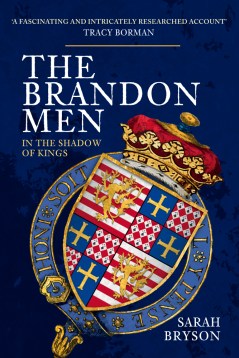
Book Review: “The Brandon Men: In the Shadow of Kings” by Sarah Bryson

50419855Loyalty to one’s king was imperative during times of war and strife. This statement was painfully true during periods of civil war when cousins fought against cousins. The Wars of the Roses was where we see families rise and fall like the tides, depending on which side they were loyal to and who was on the throne. One family who was able to navigate this political quagmire and end up on the side that would win in the end was the Brandons. Many recognize the name Brandon because of Charles Brandon and his rise in the court of Henry VIII, but how did they reach that point? What are the origins of the Brandon family? In her latest book, “The Brandon Men: In the Shadow of Kings”, Sarah Bryson takes her readers on a ride to find out what loyalty to the crown gave this family and why their legacy lives on today.
I would like to thank Amberley Publishing for sending me a copy of this book. I have read Bryson’s first book on Mary Tudor and her marriage to Charles Brandon, which I found a delightful read. When I heard about this book, I was interested in reading it as I have always enjoyed the story of Charles Brandon and I wanted to know more about his family.

Bryson begins her journey into the Brandon family with William Brandon, who lived during the reign of King Henry VI and the origins of the Wars of the Roses. William’s gradual rise in power is nothing short of extraordinary and it extended to his son, also named William. William Sr would serve Henry VI, Edward IV, and Richard III, even when his son William decided to work with Henry Tudor. William’s loyalty to Henry Tudor would ultimately cost him his life as he died at the Battle of Bosworth Field as the standard-bearer for the would-be king.

The bulk of this particular title explores the life of Charles Brandon and his relationship with his best friend, King Henry VIII. We have seen how loyal the Brandons can be with the first two generations, but Charles took it to a whole new level. Since Bryson had mentioned a good portion of Charles’ life in her previous book, this felt a bit like a review. I know Charles is her favorite Brandon man, but I wish she would have focused a bit more on his grandfather, father, and his uncle, Sir Thomas Brandon. These men were crucial to understanding what kind of man Charles would become and why he was so loyal to the crown, even if he didn’t agree with all the decisions that Henry VIII made.

Overall, I found this book informative and easy to follow. Bryson has a passion for the Brandon family, and it shows with this particular title. The family trees and the letters that she included in this book are impressive and give the reader a deeper understanding of the family dynamic as well as the dynamic between the Brandons and the kings that they served. If you are interested in learning more about the Brandon family and the depth of their loyalty to the English crown, I highly suggest you read, “The Brandon Men: In the Shadow of Kings” by Sarah Bryson.

Book Review: “The Beaufort Woman: Book Two of The Beaufort Chronicle” by Judith Arnopp

download (3)A young woman separated from her only son as a war divides the nation that she dearly loves. The struggle between York and Lancaster, the Wars of the Roses, grows in intensity and the only hope for the Lancastrians is the son of Margaret Beaufort, Henry Tudor. To keep him safe, Margaret must allow him to go into hiding as she adapts to the court of Edward IV and his wife Elizabeth Woodville. Margaret’s journey through love, death, and court intrigue continues in Judith Arnopp’s second book in her Beaufort Chronicle, “The Beaufort Woman”.
As someone who is a fan of Margaret Beaufort and her life story, I have been finding myself enjoying The Beaufort Chronicle series by Judith Arnopp. Since I read the first book, “The Beaufort Bride”, I knew that I wanted to continue Margaret’s adventure.

We join Margaret as she is enjoying her third marriage to Sir Henry Stafford. This was probably her happiest and longest marriage, yet it is not elaborated on much. I think the way that Arnopp describes this relationship is thoughtful, considerate, and full of love. Obviously, like most relationships, there were hardships between Henry and Margaret, but Henry knew that what Margaret was doing was for her son. Life looks like it is going Margaret’s way, but then her husband Henry dies and she must make a difficult choice.

Margaret decides to choose her fourth and final husband, Thomas Stanley. Unlike her marriage to Henry, Margaret never really loved Thomas. Thomas was more of a tool to get her into the court of Edward IV to make sure her beloved son Henry could come home. When I have read Margaret’s biographies in the past, I have always wondered what life must have been like for her while she was in the court of her former enemies. To see her interacting with Elizabeth Woodville and her children was a delight and makes you wonder what life might have been like for Margaret if she had more children.

With the sudden death of King Edward IV in 1483 and the mysterious affair with his sons, Edward’s brother becomes King Richard III and fortune’s wheel takes another turn for Margaret. She must take dangerous steps to make sure that her beloved son can return home, even if it means risking her own. The amount of courage and patience that Margaret had was nothing short of extraordinary. You cannot help but admire Arnopp’s Margaret Beaufort.

I found this a thrilling second book to this stunning trilogy. Arnopp made Margaret Beaufort and her family even more relatable. I felt sympathy for Margaret as she had to make some extremely difficult decisions. I did know what was going to happen, but I still wanted to continue reading just to see how Arnopp would interpret the events in Margaret’s life. If you have read “The Beaufort Bride” and you want to continue the journey, you need to read “The Beaufort Woman” by Judith Arnopp.

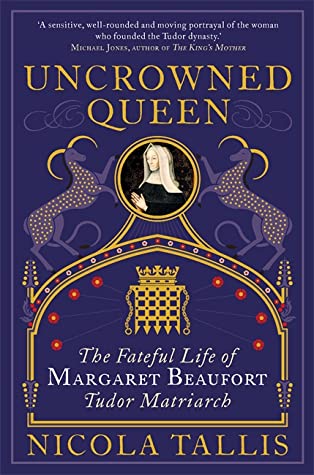
Book Review: “Uncrowned Queen: The Fateful Life of Margaret Beaufort Tudor Matriarch” by Nicola Tallis

45992763._SY475_The stories of the women of the Wars of the Roses have become very popular in recent years. Tales of Jacquetta Woodville, Elizabeth Woodville, Margaret of Anjou, and Elizabeth of York tend to be favorites of those who read historical fiction. However, there was one woman whose life story is so much better than fiction. She was married 3 or 4 times (depending on if you count her first marriage), had only one beloved son who she helped rise to become King of England, and was considered one of the most powerful women of her time. In the modern era of historical dramas, Margaret Beaufort has been portrayed as malicious and cunning, someone who plotted against the Yorkist cause. With all of these conflicting reports about this one woman, can we ever find out the truth about her life? What kind of person was Margaret Beaufort? Nicola Tallis has taken up the challenge to answer these questions to find the truth about this remarkable woman in her latest biography, “Uncrowned Queen: The Fateful Life of Margaret Beaufort Tudor Matriarch”.

I have been a huge fan of Margaret Beaufort, ever since I first heard about her rather extraordinary life. When I heard that Nicola Tallis was writing a new biography about her, I knew for a fact that I wanted to read it. Like Tallis’ previous biography that I read, this was an absolute joy to read.

From the moment she was born, Margaret was a useful pawn for the marriage market. Her father, John Beaufort, Duke of Somerset, was the grandson of John of Gaunt and Katherine Swynford and was an extremely powerful man. When he died, perhaps by suicide after a failed military campaign, Margaret was his only heiress. She was put on the marriage market at a young age and was perhaps married when she was quite young, but the first marriage she ever acknowledged was to Edmund Tudor, the father of Henry Tudor when she was 12; she would give birth to Henry when she was only 13 and never had any more children due to the trauma that she endured at such a young age.

It was this bond between mother and son that would define Margaret’s life and her motivation to keep on going, even when her life hung in the balance. After Edmund died, she was separated from Henry for years, meaning that if she wanted to protect her son, she would have to marry men of power, like her third husband, Henry Stafford, and her fourth husband, Thomas Stanley. These men would prove to be husbands that Margaret could rely on to make sure that Henry was able to survive during the Wars of the Roses. Margaret got along relatively well with kings like Henry VI and Edward IV, but to say that her relationship with Richard III was disastrous would be an understatement. Tallis takes the time to explore this relationship and to debunk the myth that she had something to do with the Princes in the Tower and their disappearances.
When Henry Tudor defeated Richard III at the Battle of Bosworth Field on August 22, 1485, the Tudor dynasty began and Margaret took up the new role as the King’s Mother. There were still triumphs and heartaches that Margaret had to endure, but we finally were able to see her piety and her desire to help out educational institutions during this last part of her life. By diving into the records, Tallis can reveal the truth about Margaret Beaufort’s life and her relationships with her ever-expanding family.

Tallis makes a triumphant return with this meticulously researched biography about the remarkable Margaret Beaufort. It is engaging and truly one of the best biographies about the matriarch of the Tudor dynasty. This is a must-read for anyone curious about the Wars of the Roses, the beginning of the Tudor dynasty, and this strong mother caught in the middle. I highly recommend “Uncrowned Queen: The Fateful Life of Margaret Beaufort Tudor Matriarch” by Nicola Tallis.

Book Review: “Following in the Footsteps of Henry Tudor: A Historical Journey From Pembroke to Bosworth” by Phil Carradice

43972620In the study of history, we tend to look at the beginning and the end of a battle and why they were fought. We rarely pay attention to the march that led to the battle, but when we do, there is a distinct reason why. One particular case is of Henry Tudor’s march to the Battle of Bosworth Field. It is a tale that started from his birth at Pembroke Castle to being an exile and then from an exile to being King of England. The story of how an exile became a king and founded the infamous Tudor dynasty deserves attention. Phil Carradice believed that it was time for the story of the first Tudor king and his march to destiny to be told in his latest book, “Following in the Footsteps of Henry Tudor: A Historical Journey From Pembroke to Bosworth”.

I would like to thank Pen and Sword Books for sending me a copy of this book. This is the second book in the “Following in the Footsteps” series that I have read, so I was cautiously optimistic. I wanted to learn more about Henry Tudor’s march to Bosworth and I certainly did in this book.

Carradice begins his book with a novel-like description of Henry, or “Harri”, and his uncle Jasper Tudor landing in Wales. As a reader, I was a bit confused about the direction that Carradice was taking by using this approach since this is a historical non-fiction book instead of historical fiction, but Carradice was able to tie it in nicely. He then explains, rather briefly, the conflict known as the Wars of the Roses and how England got to the point where it was Henry Tudor versus King Richard III for the throne. It is this information that is crucial for readers to understand Henry’s motive for claiming the throne and how it was an arduous task to achieve. It was in these early chapters that we see how Henry went from a regular boy to an exile who became a thorn in the side of the Yorkist Kings Edward IV and Richard III.

The bulk of Carradice’s book deals with what happens after Henry Tudor and his men land in Wales. He deals with issues of exactly where Henry landed and why the traditional place for the landing does not make a whole lot of sense. Carradice also takes on the legends that surrounded the different locations during the march and compared them to the facts that we do know about the march, primarily from Polydore Vergil. The one problem that I had with this book was that Carradice did not include a map of the march. I was not familiar with the locations, particularly the Welsh locations, so it was difficult to visualize the distances. What I did appreciate was the fact that as the battle approached, Carradice showed how both Henry and Richard III must have been feeling and how their decisions on that fateful day made all the difference.

Overall, I was pleasantly surprised by this book. It may be small, but it is rather mighty with all the information that it contains. Carradice’s writing style makes this book feel like a historical fiction novel with a plethora of information one expects from a historical nonfiction book. If you want a great introduction book to Henry Tudor’s march to Bosworth Field and the beginning of the Tudor dynasty, I highly recommend you read, “Following in the Footsteps of Henry Tudor: A Historical Journey From Pembroke to Bosworth” by Phil Carradice.