
 During medieval wars, one’s fate is often determined by the spin of the Wheel of Fortune, even for those who did not fight a single battle. One could be living a life of luxury, stability reigning supreme, and is destined to marry a foreign king or prince, but when the wheel begins to spin, all seems lost, and the things that once were as good as guaranteed fall by the wayside. This description could fit any number of stories from the past. Still, the one highlighted in this particular novel is the story of the eldest daughter of King Edward IV and Elizabeth Woodville and the first Tudor queen. In the first book of her latest book series, “The Last White Rose: A Novel of Elizabeth of York,” Alison Weir shows how one woman was able to ride the highs and lows of life to secure her family’s legacy and transform English history forever.
I want to thank Penguin Random House- Ballantine Books and NetGalley for sending me a copy of this novel. I am always thrilled when a new Alison Weir book is announced, whether fiction or nonfiction. I thoroughly enjoyed the Six Tudor Queens series, so when I heard that there would be a new book series with the story of Elizabeth of York being the first novel, I knew I wanted to read it. Of course, I had read her biography of Elizabeth of York, so I wanted to see how her research would translate into a historical fiction novel.
Elizabeth of York was born and raised to be a queen. As the eldest daughter of Edward IV and Elizabeth Woodville, it was her destiny to be married to a king or a prince to strengthen England through a foreign alliance. However, her life took a drastic turn when her father tragically died. Her brothers disappeared when they were in the Tower of London awaiting the coronation of Edward V, which never occurred. Richard III, Elizabeth’s uncle, became king, which forced Elizabeth Woodville to seek sanctuary with her daughters. A daring plan was crafted to unite the houses of York and Lancaster through marriage; Elizabeth of York was to marry a young man in exile, Henry Tudor.
The marriage created the Tudor dynasty, but that does not mean Elizabeth and Henry’s married life was full of sunshine and roses. The road to securing their dynasty was full of heartache and plenty of pretenders. The love between Elizabeth and Henry and Elizabeth’s love for her family allowed the dynasty to survive the turbulent times.
I loved the relationship that Weir was able to craft between Elizabeth, Henry, and her family. However, there were elements of the story that I disagreed with; they were minor, like her portrayal of Elizabeth’s relationship with Richard III and the idea that Arthur had been very ill since his birth. These elements did not take away from the joy I had reading this novel.
Overall, I found the first novel of the Tudor Roses series engaging and a delight to read. Alison Weir has brought the tragic yet triumphant story of the first Tudor queen to life through excellent prose and captivating details. If you are a fan of Alison Weir and her historical fiction novels, or just a fan of Tudor novels in general, you will find “The Last White Rose: A Novel of Elizabeth of York” an enchanting escape into the past.
 In history, the stories of women closest to those who sat on the throne tend to shine a bit brighter than others. Their tales give us great insight into how their respective countries were run and how dangerous it could be to marry someone with royal blood in their veins. However, some of the tales get lost in the annals of the past, only to be discovered much later. One of those tales is the story of Cecily Bonville- Grey, the wife of Thomas Grey Marquis of Dorset. In her own right, an extremely wealthy woman, her marriage into the Grey family would help define the succession issue during the late Tudor dynasty. Her story is finally told in Sarah J. Hodder’s latest book, “Cecily Bonville-Grey- Marchioness of Dorset: From Riches to Royalty.”
 When one studies a specific dynasty, we tend to focus on the stories of those who rule their respective countries and explore the men who influenced the king’s decisions. A dynasty’s legacy tends to be viewed from the military and legal victories of the men, but just as important are the women who stood beside the king. Royal women tend to be considered side characters of the dynasty who were only crucial for their inheritance, who they married, and the children they could produce. But if we focused on the story of the royal women in a specific dynasty, what could we learn about the dynasty? Amy Licence took this concept to explore women’s voices and decided to tackle the Tudor dynasty in her latest book, “Tudor Roses: From Margaret Beaufort to Elizabeth I.”
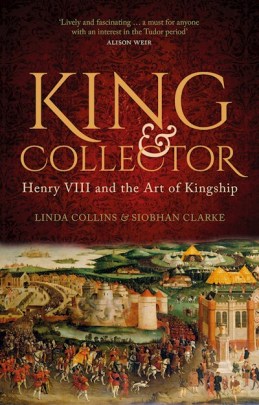 When we think of the legacy of King Henry VIII, a few descriptions come to mind—married six times, father of three children who would be the king and queens of England one day. We often see him as a man conflicted with religious changes and someone who could be tyrannical when dispatching his enemies and those closest to him. We don’t usually associate Henry VIII with a collector and patron of fine art, but his collection would help bring the Royal Collection to life. The artwork that Henry VIII commissioned and collected tells how he wanted to be viewed by the world. In “King and Collector: Henry VIII and the Art of Kingship,” Linda Collins and Siobhan Clarke peel back the layers of Tudor propaganda to show the truth about King Henry VIII and the artists who made his ideal image.
 When we think about love, we have ideas about how people fall in love through dating and wooing one another. Sweet words and gestures. Flowers and chocolate. Dates at fun venues and romantic dinners. This is a more modern interpretation of romance and love, which was vastly different than the concept of courtly love that was common in royal circles in medieval Europe. What exactly was courtly love, and how did it play a role in the Tudor dynasty? Sarah Gristwood explores this topic in her latest nonfiction book, “The Tudors in Love: The Courtly Code Behind the Last Medieval Dynasty.”
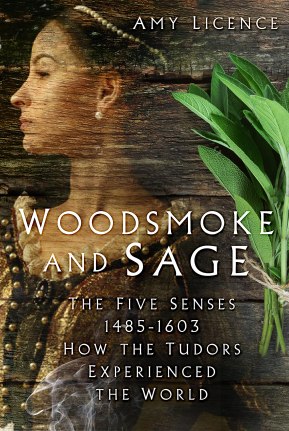 When we study history, we tend to focus on specific dates, certain people, and the stories that transformed countries forever, no matter how much of an impact they made. What is difficult about studying history is understanding how they experienced life. What did they see? How did they communicate? What did they hear during a typical day? What smells wafted through the air? How did their view on how the body worked affected what they ate and how they cured their illnesses? In her latest nonfiction book,” Woodsmoke and Sage: The Five Senses 1485-1603: How the Tudors Experienced the World”, Amy Licence has taken on the challenge of explaining the Tudor world that they knew through their senses.
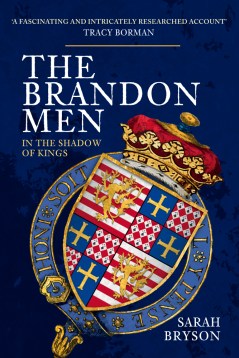 Loyalty to one’s king was imperative during times of war and strife. This statement was painfully true during periods of civil war when cousins fought against cousins. The Wars of the Roses was where we see families rise and fall like the tides, depending on which side they were loyal to and who was on the throne. One family who was able to navigate this political quagmire and end up on the side that would win in the end was the Brandons. Many recognize the name Brandon because of Charles Brandon and his rise in the court of Henry VIII, but how did they reach that point? What are the origins of the Brandon family? In her latest book, “The Brandon Men: In the Shadow of Kings”, Sarah Bryson takes her readers on a ride to find out what loyalty to the crown gave this family and why their legacy lives on today.
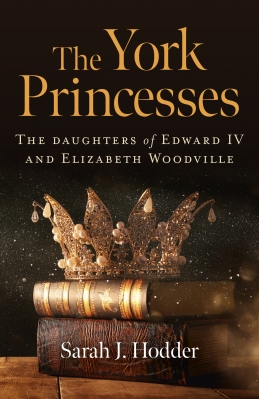 The life of a medieval princess was not a life of luxury that we often see in fantasy films. It can be filled with lovely gowns and castles, but it can change in an instance. Take, for example, the lives of the daughters of King Edward IV and Elizabeth Woodville. One minute their father was King of England and life was comfortable; the next minute, they were in the sanctuary, hoping and praying that they would be able to be reunited with their father one day. Their lives were planned out for them when their father was alive, but when Edward IV died unexpectedly in April 1483, the princesses found their world taking another turn. We know what happened with the eldest daughter, Elizabeth of York, as she married Henry VII and became the first Tudor queen, but what about her sisters? In her second book, “The York Princesses: The Daughters of Edward IV and Elizabeth Woodville”, Sarah J. Hodder explores what happened to Elizabeth of York and her sisters once the House of York fell and the Tudors became the new dynasty.
 In 1483, King Edward IV’s family received a devastating announcement; the king in the prime of his life died, leaving the throne to his young son Edward V. However, neither Edward V nor his younger brother Richard of York would ever see the throne. Instead, they were taken to the Tower of London by their protector, Richard of Gloucester, for protection, never to be seen again. For over five hundred years, many theories have emerged about what happened to the princes in the tower and who might have possibly killed the boys. In MJ Trow’s latest book, “The Killer of the Princes in the Tower: A New Suspect Revealed”, he works hard to uncover the truth of what might have happened to the sons of King Edward IV.
 Adventures of a Tudor Nerd