
 England throughout the centuries has known internal strife with civil wars to determine who had the right to rule the island nation. None more so than in the fifteenth century when a tug of war for the English crown broke out. Today, we call this time period “The Wars of the Roses”, but what was it all about? Who were the main figures during this time? What were the crucial battles that defined these wars? How did the Plantagenet Dynasty fall and how did the Tudors become the new dynasty to rule England? These questions and more are explored in Dan Jones’ book, “The Wars of the Roses: The Fall of the Plantagenets and the Rise of the Tudors”.
I will admit that this was not my first time reading this particular book. I did borrow it from my local library and read it a few years ago, but I enjoyed it so much that I decided that I wanted to add it to my personal collection.
Jones begins his book with the horrific execution of the elderly Margaret Pole, the last white rose of York. Her death had more to do with her Plantagenet blood and the fact that she was the daughter of George, Duke of Clarence, than with any crime she committed. It was the royal blood and who had the right to rule that was at the heart of the Wars of the Roses, as Jones goes on to explain.
Although the true origins of the conflict go back to the sons of Edward III and Philippa of Hainault, Jones chooses to explore the reign of King Henry V, Catherine of Valois, and their son Henry VI. When Henry V tragically died of dysentery, his infant son Henry VI became king of both England and France. This wouldn’t have been a problem if Henry VI was as strong as his father, but alas, as king was very weak, which meant that he needed help to rule his kingdoms. It was the rivals between the powerful men and women behind the crown, like Richard, Duke of York and Margaret of Anjou, which led to the thirty years of civil wars.
What I appreciate about Jones’ book is that his focus is on the people who made the Wars of the Roses so fun to study. From Henry VI and his dynamic wife Margaret of Anjou to the sons of Richard duke of York; Edward IV, Richard III ( Ricardians might not agree with Jones’ assessment of Richard III) and George Duke of Clarence. Then there are figures who stand on their own who worked behind the scenes, like Warwick “The Kingmaker”, Margaret Beaufort, Owen and Jasper Tudor, the Princes in the Tower, and the ultimate victor, Henry VII.
Jones was able to weave the stories of these extraordinary people with the bloody battles and the politics that defined the era into this delightful book. It acts as a fantastic introduction to this turbulent time in English history that brought the downfall of the powerful Plantagenets and brought forth the Tudors. Another enjoyable and engaging book by Dan Jones. If you want to begin a study into this time, I highly recommend you read, “The Wars of the Roses: The Fall of the Plantagenets and the Rise of the Tudors”.
 The Tudor dynasty and the enigmatic figures who made this time period so fascinating have been hotly discussed for centuries. Henry Tudor, who became King Henry VII after defeating King Richard III at the Battle of Bosworth Field in 1485. King Henry VIII, the second son whose numerous wives and his split from the Catholic Church made his name infamous in history. King Edward VI, Henry VIII’s beloved son who died before he really could accomplish the reformation that he had planned for England. Queen Mary I, who was the first Queen of England to rule in her own right and wanted to restore the Catholic Church. Finally, Queen Elizabeth I, who never married and led England to a “Golden Age”. Many historians have viewed the Tudor dynasty as a time of great change and England was in a good place. However, G.J. Meyer paints a darker picture of the era in his book, “The Tudors: The Complete Story of England’s Most Notorious Dynasty”.
 In the study of history, we tend to look at the beginning and the end of a battle and why they were fought. We rarely pay attention to the march that led to the battle, but when we do, there is a distinct reason why. One particular case is of Henry Tudor’s march to the Battle of Bosworth Field. It is a tale that started from his birth at Pembroke Castle to being an exile and then from an exile to being King of England. The story of how an exile became a king and founded the infamous Tudor dynasty deserves attention. Phil Carradice believed that it was time for the story of the first Tudor king and his march to destiny to be told in his latest book, “Following in the Footsteps of Henry Tudor: A Historical Journey From Pembroke to Bosworth”.
 The 16th century was filled with extremely strong women who went on to shape European and world history forever. This was true for England and Scotland, two countries whose stories were intertwined by powerful women. The women who ruled these two countries during this time were women that those who study this time period know about; Lady Jane Grey, Mary I, Elizabeth I, and Mary Queen of Scots. There was one woman who knew all four of these women and lived for over 80 years: Bess of Hardwick, Countess of Shrewsbury. The story of these five women is told in Jill Armitage’s book, “Four Queens and a Countess: Mary Queen of Scots, Elizabeth I, Mary I, Lady Jane Grey and Bess of Hardwick: The Struggle for the Crown”.
 The children of King Henry VII and Elizabeth of York lived rather eventful and fascinating lives. We all know the stories of Prince Arthur, who tragically died, his younger brother Henry, who would become the notorious King Henry VIII, and Mary, who would become Queen of France and then marry the man she loved, Charles Brandon. The one sibling that many tend to forget about is Margaret Tudor, who would become the wife of King James IV and the mother of King James V and Margaret Douglas. Her love life was quite rocky, but she kept fighting for what she believed was right for her family and her adoptive country of Scotland. This remarkable woman didn’t receive much attention in her lifetime, but Melanie Clegg hopes that people today will know Margaret’s story. This is why she wrote this delightful biography of the Tudor princess turned Queen of Scotland, “Margaret Tudor: The Life of Henry VIII’s Sister”.
  There are many noble or royal families that truly were the backbone of the English society and that could help or hinder the monarchy. One such family was the Greys, who started as a baronial family and rose through the ranks by good marriages and staying loyal to those who were in power. Of course, when one rises high, there is also the risk of falling low spectacularly, which happens when Lady Jane Grey becomes Queen of England for a mere 9 days. The story of the house of Grey is complex, yet it has never been told in its entirety, until now. This extraordinary family saga is told in Melita Thomas’s latest book, “The House of Grey: Friends and Foes of Kings”.
  Words have a lot of power, especially when it comes to how we perceive historical figures. It can be through letters, chronicles, biographies, and this instance, through a couplet written by William Collynbourne in 1484. The couplet in question goes; “
 Henry VII winning at the Battle of Bosworth Field on August 22, 1485, is viewed as the beginning of the Tudor Dynasty. However, the story of the Tudor family goes back centuries in Wales. What we consider the story of the Tudors tends to start with a man named Owen Tudor, a servant, who fell in love and married the dowager Queen of England, Catherine of Valois. Quite a romantic tale, but how much of it is true? Were the Tudors simple folk or did they have a bigger role to play in their native Wales? What roles did Owen and his sons play in the Wars of the Roses? These questions and more are explored in Terry Breverton’s latest biography, “Owen Tudor: Founding Father of the Tudor Dynasty”.
 In history, many people tend to focus on the big names. The kings and queens, the rebels, and those who really made an impact. The political advisors and men of the church tend to get left behind in the dust since they are not seen as “important”. However, it is these men who were the backbone of the monarchy, who helped make the king’s vision come to fruition. They tend to come and go, so that is why John Morton’s story is so extraordinary. John Morton helped three separate kings of England, was the enemy to a fourth king, tried to reform the church, and had numerous building projects. His life tends to be overshadowed by the kings that he served, but his life is brought into the light in this biography by Stuart Bradley, “John Morton: Adversary to Richard III, Power Behind the Tudors”.
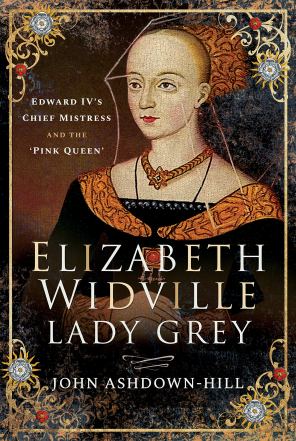 The English conflict known as the Wars of the Roses is filled with dynamic figures whose stories are those of legends. None more so than the wife of Edward IV and the mother of Elizabeth of York and the princes in the Tower, Elizabeth Woodville. She has been known in popular culture as the commoner turned “White Queen” consort, but do we really know the true story about her life? Was she really Edward IV’s wife? How much influence did she actually carry? These questions and more are tackled in Dr. John Ashdown-Hill’s latest book, “Elizabeth Widville Lady Grey: Edward IV’s Chief Mistress and the ‘Pink Queen’.
 Adventures of a Tudor Nerd